Protocols, potency sequencing, and dosing guidelines outlined in this advanced clinical repository are derived directly from Dr. Samuel Hahnemann's Organon of Medicine (Liquid Potency & Split Dose Method), combined with classic clinical keynotes from Dr. James Compton Burnett and Dr. William Boericke, verified through extensive practical clinical execution and advanced repertorial synthesis.
Finding an effective Homeopathic Medicine for Pulmonary Edema (Fluid in Lungs) is essential for individuals struggling with sudden suffocative air hunger, inability to lie flat in bed (orthopnea), pink frothy sputum, coarse rattling chest phlegm, and low blood oxygen saturation. Recognizing the underlying causes, types, stages, and symptoms of pulmonary edema—whether presented as Cardiogenic Pulmonary Edema (left heart failure, high blood pressure, valve disease) or Non-Cardiogenic Pulmonary Edema (ARDS, sepsis, high altitude, toxin inhalation)—is crucial for preventing life-threatening respiratory collapse. Homeopathic constitutional care offers a gentle, safe, non-toxic, and natural pathway to support cardiovascular and pulmonary microcirculation, reduce alveolar fluid transudation, promote fluid reabsorption, and restore easy, comfortable breathing safely.
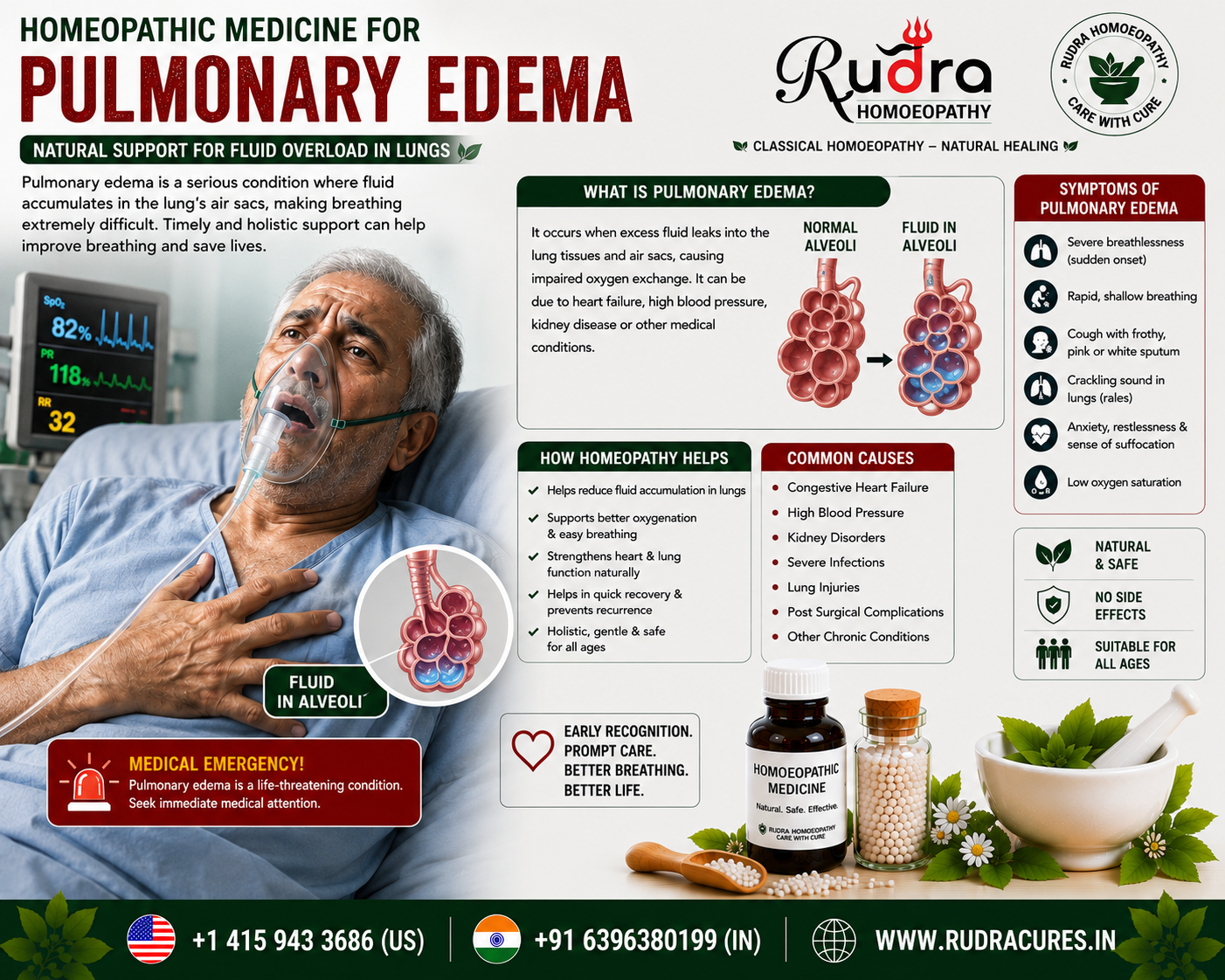
Pulmonary Edema / Fluid in Lungs (फेफड़ों में पानी भरना व द्रव ज़माव) – Overview & Key Remedies
Sudden severe shortness of breath, inability to lie flat in bed (needing to sit upright to catch breath), coughing up pink frothy or foamy phlegm, loud rattling sound in the chest while breathing, blue discoloration of lips or fingernails, cold clammy sweats, and extreme anxiety or fear of suffocation are the primary symptoms experienced by patients with pulmonary edema. Pulmonary Edema (Fluid in Lungs / Pulmonary Congestion / फेफड़ों में पानी भरना व द्रव ज़माव) is an acute, serious medical condition where fluid abnormally leaks out of blood capillaries into the lung air sacs (alveoli) and surrounding tissues. This fluid flooding blocks normal oxygen absorption into the blood. Caused by heart weakness (left ventricular heart failure, high blood pressure, valve defects – Cardiogenic) or lung capillary damage (ARDS, severe sepsis, high-altitude exposure, kidney failure – Non-Cardiogenic), the body’s PNEI (Psycho-Neuro-Endocrine-Immunology) Matrix—the master communication network connecting brain breathing centers, heart pumping muscles, lung blood capillaries, and kidney fluid balance—becomes severely overwhelmed. Homeopathy offers a gentle, safe, natural, non-steroidal, and constitutional approach to support cardiovascular and lung function, promote natural fluid reabsorption, clear chest rattling, and restore easy, comfortable breathing safely.
अचानक बहुत तेजी से सांस फूलना, बिस्तर पर सीधे न लेट पाना (बैठकर आगे झुकने पर ही सांस आना), खांसते समय गुलाबी रंग का झागदार बलगम (Pink Frothy Sputum) निकलना, सांस लेते समय छाती से बलगम व पानी की गड़गड़ाहट (Rattling) होना, होठों का नीला पड़ना, और दम घुटने के डर से भयंकर घबराहट होना—इसे सामान्य भाषा में फेफड़ों में पानी भरना या फेफड़ों का द्रव जमाव (Pulmonary Edema / Fluid in Lungs) कहा जाता है। यह एक आपातकालीन स्थिति है। यह मुख्य रूप से दो कारणों से होता है: **हार्ट फेलियर या दिल की कमजोरी** (जिससे खून फेफड़ों की नसों में वापस भर जाता है) या **फेफड़ों का गंभीर इन्फेक्शन व सेप्सिस**। इमरजेंसी में आईसीयू (ICU) और ऑक्सीजन सपोर्ट के साथ-साथ, सही होम्योपैथिक दवाएं फेफड़ों में जमे पानी को सोखने, दिल की पंपिंग बढ़ाने, और सांस लेना आसान बनाने में मदद करती हैं।
Primary Types & Stages of Pulmonary Edema (मुख्य प्रकार व चरण)
Understanding the specific clinical category of pulmonary edema helps doctors select the right curative strategy:
- Cardiogenic Pulmonary Edema: Caused by left heart failure, high blood pressure, or heart valve disease; causes severe inability to lie flat (orthopnea) and pink frothy phlegm.
- Non-Cardiogenic Pulmonary Edema (ARDS): Caused by direct capillary damage from severe lung infection, sepsis, or toxin inhalation; causes severe low oxygen ($SpO_2$).
- High Altitude Pulmonary Edema (HAPE): Triggered by rapid travel or climbing to high mountain altitudes with low atmospheric oxygen.
- Renal Dropsical Pulmonary Edema: Secondary to acute or chronic kidney failure where fluid builds up throughout the body (anasarca) and floods the lungs.
Common Causes & Risk Factors of Pulmonary Edema (मुख्य कारण)
Key Signs and Symptoms of Pulmonary Edema (प्रमुख लक्षण)
- Severe Air Hunger & Suffocation (अचानक भयंकर दम घुटना): Sudden difficulty breathing that makes the person feel like they are drowning.
- Orthopnea / Cannot Lie Flat in Bed (सीधे लेटने पर सांस न आना): Inability to lie flat in bed; person must sit upright or lean forward over a table.
- Pink Frothy / Foamy Sputum (गुलाबी झागदार बलगम निकलना): Coughing up pink, foamy, or blood-tinged fluid from the lungs.
- Coarse Rattling Sound in Chest (छाती में पानी व बलगम की गड़गड़ाहट): Loud moist rattling or bubbling sound heard in the chest while breathing.
- Bluish Lips or Fingernails (होठों व नाखूनों का नीला पड़ना – Cyanosis): Oxygen saturation ($SpO_2$) dropping sharply causing bluish skin discoloration.
- Cold Clammy Sweats & Panic (ठंडा पसीना व भयंकर घबराहट): Cold sweating on forehead and face accompanied by fear of dying.
मुख्य लक्षण: अचानक दम घुटना, सीधे न लेटना (बैठकर ही सांस आना), गुलाबी झागदार बलगम निकलना, छाती में गड़गड़ाहट, होठों का नीला पड़ना, और ठंडा पसीना आना।
Homeopathic Approach to Fluid Reabsorption & Heart-Lung Support
Homeopathy manages Pulmonary Edema through Alveolar Capillary Hydrostatic Rebalancing, Fluid Reabsorption Stimulation, and Myocardial Support. Conventional emergency treatment relies heavily on intravenous diuretics (lasix/furosemide), high-flow oxygen, CPAP/bilevel ventilation, and nitrates. While emergency medical care is mandatory to save lives, homeopathic constitutional remedies (such as Arsenicum Album, Carbo Vegetabilis, Antimonium Tartaricum, Laurocerasus, Digitalis, Apocynum Cannabinum, Grindelia, and Aspidosperma) work naturally to support heart pumping muscle strength, promote kidney fluid excretion, melt trapped alveolar fluid, improve blood oxygenation ($SpO_2$), and restore comfortable breathing safely alongside standard medical care.
मुख्य होम्योपैथिक दवाएं और उनके लक्षण (Homeopathic Medicines & Symptoms Basis)
होम्योपैथी में मरीज के लक्षणों, सांस फूलने के समय (रात 1-2 बजे या लेटने पर), बलगम के रंग (गुलाबी झाग), और दिल व गुर्दे की स्थिति के आधार पर सही दवा चुनी जाती है:
लक्षण और पहचान: फेफड़ों में पानी भरने और रात 1 से 2 बजे अचानक दम घुटने की नंबर 1 मास्टर दवा। मरीज सीधा लेट नहीं सकता, आगे झुककर बैठना पड़ता है; गुलाबी झागदार बलगम; छाती में जलन; थोड़ा-थोड़ा गर्म पानी पीने की इच्छा; भयंकर घबराहट व मौत का डर।
लक्षण और पहचान: फेफड़ों में पानी भरने से भयंकर कमजोरी, ऑक्सीजन का स्तर गिरना, ठंडे हाथ-पैर, नीले होठ, और पंखे की तेज हवा की तीव्र इच्छा होना (”Resuscitator of Lungs”)।
लक्षण और पहचान: हार्ट फेलियर और दिल की कमजोरी से फेफड़ों व पैरों में पानी भरना (Digitalis – नाड़ी धीमी या अनियमित होना)। एपोसाइकम (Apocynum Q) गुर्दों से पेशाब की मात्रा बढ़ाकर फेफड़ों व पूरे शरीर की सूजन सुखाती है।
लक्षण और पहचान: फेफड़ों में पानी व बलगम की भारी गड़गड़ाहट (Rattling) होना, लेकिन मरीज में बलगम बाहर निकालने की ताकत न होना। सुस्ती, कमजोरी, और होठों का नीला पड़ना (Cyanosis)।
लक्षण और पहचान: दिल की भयंकर बीमारी से सांस न आना, नीलापन, और गुलाबी झागदार बलगम (Laurocerasus)। ग्रिंडेलिया (Grindelia Q) रात को सोते ही सांस रुकने की समस्या (Sleep Apnea) को ठीक करती है।
लक्षण और पहचान: फेफड़ों में ऑक्सीजन का स्तर ($SpO_2$) बढ़ाकर सांस फूलने से राहत देने वाला टॉनिक (Aspidosperma Q)। कोका (Coca Q) पहाड़ों या ऊंचाई पर सांस फूलने व फेफड़ों में पानी जमा होने (HAPE) की विशेष दवा है।
लक्षण और पहचान: छाती में जलन, भारीपन, और खूनी/गुलाबी बलगम (Phosphorus)। क्रिटेगस (Crateagus Q) दिल की मांसपेशियों को मजबूत बनाने वाला कार्डियक टॉनिक है।
Frequently Asked Questions (15 Essential FAQs) – फेफड़ों में पानी भरने से जुड़े सवाल और जवाब
1. What is Pulmonary Edema (Fluid in Lungs)?
Pulmonary Edema is a serious condition where fluid leaks out of blood vessels into the lung air sacs (alveoli), blocking normal oxygen absorption.
फेफड़ों में पानी भरना (Pulmonary Edema) वह गंभीर स्थिति है जिसमें खून की नसों से पानी रिसकर फेफड़ों की हवा की थैलियों में भर जाता है, जिससे ऑक्सीजन बंद हो जाती है।
2. Is Pulmonary Edema a medical ICU emergency?
Yes. Acute Pulmonary Edema is a life-threatening hospital ICU emergency requiring immediate oxygen support, medical position, and emergency evaluation alongside supportive care.
हाँ, फेफड़ों में पानी भरना एक मेडिकल इमरजेंसी है जिसके लिए अस्पताल के आईसीयू (ICU) और ऑक्सीजन सपोर्ट की तुरंत जरूरत होती है।
3. What is Pink Frothy Sputum in Pulmonary Edema?
Pink frothy sputum is foamy, pinkish fluid expectorated from lungs when high blood pressure in lung capillaries forces red blood cells and fluid into air sacs.
4. What is the difference between Cardiogenic and Non-Cardiogenic Pulmonary Edema?
Cardiogenic Pulmonary Edema is caused by heart failure or high blood pressure. Non-Cardiogenic Pulmonary Edema is caused by severe lung infection, sepsis, ARDS, or high altitude.
5. Why do patients with fluid in lungs find it impossible to lie flat (Orthopnea)?
Lying flat causes fluid from the legs and abdomen to flow into lung blood vessels, drastically increasing lung flooding and suffocation. Sitting upright lowers fluid pressure.
6. How does Aspidosperma Mother Tincture help improve oxygen saturation ($SpO_2$)?
Aspidosperma acts directly as a lung oxygenator that stimulates brain breathing centers, expanding air passages and improving blood oxygen absorption during fluid stress.
7. How does Apocynum Cannabinum Mother Tincture help drain fluid?
Apocynum acts as an organopathic fluid drainer (”vegetable trochar”) that stimulates kidneys to pass urine, reducing fluid overload in lungs and legs.
8. What essential medical tests diagnose Pulmonary Edema?
Chest Digital X-Ray (showing lung congestion / bat-wing opacities), Echocardiogram (Echo for EF%), NT-proBNP Blood Test, Arterial Blood Gas (ABG), and $SpO_2$ Oximetry.
9. What is High Altitude Pulmonary Edema (HAPE)?
HAPE is non-cardiogenic lung fluid accumulation triggered when traveling or climbing rapidly to high mountain altitudes with low atmospheric oxygen (treated by Coca).
10. How does Carbo Vegetabilis help when hands feel cold and lips turn blue?
Carbo Vegetabilis acts as a lung resuscitator when oxygen drops sharply, body surface turns cold, lips look blue, and patient demands continuous fan air.
11. What immediate position should a patient with lung fluid assume?
The patient should immediately sit upright in bed or on a chair with feet dangling down; never allow the patient to lie flat on their back.
12. Are homeopathic remedies safe alongside emergency hospital treatment?
Yes. Homeopathic remedies are 100% natural, non-toxic, and work completely safely alongside hospital emergency ICU care, diuretics, and oxygen support.
13. Can high blood pressure (hypertension) cause sudden fluid in lungs?
Yes. Uncontrolled high blood pressure increases resistance against the heart, forcing fluid backward into lung capillaries (Hypertensive Pulmonary Edema).
14. How long does it take for lung fluid to reabsorb with treatment?
In hospital ICU care, acute fluid levels stabilize within 24 to 48 hours, with supportive homeopathic care helping complete lung fluid reabsorption over 1 to 2 weeks.
15. How can I schedule a private clinical consultation?
You can connect directly with our expert clinical medical team via WhatsApp to share Chest X-Ray and Echocardiogram reports in complete 100% privacy.
Lifestyle & Home Guidelines for Pulmonary Edema Care
- Keep Patient Sitting Upright Immediately: Never allow a patient with lung fluid to lie flat; keep them sitting upright in bed or on a chair with feet hanging down.
- Seek Emergency Hospital ICU Care Immediately: Call for emergency ambulance care immediately, as oxygen support and medical diuretics are vital.
- Restrict Water & Salt Intake As Advised: Strictly limit liquid water intake and salt in food as guided by doctors to prevent further fluid buildup.
- Monitor Oxygen Saturation ($SpO_2$) & BP: Regularly track blood oxygen levels ($SpO_2$) using a pulse oximeter and check blood pressure.
- Ensure Continuous Ventilation & Fresh Air: Keep the room cool and well-ventilated; allow fresh air flow without making the patient cold.
Understanding Diagnostic Milestones: A Balanced Medical Approach
Proper diagnostic evaluation confirms heart-lung fluid status and guides recovery:
| Assessment Type | Why It Is Crucial for Clinical Success | Clinical Focus Area |
|---|---|---|
| Chest Digital X-Ray Examination | Shows pulmonary vascular congestion, fluid in lung fields (bat-wing opacities), and heart size. | Confirms lung fluid congestion. |
| Echocardiogram (Echo) & NT-proBNP Test | Evaluates heart ejection fraction (EF%), valve health, and measures heart strain blood markers. | Confirms heart pumping failure. |
| Pulse Oximetry ($SpO_2$) & ABG Analysis | Monitors blood oxygen saturation ($SpO_2$) and carbon dioxide levels to guide oxygen support. | Confirms blood oxygen saturation. |
Pulmonary Edema responds best when emergency hospital ICU care is combined with sitting upright position, fluid/salt restriction, monitoring oxygen levels ($SpO_2$), and supportive constitutional homeopathic care. Your heart-lung function, oxygen levels, and breathing comfort can be restored steadily.
Why Choose Rudra Homoeopathy?
- 100% natural, non-toxic constitutional protocols tailored around your unique physical build, Chest X-Ray, and Echocardiogram reports.
- Proven clinical experience in safely supporting pulmonary edema recovery, heart weakness, pink frothy sputum, and low oxygen.
- Focuses on biochemic fluid reabsorption and microvascular cardiac support alongside emergency medical care.
- Compassionate clinical care ensuring complete patient privacy, 100% strict confidentiality, and continuous expert support.
Conclusion
Homeopathy offers a safe, gentle, deeply effective, and restorative path for individuals struggling with Pulmonary Edema, Fluid in Lungs, and Low Oxygen Saturation. Remedies like Arsenicum Album, Carbo Vegetabilis, Antimonium Tartaricum, Laurocerasus, Digitalis, Apocynum Cannabinum, Grindelia, and Aspidosperma work in harmony with the body to rebalance cardiovascular-respiratory health and restore clean, effortless breathing and vitality.
Manage Pulmonary Edema, Fluid in Lungs, Pink Frothy Sputum, and Orthopnea naturally and confidentially with expert clinical care.
💬 Confidential WhatsApp ConsultationAdvanced Clinical Comparison Tool
Compare symptoms, cross-reference Materia Medica notes, and analyze repertorial rubrics side-by-side for precise case evaluation.
Access Clinical Tool →