History of Homoeopathy
Explore the historical circumstances, intellectual journey, experiments, writings, and development of Homoeopathy from the time of Dr. Samuel Hahnemann to its spread across the world.
Understanding the History
Homoeopathy emerged in Europe at the end of the eighteenth
century through the work of the German physician
Dr. Christian Friedrich Samuel Hahnemann
(1755–1843).
To understand its origins, it is important to understand
the medical environment in which Hahnemann lived and
practised. The medicine of his era was very different from
modern medicine, and treatments such as bloodletting,
purging, polypharmacy, and other aggressive interventions
were widely used.
Medicine in Hahnemann’s Era
The late eighteenth-century medical environment included many practices that Hahnemann came to regard as excessively aggressive, insufficiently systematic, or potentially harmful.
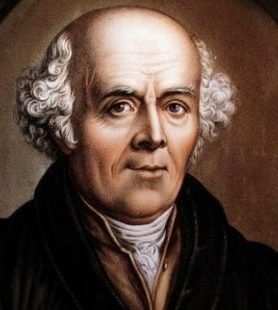
Dr. Samuel Hahnemann
1755 – 1843
Founder of Homoeopathy
A Physician Who Questioned His Own Profession
Hahnemann was not an outsider to medicine. He studied medicine at the University of Erlangen and received his medical degree in 1779. He subsequently worked as a physician while also developing considerable interests in chemistry, languages, pharmacology, translation, and medical literature.
His early professional life therefore gave him direct experience of the medicine of his time. Over the years, however, he became increasingly dissatisfied with therapeutic methods that he believed could suppress symptoms without adequately addressing the broader pattern of illness.
This dissatisfaction became one of the important intellectual backgrounds against which his later work developed.
What Did Hahnemann Observe?
His criticism was directed particularly at what he considered crude, excessive, or merely antagonistic therapeutic practices of his period.
Bloodletting
Bloodletting was an established therapeutic practice of the period. Hahnemann questioned medical practices that subjected already ill patients to additional physiological stress.
Multiple Medicines
Complex mixtures and polypharmacy were common features of historical medical practice. Hahnemann increasingly sought a more systematic relationship between a medicinal substance and the symptoms it produced.
Antagonistic Treatment
Hahnemann objected to simply opposing one symptom with another medicinal action and carefully studied what he described as primary and subsequent effects.
The Question That Changed His Medical Thinking
Hahnemann’s historical importance lies not only in the system he eventually proposed, but also in his insistence on observing what medicines themselves could produce in healthy people.
What Does a Medicine Actually Do?
Instead of considering a medicine only through the disease for which it had traditionally been used, Hahnemann investigated its effects on the human organism.
Careful Observation
He emphasized recording observable changes and symptoms associated with medicinal substances.
Experimentation
His experiments with substances such as Cinchona contributed to his developing ideas concerning similarity between medicinal effects and disease symptoms.
Recording the Results
The observations eventually became part of the literature from which the Homoeopathic Materia Medica developed.
The Example of Opium
Hahnemann used examples of medicines producing an initial effect followed by a different or opposite reaction to illustrate his criticism of purely antagonistic treatment.
In the Organon, Hahnemann discussed
examples involving opium, including
its temporary constipating effect and the subsequent
worsening of chronic diarrhoea described in his
observations. He used such examples to argue that
merely opposing a symptom could sometimes be followed
by an opposite reaction of the organism.
This historical discussion became part of his broader
criticism of what he called antipathic or
palliative treatment.
🌿 Cinchona Bark
One of the most famous episodes in Hahnemann’s intellectual development involved Cinchona bark, from which quinine would later become an important antimalarial substance.
The Experiment That Became Historically Important
While translating William Cullen’s writings on materia medica, Hahnemann questioned the explanation given for Cinchona’s action in intermittent fever.
He experimented with Cinchona himself and reported that repeated doses produced symptoms resembling those of intermittent fever. This observation contributed to his developing the idea that a medicinal substance capable of producing a symptom pattern in a healthy person might have therapeutic relevance to a similar symptom pattern in a sick person.
The Emergence of Homoeopathy
Hahnemann’s ideas developed gradually through essays, experimentation, clinical experience, and continued writing. The following milestones are especially important in the historical development of Homoeopathy.
Medical Degree
Hahnemann received his medical degree from the University of Erlangen.
New Principle
His essay on a new principle for ascertaining the curative powers of drugs marked a major milestone.
Organon
The first edition of the Organon of Rational Healing was published.
Expansion
Homoeopathic literature, provings, clinical practice, and institutions gradually expanded across Europe and beyond.
The Organon of Medicine
The Organon became one of Hahnemann’s principal works and the central written expression of the principles and methodology he developed.
Hahnemann continued revising the work throughout his lifetime. The later editions reflected his continuing observations and evolving ideas concerning disease, medicinal action, dosage, and the practice of Homoeopathy.
The sixth edition was completed in 1842 but was not published until 1921, long after Hahnemann’s death.
From Europe to the World
During the nineteenth century, Homoeopathy spread beyond its European origins and developed practitioners, institutions, literature, and medical schools in many parts of the world.
Germany & Europe
The movement originated in the German-speaking world and subsequently spread through Europe.
North America
Homoeopathy became influential in nineteenth-century North America, where hospitals, colleges, societies, and extensive literature developed.
International Spread
During the nineteenth and early twentieth centuries, Homoeopathic practice and literature reached numerous countries across different continents.
Homoeopathy in India
Homoeopathy was introduced into India during the early nineteenth century and subsequently developed a substantial presence, particularly in Bengal, before spreading to other parts of the country.
The Calcutta Homoeopathic Medical College was established in 1881 and played an important role in the development of formal Homoeopathic education in India. Over subsequent decades, Homoeopathy became increasingly institutionalized, eventually receiving statutory recognition and regulation within India’s healthcare framework.
The Continuing Legacy of Hahnemann
More than two centuries after Hahnemann began formulating his ideas, his writings remain central to the study of Classical Homoeopathy.
His Organon, Materia Medica, provings, clinical writings, and emphasis on careful observation form a substantial historical body of literature that continues to be studied by Homoeopathic students and practitioners.
For HomeoSage, understanding this history is not simply about remembering dates. It is about understanding the intellectual journey from which the Homoeopathic literature developed.
📚 A Note on Historical Context
Historical descriptions of eighteenth- and nineteenth-century medicine reflect the medical knowledge and practices of their own period. They should not be read as descriptions of contemporary evidence-based medical practice. HomeoSage presents these events as part of the history and intellectual development of Homoeopathy.
⚖️ Educational Context & Important Limitation
This page presents the history of Homoeopathy and the historical writings and ideas associated with Dr. Samuel Hahnemann and subsequent Homoeopathic traditions.
Historical claims about therapeutic practices, medicinal effects, or medical theories describe what was documented or believed within particular historical periods. They should not be interpreted as modern medical advice or as evidence that a historical treatment is appropriate for present-day medical conditions.
HomeoSage is an educational knowledge platform and does not provide individualized medical consultation, prescriptions, or telemedicine services through this website.
To Understand Homoeopathy, Understand Its History
The history of Homoeopathy begins with a physician who was dissatisfied with the therapeutic limitations he observed around him and who chose to question, experiment, record, and rethink.
From questioning came observation. From observation came experimentation. From experimentation came a new medical tradition.