Homoeopathy: An Introduction
An educational introduction to Homoeopathy — its origins, foundational ideas, Classical literature, Materia Medica, repertory, case-taking, potentisation, and the intellectual tradition that has shaped the system over more than two centuries.
What Is Homoeopathy?
Homoeopathy is a system of medicine that originated in Europe
in the late eighteenth century through the work of the German
physician Dr. Samuel Hahnemann (1755–1843).
Its literature developed around a distinctive approach to
understanding symptoms, medicines, individual cases, and
therapeutic relationships.
To understand Homoeopathy properly, it is useful to study not
merely individual remedies, but the principles, terminology,
philosophy, literature, and methods that form the framework
of the system.
The Origin of Homoeopathy
The history of Homoeopathy is inseparably connected with the work and writings of Dr. Samuel Hahnemann.
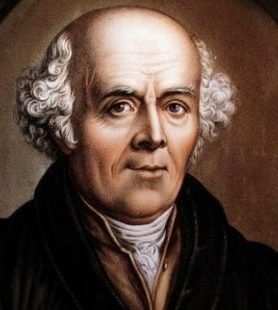
Dr. Samuel Hahnemann
1755 – 1843
Founder of Homoeopathy
A New Approach to Medicine
Dr. Samuel Hahnemann was a German physician, scholar, translator, and the founder of Homoeopathy. His work emerged from a profound desire to understand medicine through observation, experimentation, and a more systematic study of medicinal substances.
Through his writings, experiments, clinical observations, and relentless pursuit of a coherent medical system, Hahnemann established the foundations upon which Homoeopathy developed.
His Organon of the Medical Art, Materia Medica, provings, and other writings became foundational works for generations of Homoeopathic physicians and students.
A Brief Historical Perspective
A simplified view of important milestones in the development of Homoeopathic thought and literature.
1755 — Birth of Samuel Hahnemann
Samuel Hahnemann was born in Meissen, Saxony, beginning the life of the physician and scholar whose work would later establish Homoeopathy.
Late 18th Century — Development of New Ideas
Hahnemann increasingly questioned prevailing medical practices and began developing his own approach through observation, experimentation, and translation of medical literature.
1796 — The Principle of Similia
Hahnemann published work describing the principle commonly expressed as similia similibus curentur — commonly translated as “like cures like.”
1810 — Organon of the Medical Art
The first edition of the Organon provided a systematic exposition of Hahnemann’s developing medical philosophy and methodology.
19th Century — Expansion of the Literature
Homoeopathic literature expanded through Materia Medica, repertories, clinical writings, provings, journals, and contributions from practitioners across different countries.
Today — A Large Educational Tradition
Homoeopathy has developed a substantial historical literature encompassing philosophy, Materia Medica, repertory, clinical writings, education, and research.
Fundamental Concepts in Homoeopathy
These concepts form an important part of the Classical Homoeopathic intellectual framework.
Similia Similibus Curentur
The principle of similarity is traditionally expressed as “like cures like” and occupies a central place in Hahnemann’s Homoeopathic philosophy.
Individualisation
Classical Homoeopathic literature places emphasis on the individual pattern of symptoms rather than considering a disease name alone.
The Totality of Symptoms
The totality of characteristic symptoms is an important concept in Classical case analysis and remedy study.
Drug Proving
Homoeopathic Materia Medica developed substantially from observations and provings intended to record the effects of substances on healthy individuals.
Materia Medica
Materia Medica records remedy information and provides the literature through which remedy pictures and characteristic symptoms are studied.
Repertorisation
Repertories organize symptoms and corresponding remedies into structured indexes that can support systematic educational study of a case.
The Classical Homoeopathic Framework
Classical Homoeopathy developed around a coherent body of philosophy, literature, observation, case analysis, and materia medica rather than around disease names alone.
The Major Areas of Homoeopathic Study
Understanding the system requires familiarity with several interconnected areas of knowledge.
Organon & Philosophy
The philosophical and methodological literature that explains the principles, objectives, observations, and practice framework of Homoeopathy.
Materia Medica
The study of medicinal substances through their recorded symptom pictures, provings, observations, modalities, relationships, and characteristic expressions.
Repertory
The study of repertorial structures, rubrics, symptom language, remedy relationships, and systematic methods of organizing case information.
Case-Taking
Classical literature emphasizes careful observation and collection of the individual patient’s symptoms, circumstances, modalities, and characteristic features.
Case Analysis
Educational study may involve understanding which symptoms are characteristic, significant, peculiar, general, or otherwise relevant within Classical Homoeopathic methodology.
Clinical Literature
Historical and contemporary clinical writings provide additional perspectives for studying how Homoeopathic ideas have been interpreted and applied over time.
Potentisation & Preparation
Potentisation is one of the distinctive concepts associated with Homoeopathic pharmacy and literature. Understanding it requires distinguishing the historical preparation methods described in Homoeopathic texts from claims about clinical effects.
Dilution
Sequential dilution forms part of the traditional preparation methods described in Homoeopathic literature.
Succussion
Traditional Homoeopathic preparation also describes succussion as a repeated mechanical process.
Potency Scales
Historical literature describes different scales and preparation methods, including decimal and centesimal systems.
How HomeoSage Helps You Explore Homoeopathy
HomeoSage is designed to make this large body of knowledge easier to navigate and study.
🔎 Discover
Find educational resources across diseases, remedies, Materia Medica, repertory, specialties, and other knowledge categories.
🔗 Connect
Follow relationships between symptoms, remedies, repertorial concepts, diseases, literature, and related subjects.
📖 Study
Explore structured educational material designed to support deeper understanding rather than isolated fact-finding.
🧠 Understand
Move beyond individual terms and examine the broader principles and relationships underlying Homoeopathic literature.
🗂️ Organize
Access knowledge through structured repositories, categories, internal references, and interconnected educational pages.
🌱 Keep Learning
Return to an expanding repository as new educational resources, subjects, references, and connections are developed.
⚖️ Educational Context & Important Limitation
This page provides an educational introduction to Homoeopathy and its historical and theoretical framework. It is not intended to provide individualized medical advice, diagnosis, prescriptions, or treatment recommendations.
Descriptions of Homoeopathic principles, remedies, potentisation, symptoms, or historical practices describe concepts found within Homoeopathic literature and should not be interpreted as a personal medical recommendation.
HomeoSage does not provide individualized consultation, prescriptions, treatment plans, or telemedicine services through this educational platform.
Begin With the Foundations
Homoeopathy is supported by a vast and diverse body of literature. Understanding its foundations provides a useful starting point for exploring Materia Medica, repertory, philosophy, history, and the many branches of knowledge that developed from the original Homoeopathic tradition.
Explore the foundations. Study the literature. Follow the knowledge.