Protocols, potency sequencing, and dosing guidelines outlined in this advanced clinical repository are derived directly from Dr. Samuel Hahnemann's Organon of Medicine (Liquid Potency & Split Dose Method), combined with classic clinical keynotes from Dr. James Compton Burnett and Dr. William Boericke, verified through extensive practical clinical execution and advanced repertorial synthesis.
Finding an effective Homeopathic Medicine for Tarlov Cyst (Perineural Spinal Cysts, S2–S3 Nerve Root Compression & Neuralgic Sciatic Pain) is essential for individuals struggling with severe sacral pain, radiating perineal paresthesia, coccydynia, bowel and bladder dysfunction, and intractable lower back agony. Recognizing the underlying pathological causes (congenital arachnoid dilation, increased cerebrospinal fluid pulsation pressure, and local perineural inflammation), clinical types, and progressive stages is vital for integrating timely neuro-spinal care. Homeopathic constitutional, neuro-trophic, and anti-miasmatic remedies offer a gentle, safe, non-toxic, and natural pathway to decompress spinal nerve roots, relieve sharp neuralgic shooting pains, reduce perineural inflammation, and restore structural and neurological comfort safely without surgical risks.
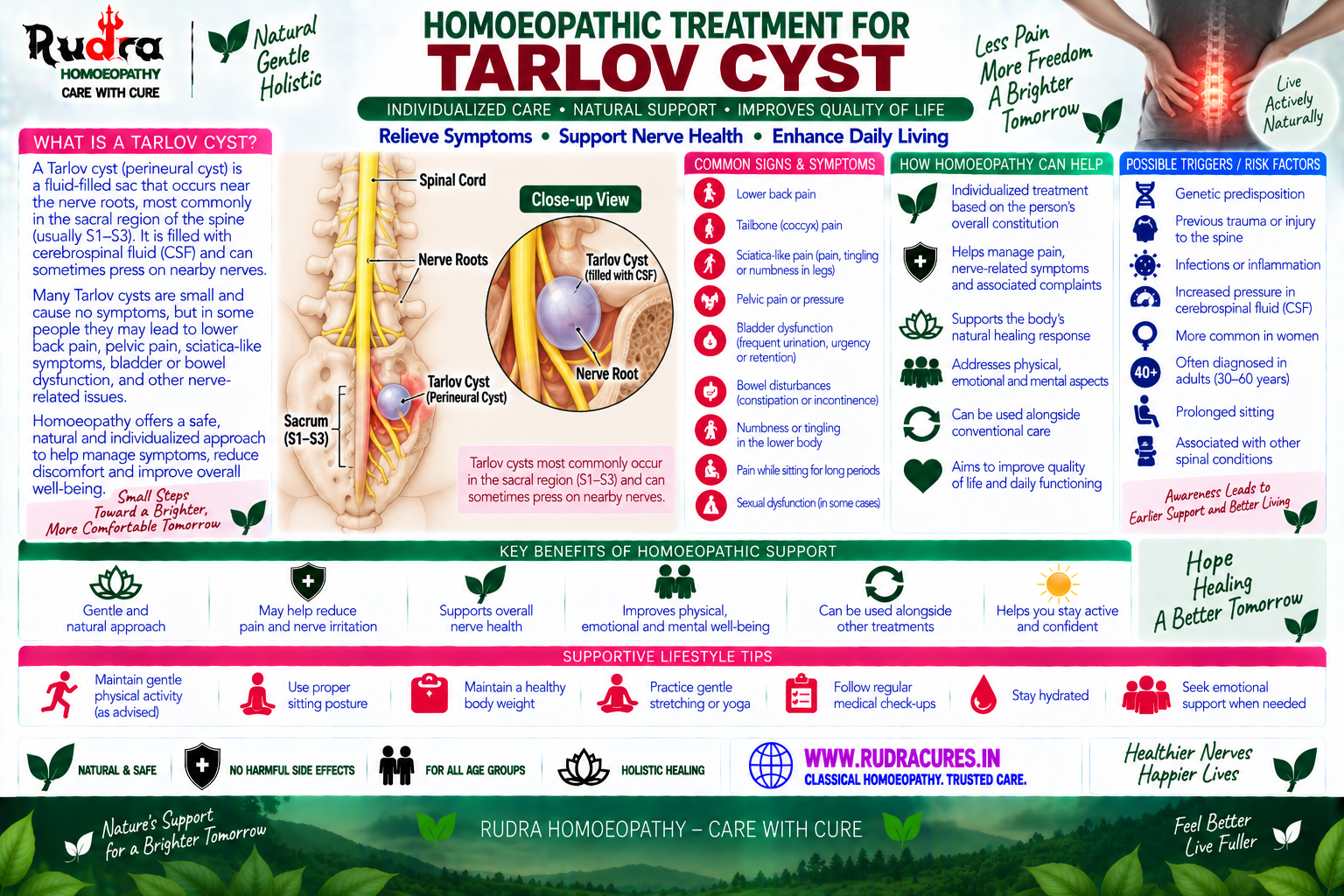
Tarlov Cyst Care (टार्लोव सिस्ट, रीढ़ की हड्डी के नस के छल्ले, कमर व तंत्रिका दर्द का प्राकृतिक इलाज) – Overview & Key Remedies
Suffering from deep, persistent, aching pain in the lower back, sacrum, and tailbone that worsens when sitting or standing for long periods, experiencing sharp, electric-shock shooting pains radiating down the legs (sciatica), feeling numbness, tingling, or burning in the perineal region, noticing bladder or bowel irregularities due to nerve compression, and feeling completely exhausted from chronic spinal nerve pain are the hallmark experiences of individuals struggling with Tarlov Cyst (Perineural Cysts / टार्लोव सिस्ट). Tarlov cysts are fluid-filled sacs that develop along spinal nerve roots, most commonly in the sacrum, pressing against sensitive nerve fibers. Conventional medicine often offers limited options—ranging from observation and pain management to risky neurosurgery—which frequently leave patients searching for safer alternatives. Homeopathy offers a gentle, safe, natural, and deeply effective constitutional approach to soothe irritated spinal nerves, reduce perineural inflammation, promote nervous tissue healing, and restore comfort and mobility without surgical risks.
कमर के निचले हिस्से, स्रेकम (Sacrum) और टेलबोन (Tailbone) में गहरा व असहनीय दर्द रहना जो बैठने या खड़े होने पर बहुत बढ़ जाए, पैरों में बिजली की तरह करंट या साइटिका का तेज दर्द उठना, गुप्तांगों और कमर के हिस्से में सुन्नपन या जलन महसूस होना, और रीढ़ की नसों पर दबाव के कारण पेशाब-पाखाने में असुविधा होना—इसे सामान्य बोलचाल में टार्लोव सिस्ट या पेरिन्यूरल सिस्ट (Tarlov Cyst) कहा जाता है। यह रीढ़ की नसों की जड़ों में सीएसएफ (CSF) तरल पदार्थ के भरने से बनने वाली थैलियां होती हैं जो नसों को दबाती हैं। सही खान-पान (हड्डियों का सूप, ओमेगा-3 युक्त आहार) और सही होम्योपैथिक दवाओं (**Hypericum Perforatum, Silicea, Calcarea Fluorica, Causticum, Colocynthis, Rhus Toxicodendron**) के सेवन से नसों की सूजन शांत होती है, रीढ़ की हड्डी का दर्द दूर होता है, और तंत्रिका तंत्र (Nervous System) मजबूत होता है।
Primary Types of Tarlov Cyst (टार्लोव सिस्ट के मुख्य प्रकार)
- Solitary Sacral Perineural Cyst: A single fluid-filled sac situated on a specific sacral nerve root (most frequently S2 or S3), causing localized back and leg pain (Key Remedy: Hypericum Perforatum).
- Multiple Sacral Cysts: Several perineural cysts distributed along the sacral spine, producing widespread pelvic and neuralgic distress (Key Remedy: Silicea).
- Symptomatic Nerve Root Impingement: Cysts large enough to actively compress sensory and motor nerve fibers, driving chronic neuralgia (Key Remedy: Colocynthis).
Common Causes & Risk Factors (मुख्य कारण)
Key Signs and Symptoms (प्रमुख लक्षण)
- Deep Sacral & Coccyx Aching: Persistent, dull, aching pain in the lower back, sacrum, and tailbone that intensifies significantly when sitting.
- Shooting Sciatic Nerve Pain: Sharp, electric-shock radiating pain traveling from the lower back down the buttocks and posterior thighs.
- Perineal Paresthesia & Numbness: Numbness, tingling, or burning sensations in the groin, buttocks, and perineal region.
- Pelvic & Sphincter Irregularities: Difficulty with urination, bowel evacuation, or pelvic discomfort due to sacral autonomic nerve compression.
- Sitting Intolerance: Inability to sit comfortably on hard surfaces without requiring cushions or frequent position shifts.
मुख्य लक्षण: कमर और स्रेकम में गहरा दर्द जो बैठने पर बहुत बढ़े, पैरों में साइटिका का तेज दर्द, गुप्तांगों में सुन्नपन या झुनझुनी, और बैठने में असमर्थता।
Homeopathic Approach to Tarlov Cyst Care
Homeopathy manages Tarlov Cyst through Nerve Root Decompression, Neuralgic Pain Relief, Perineural Inflammation Reduction, and Neuro-Trophic Restoration. Conventional treatments often offer only temporary pain relief or invasive surgery with high risks of CSF leaks and nerve damage. Homeopathic constitutional and neuro-trophic remedies (such as Hypericum Perforatum, Silicea, Calcarea Fluorica, Causticum, Colocynthis, and Rhus Toxicodendron) work gently and rapidly to soothe irritated spinal nerves, reduce sacral inflammation, promote connective tissue health, and restore normal neurological function safely without side effects.
मुख्य होम्योपैथिक दवाएं और उनके लक्षण (Homeopathic Medicines & Symptoms Basis)
होम्योपैथी में मरीज के दर्द के प्रकार (नसों का शूटिंग दर्द, हड्डियों का दर्द, या सुन्नपन) के आधार पर सही दवा चुनी जाती है:
लक्षण और पहचान: नसों (Nerves) की चोट और तेज शूटिंग दर्द की विश्व प्रसिद्ध नंबर 1 दवा (Hypericum 200C/1M)। रीढ़ की हड्डी या टेलबोन पर गिरने की चोट के बाद **कमर से ऊपर की तरफ उठने वाला बिजली जैसा तेज और तीखा दर्द**; नसों वाले हिस्से छूने पर अत्यधिक संवेदनशील (Exquisite tenderness) होना; पैरों में सुन्नपन और झुनझुनी रहना।
लक्षण और पहचान: सिस्ट के दबाव से रीढ़ की हड्डी (Sacrum) में होने वाले क्षरण और कमजोरी की महान एंटी-साइकोटिक व एंटी-सिफिलिटिक दवा (Silicea 200C/1M)। मरीज बहुत **अधिक ठंडक महसूस करने वाला (Chilly), कमजोर हड्डियों वाला और पैरों से बदबूदार पसीना आने वाला** होता है; रीढ़ की नसों में कमजोरी और सुस्ती रहना।
लक्षण और पहचान: सिस्ट की दीवारों (Connective Tissue) और रीढ़ की कमजोर लिगामेंट्स को मजबूती देने वाली दवा (Calcarea Fluor 6X/30C)। रीढ़ की हड्डी में कड़ापन और दर्द जो **आराम करने से बढ़े और हल्के चलने-फिरने से थोड़ा बेहतर हो**; हड्डियों और नसों के आसपास के फाइब्रोटिक कड़ेपन को दूर करती है।
लक्षण और पहचान: रीढ़ की नसों पर दबाव के कारण **पैरों में कमजोरी, चलने में लड़खड़ाना और खांसने-छींकने पर पेशाब निकल जाना** (Causticum 30C/200C)। कमर और स्रेकम में लगातार खिंचाव और भारीपन रहना; नसों की कमजोरी और सुस्ती को दूर करती है।
लक्षण और पहचान: टार्लोव सिस्ट के कारण **कमर से शुरू होकर कूल्हे और जांघों के पीछे तेजी से नीचे उतरने वाला साइटिका का दर्द** (Colocynthis 200C)। दर्द ऐसा तेज होता है कि मरीज दोहरा होकर (Bending double) बैठता है और दबाने से आराम मिलता है।
लक्षण और पहचान: रीढ़ की हड्डी और कमर में **सुबह उठने पर या बैठने के बाद जब पहली बार उठें तो भयंकर अकड़न और दर्द होना** (Rhus Tox 30C/200C)। थोड़ा चलने-फिरने के बाद शरीर खुल जाता है और दर्द में राहत मिलती है; बारिश और ठंड के मौसम में तकलीफ बढ़ती है।
Frequently Asked Questions (15 Essential FAQs) – टार्लोव सिस्ट से जुड़े सवाल और जवाब
1. What is a Tarlov Cyst and how does it cause pain?
Tarlov cysts are fluid-filled sacs that develop along spinal nerve roots (usually in the sacrum). As cerebrospinal fluid fills and expands the cyst, it compresses adjacent sensory and motor nerve fibers, causing severe localized and radiating pain.
टार्लोव सिस्ट रीढ़ की नसों की जड़ों में सीएसएफ (CSF) तरल पदार्थ से भरी थैलियां होती हैं। जब यह सिस्ट बड़ी होती है, तो यह पास की नसों को दबाती है जिससे कमर और पैरों में तेज दर्द होता है।
2. Can Homeopathy shrink or manage Tarlov Cysts effectively?
Homeopathy provides profound relief by reducing perineural inflammation, soothing irritated spinal nerves, strengthening surrounding connective tissue, and managing neuralgic pain without surgical risks.
3. Why do Tarlov Cysts hurt so much when sitting?
Sitting places direct mechanical pressure on the sacrum, compressing the fluid-filled sac against surrounding bone and nerve fibers, which spikes neuralgic pain.
4. Are Tarlov Cysts cancerous or malignant?
No, Tarlov cysts are benign (non-cancerous) perineural cysts, though their symptoms can be severely debilitating due to nerve root compression.
5. How does Hypericum Perforatum help nerve pain?
Hypericum is the premier homeopathic remedy for nerve trauma and neuralgic shooting pains, acting as a natural trophic tonic for damaged or compressed nerve fibers.
6. What is the difference between a Tarlov Cyst and a Spinal Disc Herniation?
A disc herniation involves displacement of intervertebral disc cartilage, whereas a Tarlov cyst is a fluid-filled pouch originating directly from the nerve root sheath itself.
7. Can Tarlov Cysts cause bladder and bowel problems?
Yes, because they frequently affect the S2–S3 sacral nerve roots which control pelvic autonomic functions, large cysts can sometimes cause urinary or bowel irregularities.
8. Why do doctors often recommend observation for Tarlov Cysts?
Because surgery on sacral nerve root cysts carries high risks of cerebrospinal fluid leaks and nerve damage, doctors often observe asymptomatic or mild cases.
9. How does Silicea help in sacral bone erosion?
Silicea supports bone matrix nutrition and osteoblastic repair, helping manage bone remodeling in areas where expanding cysts apply pressure against the sacrum.
10. What lifestyle changes help manage Tarlov Cyst symptoms?
Using ergonomic cushions (donut pillows) for sitting, avoiding heavy lifting, practicing gentle spinal stretches, and eating an anti-inflammatory diet provide excellent support.
11. Can stress aggravate Tarlov Cyst nerve pain?
Yes. Emotional stress increases muscle tension and nervous system sensitivity, frequently amplifying the perception of chronic neuralgic spine pain.
12. How long does homeopathic treatment take for spinal nerve pain?
Initial relief in nerve shooting pain is often noticed within 3 to 6 weeks, while constitutional nervous system stabilization requires consistent, structured care.
13. What is Cauda Equina Syndrome?
Cauda Equina Syndrome is a surgical emergency caused by severe compression of lower spinal nerve roots, resulting in sudden loss of bowel/bladder control or severe leg weakness.
14. Are homeopathic remedies safe alongside conventional pain medications?
Yes, homeopathic remedies are 100% non-toxic and can be taken safely alongside conventional care without chemical drug interactions.
15. How can I consult your expert clinical team?
You can connect directly with our expert homeopathic team via WhatsApp to discuss your MRI reports, symptoms, and receive personalized care in complete privacy.
Lifestyle, Diet & Home Guidelines for Spine Care
- Use Ergonomic Seating & Donut Cushions: Avoid sitting directly on hard surfaces; use specialized cushions to relieve direct mechanical pressure on the sacrum.
- Eat Mineral-Rich, Anti-Inflammatory Foods: Include bone broths, magnesium-rich leafy greens, and omega-3 fatty acids to support nerve and bone health.
- Stay Well Hydrated with Pure Water: Drink 3 to 4 liters of clean water daily to maintain spinal tissue hydration and healthy fluid dynamics.
- Avoid Heavy Lifting & High-Impact Strains: Refrain from heavy lifting, bending awkwardly, or high-impact exercises that strain the sacral spine.
Understanding Diagnostic Milestones: A Balanced Medical Approach
Comprehensive medical evaluation ensures accurate identification and tailored management:
| Assessment Type | Why It Is Crucial for Clinical Success | Clinical Focus Area |
|---|---|---|
| Spine MRI (Lumbar & Sacral) | Gold standard imaging; visualizes cyst size, exact location (S2/S3), nerve root involvement, and sacral bone erosion. | Detects perineural cysts & CSF sacs. |
| Neurological Clinical Examination | Evaluates deep tendon reflexes, muscle strength, sensory perception, and sphincter function. | Assesses nerve root compression. |
| Urodynamic Studies (When Indicated) | Assesses bladder function and sphincter control if pelvic symptoms are present. | Evaluates autonomic nerve function. |
Tarlov cyst management succeeds best when proper neuro-spinal diagnosis is combined with constitutional and neuro-trophic homeopathy (Hypericum / Silicea / Calc Fluor / Causticum), ergonomic care, and anti-inflammatory nutrition. Nerve pain can be eased and comfortable mobility restored steadily.
Why Choose Rudra Homoeopathy?
- 100% natural, non-toxic supportive protocols tailored around your unique Tarlov cyst symptoms and MRI reports.
- Proven clinical experience in safely managing perineural cysts, nerve root compression, and chronic neuralgic spine pain.
- Focuses on deep constitutional nerve repair and connective tissue reinforcement without surgical side effects.
- Compassionate clinical care ensuring complete patient privacy and continuous expert guidance.
Conclusion
Homeopathy offers a safe, gentle, deeply effective, and permanent non-toxic path for individuals struggling with Tarlov Cyst, Perineural Spinal Cysts, Nerve Root Compression, and Neuralgic Sciatic Pain. Remedies like Hypericum Perforatum, Silicea Terra, Calcarea Fluorica, Causticum, and Colocynthis work in harmony with the body to relieve pain, reduce inflammation, and restore comfortable mobility and vibrant health.
Relieve Nerve Pain & Support Your Spinal Health Naturally
Manage Tarlov Cysts, nerve root compression, and chronic back pain naturally and confidentially with expert clinical care.
💬 Confidential WhatsApp Consultation