Protocols, potency sequencing, and dosing guidelines outlined in this advanced clinical repository are derived directly from Dr. Samuel Hahnemann's Organon of Medicine (Liquid Potency & Split Dose Method), combined with classic clinical keynotes from Dr. James Compton Burnett and Dr. William Boericke, verified through extensive practical clinical execution and advanced repertorial synthesis.
Finding an effective Homeopathic Medicine for Postural Orthostatic Tachycardia Syndrome (POTS, Orthostatic Intolerance, Autonomic Dysfunction & Heart Rate Spikes upon Standing) is essential for individuals struggling with excessive heart rate increases upon standing, chronic fatigue, lightheadedness, brain fog, and exercise intolerance. Recognizing the underlying pathological causes (sympathetic nervous system overactivity, hypovolemia, peripheral vascular pooling, and vagal-sympathetic imbalance), clinical types, and progressive stages is vital for integrating timely neuro-cardiovascular care. Homeopathic constitutional, autonomic-regulating, and anti-miasmatic remedies offer a gentle, safe, non-toxic, and natural pathway to re-tune autonomic vasomotor responses, stabilize orthostatic heart rates, reduce chronic fatigue, and restore structural and neurological comfort safely without surgical risks.
Postural Orthostatic Tachycardia Syndrome (POTS) Care (पोट्स, खड़े होने पर दिल की धड़कन का तेज होना, चक्कर और थकान का प्राकृतिक इलाज) – Overview & Key Remedies
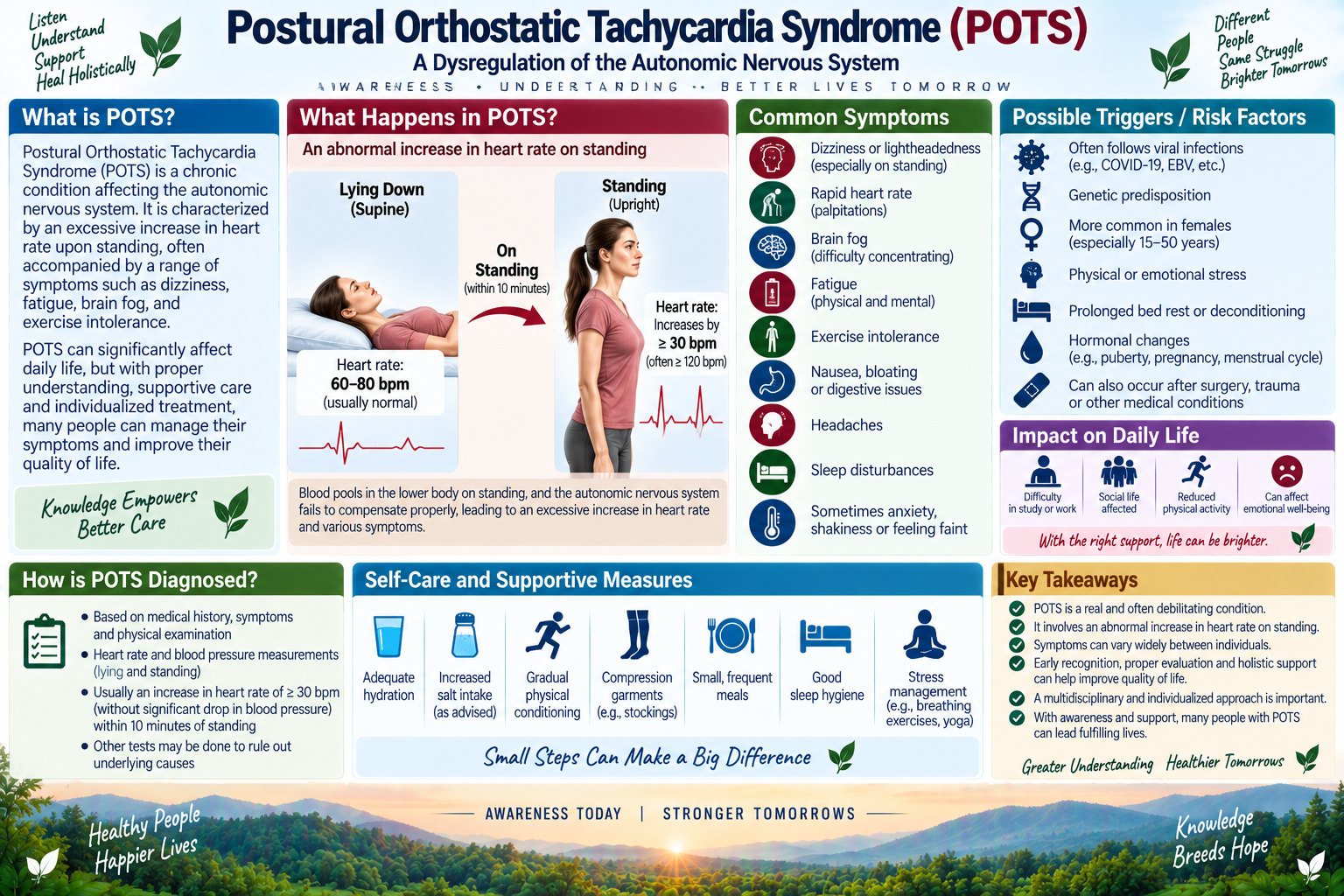
Suffering from a sudden, sharp spike in heart rate (by 30 bpm or more) within 10 minutes of standing up, experiencing severe dizziness, lightheadedness, or near-fainting when upright, struggling with brain fog, extreme fatigue, and exercise intolerance, and feeling better only when lying down are the hallmark experiences of individuals struggling with Postural Orthostatic Tachycardia Syndrome (POTS / पोट्स). POTS is a condition of the autonomic nervous system that affects blood flow regulation. Conventional medicine often relies on increased salt intake, compression stockings, or medications like beta-blockers, which frequently leave patients searching for safer alternatives. Homeopathy offers a gentle, safe, natural, and deeply effective constitutional approach to re-tune autonomic vasomotor responses, stabilize orthostatic heart rates, reduce chronic fatigue, and restore comfort without side effects.
सीधे खड़े होने पर **अचानक दिल की धड़कन का बहुत तेजी से बढ़ जाना (30 बीट प्रति मिनट या उससे ज्यादा)**, उठते ही चक्कर आना, आंखों के आगे अंधेरा छाना या बेहोशी जैसा महसूस होना, दिमागी सुस्ती (Brain fog), अत्यधिक थकान और केवल लेटने पर राहत मिलना—इसे सामान्य बोलचाल में पोट्स या पोस्टुरल ऑर्थोस्टेटिक टैकीकार्डिया सिंड्रोम (POTS) कहा जाता है। यह ऑटोनॉमिक नर्वस सिस्टम (Autonomic nervous system) की गड़बड़ी के कारण होता है जो शरीर में खून के बहाव को सही से नियंत्रित नहीं कर पाता। सही खान-पान (अधिक नमक, इलेक्ट्रोलाइट्स, बोन ब्रोथ) और सही होम्योपैथिक दवाओं (**Gelsemium Sempervirens, Carbo Vegetabilis, China Officinalis, Veratrum Album, Aconitum Napellus, Crataegus Oxyacantha, Ars Alb, Natrum Muriaticum, Kali Phosphoricum, Gels**) के सेवन से ऑटोनॉमिक नसों का संतुलन सुधरता है, खड़े होने पर दिल की धड़कन सामान्य रहती है, और ऊर्जा वापस आती है।
Primary Types of Postural Orthostatic Tachycardia Syndrome (पोट्स के मुख्य प्रकार)
- Neuropathic POTS: Caused by small-fiber peripheral neuropathy that prevents proper blood vessel constriction in the lower limbs when standing (Key Remedy: Gelsemium Sempervirens).
- Hyperadrenergic POTS: Characterized by high levels of circulating norepinephrine when upright, leading to severe tremors, anxiety, and sharp heart rate spikes (Key Remedy: Aconitum Napellus).
- Hypovolemic POTS: Associated with low blood volume, making it difficult for the cardiovascular system to maintain adequate blood pressure upon standing (Key Remedy: China Officinalis).
Common Causes & Risk Factors (मुख्य कारण)
Key Signs and Symptoms (प्रमुख लक्षण)
- Orthostatic Tachycardia: Heart rate increasing by 30+ bpm within 10 minutes of standing up from a lying position.
- Presyncope & Dizziness: Lightheadedness, wooziness, or near-fainting spells triggered by standing upright.
- Brain Fog & Cognitive Fatigue: Difficulty concentrating, word-finding trouble, and mental cloudiness.
- Exercise Intolerance: Inability to perform standard workouts or physical exertion without severe exhaustion and tachycardia.
- Acrocyanosis & Cold Extremities: Purplish or bluish discoloration of the feet and hands when standing due to blood pooling.
मुख्य लक्षण: उठकर खड़े होते ही दिल की धड़कन का अचानक बहुत तेज होना, सिर घूमना और चक्कर आना, दिमाग का सुस्त पड़ना (Brain fog), जरा सी मेहनत या एक्सरसाइज करने पर अत्यधिक थकान, और खड़े होने पर पैरों का नीला पड़ना।
Homeopathic Approach to POTS Care
Homeopathy manages Postural Orthostatic Tachycardia Syndrome through Autonomic Nervous System Stabilization, Vasomotor Tone Regulation, Orthostatic Balance, and Neuro-Trophic Restoration. Conventional medicine often relies on high salt diets, compression wear, or medications, which frequently leave patients searching for safer alternatives. Homeopathic constitutional and autonomic-regulating remedies (such as Gelsemium Sempervirens, Carbo Vegetabilis, China Officinalis, Veratrum Album, Aconitum Napellus, Crataegus Oxyacantha, Arsenicum Album, Natrum Muriaticum, and Kali Phosphoricum) work gently and rapidly to re-tune autonomic vasomotor responses, stabilize orthostatic heart rates, reduce chronic fatigue, and restore normal function safely without side effects.
मुख्य होम्योपैथिक दवाएं और उनके लक्षण (Homeopathic Medicines & Symptoms Basis – 10 Medicines)
होम्योपैथी में मरीज के दर्द के प्रकार (नसों का शूटिंग दर्द, छालें, या भयंकर जलन) के आधार पर सही दवा चुनी जाती है:
लक्षण और पहचान: ऑटोनॉमिक कमजोरी और खड़े होने पर चक्कर आने की विश्व प्रसिद्ध नंबर 1 दवा (Gelsemium 30C/200C)। **उठकर खड़े होते ही आंखों के आगे अंधेरा छाना, चक्कर आना और सिर भारी होना**; अंगों में ऐसा अहसास होना मानो शरीर सीसे की तरह भारी हो गया हो; अत्यधिक सुस्ती और कमजोरी।
लक्षण और पहचान: पैरों में खून का ठहराव (Venous pooling) और सर्कुलेटरी कमजोरी की खास दवा (Carbo Veg 200C/1M)। **खड़े होने पर पैरों में भारीपन, हाथ-पैर ठंडे पड़ना और चक्कर आना**; शरीर में ऊर्जा की भारी कमी और मरीज का लगातार तेज हवा (Fanning) मांगना।
लक्षण और पहचान: शरीर में तरल पदार्थ की कमी (Hypovolemia) और पोस्ट-वायरल कमजोरी के लिए (China Q/30C)। **खड़े होने पर चक्कर आना, कानों में घंटियां बजना (Tinnitus) और अत्यधिक कमजोरी**; शरीर में पानी और मिनरल्स की कमी से होने वाले पोट्स लक्षणों में अचूक।
लक्षण और पहचान: खड़े होने पर बेहोशी (Syncope) जैसी स्थिति आने पर (Veratrum 200C)। **माथे पर ठंडे पसीने की बूंदें आना, त्वचा का बर्फ जैसा ठंडा पड़ना और चक्कर आकर गिर जाना**; अत्यधिक कमजोरी।
लक्षण और पहचान: हाइपरएड्रिनर्जिक पोट्स (Hyperadrenergic POTS) जिसमें एड्रिनलीन स्पाइक से धड़कन तेज हो (Aconite 200C)। **खड़े होते ही दिल की धड़कन का बहुत तेजी से उछलना और मन में तीव्र घबराहट व भय रहना**; सीने में बेचैनी।
लक्षण और पहचान: हृदय की कार्यक्षमता को सहारा देने वाली हर्बल दवा (Crataegus Q)। **खड़े होने पर होने वाली तेज धड़कन (Tachycardia) और अनियमित नाड़ी को नियंत्रित करने में अत्यंत प्रभावी**; सीने में भारीपन दूर करती है।
लक्षण और पहचान: वायरल बुखार या संक्रमण के बाद बचे रहने वाली थकान और पोट्स के लिए (Arsenicum 200C)। **थोड़ा सा खड़े होने पर अत्यधिक कमजोरी और बेचैनी होना**; रात को तकलीफ बढ़ना और मानसिक चिंता।
लक्षण और पहचान: पोट्स के मरीजों में नमक की तीव्र इच्छा (Salt craving) और चक्कर आने पर (Natrum Mur 200C)। **खड़े होने पर सीने में धड़कन का फड़फड़ाना (Fluttering palpitations) और सिरदर्द होना**; पुरानी थकान।
लक्षण और पहचान: नसों की ऊर्जा समाप्त होने और ब्रेन फैग के लिए (Kali Phos 6X)। **खड़े होने पर चक्कर आने, दिमाग सुस्त रहने और अत्यधिक मानसिक व शारीरिक थकान महसूस होने पर** अद्भुत कार्य करती है।
लक्षण और पहचान: नर्वस सिस्टम के सुस्त होने और ब्लड सर्कुलेशन के असंतुलन के लिए (Gelsemium 30C/200C)। **उठने पर आंखों के आगे अंधेरा छाना और पैरों में कंपन होना**; आराम करने से राहत।
Frequently Asked Questions (15 Essential FAQs – Featuring 10 Medicines) – पोट्स (POTS) से जुड़े सवाल और जवाब
1. What is Postural Orthostatic Tachycardia Syndrome (POTS) and why does heart rate spike upon standing?
POTS is an autonomic nervous system disorder where blood vessels fail to constrict properly when standing, causing blood to pool in the lower body. To compensate, the heart beats much faster to maintain blood flow to the brain.
पोट्स ऑटोनॉमिक नर्वस सिस्टम की समस्या है जिसमें खड़े होने पर पैरों की नसें सिकुड़ती नहीं हैं और खून नीचे जमा हो जाता है। दिमाग तक खून पहुंचाने के लिए दिल को बहुत तेजी से धड़कना पड़ता है।
2. Can Homeopathy cure POTS and stabilize heart rates upon standing?
Homeopathy provides profound supportive care by re-tuning autonomic vasomotor responses, stabilizing standing heart rates, reducing brain fog and fatigue, and managing orthostatic intolerance without side effects using remedies like Gelsemium and Carbo Vegetabilis.
3. Why do POTS patients experience brain fog and extreme fatigue?
When upright blood pooling reduces the optimal flow of oxygenated blood and nutrients to the brain, patients experience cognitive cloudiness (brain fog) and exhaustion.
4. How does Gelsemium help with orthostatic dizziness and heavy fatigue?
Gelsemium is the premier homeopathic remedy for autonomic motor weakness, heavy limb fatigue, and severe lightheadedness upon standing up.
5. What is the role of Carbo Vegetabilis in venous pooling and circulation?
Carbo Vegetabilis targets sluggish venous return and blood pooling in the lower extremities, providing great relief when patients feel faint and demand fresh air.
6. Can viral infections or post-viral illnesses trigger POTS?
Yes. Many POTS cases develop following viral illnesses (such as mononucleosis, flu, or COVID-19) that trigger prolonged autonomic nervous system dysfunction and post-viral fatigue.
7. How does China Officinalis assist in hypovolemic POTS and dehydration?
China Officinalis restores vitality and vascular volume when debility stems from fluid loss, dehydration, or post-viral weakness accompanied by ringing in the ears.
8. Why do POTS patients often crave salt and extra water?
Many patients have low blood volume (hypovolemia). Increasing dietary salt and water intake helps expand blood plasma volume, making it easier for the cardiovascular system to maintain blood pressure.
9. What is the difference between POTS and standard orthostatic hypotension?
In orthostatic hypotension, blood pressure drops significantly upon standing, whereas in POTS, blood pressure usually remains stable or rises while the heart rate spikes drastically (30+ bpm increase).
10. Can exercise help or hurt POTS patients?
Traditional upright exercise can be extremely difficult initially due to tachycardia, but specialized recumbent (laying down) conditioning programs gradually help recondition the cardiovascular system safely.
11. What lifestyle changes help manage POTS?
Increasing salt and water intake as advised, wearing medical compression stockings, eating small frequent meals, avoiding heat and hot showers, and pacing activities provide excellent support.
12. Why do hot showers or baths trigger POTS symptoms?
Heat causes blood vessels to dilate (expand), which worsens blood pooling in the legs and causes blood pressure and heart rate to spike, leading to dizziness in the shower.
13. How long does homeopathic treatment take for autonomic recovery?
Initial relief in dizziness and standing heart rate stability is often noticed within 3 to 6 weeks, while deep autonomic nervous system re-tuning requires consistent, structured care.
14. Are homeopathic remedies safe alongside conventional salt and hydration protocols?
Yes, homeopathic remedies are 100% non-toxic and can be taken safely alongside increased salt intake, hydration, or conventional medications without chemical drug interactions.
15. How can I consult your expert clinical team?
Connect directly with our expert homeopathic team via WhatsApp to discuss your symptoms, history, and receive personalized care in complete privacy.
Lifestyle, Diet & Home Guidelines for Autonomic Care
- Increase Salt & Water Intake (As Advised): Boost fluid intake to 3-4 liters daily and increase dietary salt intake under physician guidance to expand blood volume.
- Wear Medical-Grade Compression Stockings: Put on thigh-high or waist-high compression stockings before getting out of bed to prevent blood from pooling in the legs.
- Eat Small, Frequent Meals: Avoid large heavy meals that shunt blood to the stomach; eat smaller, balanced portions throughout the day.
- Avoid Hot Showers & Extreme Heat: Take lukewarm showers instead of hot baths, and avoid standing in hot environments that trigger blood vessel dilation and dizziness.
Understanding Diagnostic Milestones: A Balanced Medical Approach
Comprehensive medical evaluation ensures accurate identification and tailored management:
| Assessment Type | Why It Is Crucial for Clinical Success | Clinical Focus Area |
|---|---|---|
| Head-Up Tilt Table Test (HUTT) | Gold standard diagnostic test; monitors heart rate and blood pressure continuously while strapped to a tilting table. | Diagnoses POTS and orthostatic intolerance. |
| Active Stand Test (In-Office 10-Minute Vital Check) | Measures heart rate and blood pressure lying down and at 2, 5, and 10 minutes of standing upright. | Screens for orthostatic tachycardia. |
| Comprehensive Cardiological & Thyroid Screening | Rules out secondary causes of tachycardia such as hyperthyroidism or cardiac arrhythmias. | Excludes other heart and thyroid conditions. |
POTS management succeeds best when proper cardiological and autonomic diagnosis is combined with constitutional and autonomic homeopathy (Gelsemium / Carbo Veg / China / Aconite), high-salt hydration, and lifestyle pacing. Heart rate stability can be achieved and comfortable upright mobility restored steadily.
Why Choose Rudra Homoeopathy?
- 100% natural, non-toxic supportive protocols tailored around your unique POTS symptoms and medical reports.
- Proven clinical experience in safely managing postural orthostatic tachycardia syndrome, autonomic dysfunction, and chronic fatigue.
- Focuses on deep constitutional autonomic nervous system re-tuning and vascular tone regulation without side effects.
- Compassionate clinical care ensuring complete patient privacy and continuous expert guidance.
Conclusion
Homeopathy offers a safe, gentle, deeply effective, and permanent non-toxic path for individuals struggling with Postural Orthostatic Tachycardia Syndrome (POTS), Orthostatic Intolerance, Autonomic Dysfunction, and Heart Rate Spikes upon Standing. Remedies like Gelsemium Sempervirens, Carbo Vegetabilis, China Officinalis, Veratrum Album, and Aconitum Napellus work in harmony with the body to stabilize autonomic responses, regulate standing heart rates, and bring comfortable energy and vibrant health back into your life.
Relieve Orthostatic Dizziness & Support Your Autonomic Health Naturally
Manage Postural Orthostatic Tachycardia Syndrome (POTS), autonomic dysfunction, and chronic fatigue naturally and confidentially with expert clinical care.
💬 Confidential WhatsApp ConsultationAdvanced Clinical Comparison Tool
Compare symptoms, cross-reference Materia Medica notes, and analyze repertorial rubrics side-by-side for precise case evaluation.
Access Clinical Tool →