
Protocols, potency sequencing, and dosing guidelines outlined in this advanced clinical repository are derived directly from Dr. Samuel Hahnemann's Organon of Medicine (Liquid Potency & Split Dose Method), combined with classic clinical keynotes from Dr. James Compton Burnett and Dr. William Boericke, verified through extensive practical clinical execution and advanced repertorial synthesis.
Finding an effective Homeopathic Medicine for Costochondritis (Chest Wall Chondritis, Intercostal Neuralgia & Rib Cartilage Inflammation) is essential for individuals struggling with sharp stabbing anterior chest pain, tenderness upon palpation of the costochondral junctions, pain aggravated by deep breathing or trunk twisting, and anxiety mimicking cardiac events. Recognizing the underlying pathological causes (repetitive upper body strain, viral respiratory infections, minor chest trauma, and localized cartilage micro-trauma), clinical types, and progressive stages is vital for integrating timely musculoskeletal care. Homeopathic constitutional, anti-inflammatory, and neuro-muscular remedies offer a gentle, safe, non-toxic, and natural pathway to reduce rib cartilage inflammation, relieve sharp neuralgic shooting chest pains, relax intercostal muscle spasms, and restore structural and thoracic comfort safely without surgical risks.
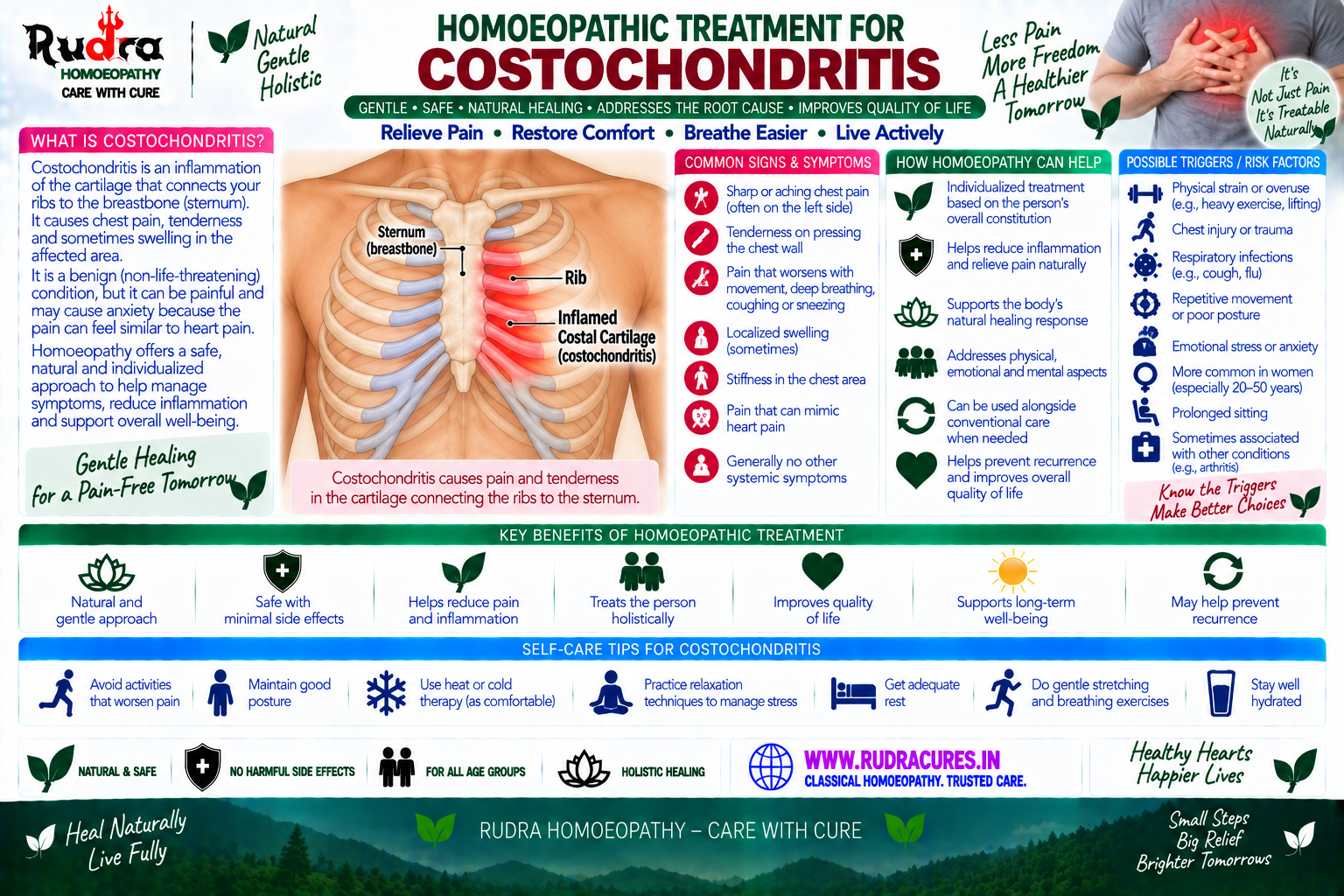
Costochondritis Care (कॉस्टोकॉन्ड्रीटिस, पसलियों और छाती के कार्टिलाज की सूजन व दर्द का प्राकृतिक इलाज) – Overview & Key Remedies
Suffering from sharp, stabbing, or aching pain in the front of the chest that worsens when taking a deep breath, coughing, sneezing, or twisting the upper body, feeling tender soreness when pressing on the breastbone or ribs, worrying constantly that the chest pain might be a heart issue, and feeling restricted in your daily movements due to persistent rib cage discomfort are the hallmark experiences of individuals struggling with Costochondritis (Chest Wall Chondritis / कॉस्टोकॉन्ड्रीटिस). Costochondritis is inflammation of the cartilage that connects your ribs to your breastbone (sternum). Conventional medicine frequently relies on non-steroidal anti-inflammatory drugs (NSAIDs) or painkillers which offer temporary relief but can cause gastric ulcers and do not correct underlying tissue weakness. Homeopathy offers a gentle, safe, natural, and deeply effective constitutional approach to reduce rib cartilage inflammation, relieve sharp intercostal nerve pain, relax chest wall muscles, and restore comfort and mobility without chemical side effects.
छाती के सामने की तरफ पसलियों और ब्रेस्टबोन (Sternum) को जोड़ने वाले कार्टिलाज (Cartilage) में सूजन और तेज चुभन वाला दर्द होना, गहरी सांस लेने, खांसने, छींकने या करवट बदलने पर सीने का दर्द बहुत बढ़ जाना, छाती को दबाने पर छूने से दर्द होना (Tenderness), और दर्द को देखकर हमेशा दिल की बीमारी का डर बने रहना—इसे सामान्य बोलचाल में कॉस्टोकॉन्ड्रीटिस या छाती की पसलियों की सूजन (Costochondritis) कहा जाता है। यह मस्कुलोस्केलेटल समस्या भारी वजन उठाने, छाती पर खिंचाव आने, या वायरल इन्फेक्शन के कारण हो सकती है। सही खान-पान और सही होम्योपैथिक दवाओं (**Ranunculus Bulbosus, Bryonia Alba, Arnica Montana, Calcarea Fluorica, Mag Phos, Rhus Toxicodendron**) के सेवन से पसलियों का दर्द और सूजन प्राकृतिक रूप से ठीक होती है, नसों की ऐंठन दूर होती है, और छाती पूरी तरह स्वस्थ हो जाती है।
Primary Types of Costochondritis (कॉस्टोकॉन्ड्रीटिस के मुख्य प्रकार)
- Localized Costochondritis: Pain and tenderness at the costochondral junctions (most commonly ribs 2 through 5) without visible swelling (Key Remedy: Ranunculus Bulbosus).
- Tietze’s Syndrome: Costochondritis accompanied by a distinct, visible, tender, spindle-shaped swelling of the costal cartilage (Key Remedy: Calcarea Fluorica or Hecla Lava).
- Intercostal Neuralgia: Sharp, nerve-root shooting pain wrapping around the chest wall between the ribs (Key Remedy: Magnesium Phosphoricum).
Common Causes & Risk Factors (मुख्य कारण)
Key Signs and Symptoms (प्रमुख लक्षण)
- Anterior Chest Wall Pain: Sharp, stabbing, or aching pain located on either side of the breastbone (sternum).
- Deep Breath Aggravation: Chest pain that intensifies significantly when taking a deep inhalation, coughing, or sneezing.
- Palpation Tenderness: Exquisite soreness and tenderness when pressing directly on the costochondral junctions over the ribs.
- Movement Restriction: Stiffness and discomfort when twisting the torso, reaching upward, or engaging in upper body movements.
- Anxiety Mimicking Cardiac Distress: Persistent worry that the sharp anterior chest pain indicates a heart attack or cardiac event.
मुख्य लक्षण: छाती के सामने पसलियों के जोड़ों पर तेज चुभन वाला दर्द, गहरी सांस लेने या खांसने पर दर्द का बढ़ना, छूने पर पसलियों में बहुत दर्द होना, और दर्द को देखकर दिल की बीमारी का भ्रम होना।
Homeopathic Approach to Costochondritis Care
Homeopathy manages Costochondritis through Rib Cartilage Inflammation Reduction, Intercostal Muscle Relaxation, Neuralgic Pain Relief, and Cartilage-Trophic Support. Conventional painkillers and NSAIDs often cause severe gastric ulcers and acidity when taken for chest wall pain. Homeopathic constitutional and organopathic remedies (such as Ranunculus Bulbosus, Bryonia Alba, Arnica Montana, Calcarea Fluorica, and Magnesium Phosphoricum) work gently and rapidly to reduce cartilage inflammation, relieve sharp nerve pain, relax intercostal spasms, and restore comfortable chest mobility safely without side effects.
मुख्य होम्योपैथिक दवाएं और उनके लक्षण (Homeopathic Medicines & Symptoms Basis)
होम्योपैथी में मरीज के दर्द के प्रकार (चुभन वाला दर्द, मूवमेंट से बढ़ने वाला दर्द, या सूजन) के आधार पर सही दवा चुनी जाती है:
लक्षण और पहचान: पसलियों के बीच (Intercostal Spaces) सुई चुभने और चीरने जैसा तेज दर्द होने पर विश्व प्रसिद्ध नंबर 1 दवा (Ranunculus 30C/200C)। **गहरी सांस लेने, खांसने, या करवट बदलने पर सीने में कांटे चुभने जैसा दर्द होना**; पसलियों की त्वचा छूने पर अत्यधिक संवेदनशील (Tender) होना।
लक्षण और पहचान: छाती और पसलियों में फटने जैसा दर्द जो **जरा सी हलचल, गहरी सांस, या खांसने से बहुत बढ़ जाए** (Bryonia 30C/200C)। मरीज खांसते समय अपने दोनों हाथों से छाती को कसकर पकड़ कर रखता है ताकि पसलियां हिले नहीं; **absolute rest (पूर्ण विश्राम)** और सीने पर दबाव डालने से आराम मिलता है।
लक्षण और पहचान: भारी वजन उठाने, जिम में कसरत करने, या तेज खांसने से पसलियों की मांसपेशियों में खिंचाव और चोट आने पर अचूक दवा (Arnica 200C)। छाती की मांसपेशियों और पसलियों में **नीले पड़ने जैसा और कुचले जाने (Bruised soreness) का अहसास होना**; छूने पर पसलियों में बहुत दर्द होना।
लक्षण और पहचान: जब पसलियों के जोड़ों पर **कड़ी, फाइब्रोटिक (Fibrotic) और गांठ जैसी सूजन (Tietze’s Syndrome)** उभर आए (Calcarea Fluor 6X/30C)। यह पसलियों के कार्टिलाज और कनेक्टेड टिश्यू की कमजोरी को दूर करके कड़ेपन और सूजन को प्राकृतिक रूप से पिघलाती है।
लक्षण और पहचान: पसलियों की नसों में बिजली जैसी तेज ऐंठन (Cramps) और शूटिंग दर्द की महान बायोकेमिक दवा (Mag Phos 6X)। सीने की नसों का दर्द जो **गर्म पानी की थैली से सिकाई करने और कड़क मालिश से तुरंत ठीक हो जाए**।
लक्षण और पहचान: भारी सामान उठाने या गलत तरीके से मुड़ने के कारण सीने की पसलियों में खिंचाव आने पर (Rhus Tox 30C/200C)। **सुबह उठने पर या आराम करने के बाद छाती में भयंकर अकड़न होना**, लेकिन थोड़ा धीरे-धीरे चलने-फिरने से शरीर के खुलने पर दर्द में राहत मिलना; बारिश के मौसम में तकलीफ बढ़ना।
Frequently Asked Questions (15 Essential FAQs) – कॉस्टोकॉन्ड्रीटिस से जुड़े सवाल और जवाब
1. What is Costochondritis and how does it feel?
Costochondritis is inflammation of the cartilage connecting your ribs to your breastbone. It feels like sharp, stabbing, or aching pain in the front of the chest that worsens with deep breathing or physical pressure.
कॉस्टोकॉन्ड्रीटिस पसलियों और छाती की हड्डी को जोड़ने वाले कार्टिलाज की सूजन है। इसमें छाती के सामने तेज चुभन या दर्द होता है जो गहरी सांस लेने पर बढ़ता है।
2. Can Homeopathy cure Costochondritis permanently?
Homeopathy provides profound relief by reducing rib cartilage inflammation, relieving intercostal nerve pain, and strengthening chest wall tissues safely without side effects.
3. How can I differentiate Costochondritis pain from a heart attack?
Costochondritis pain is localized and tender when pressing directly on the rib joints, and worsens with deep breathing or twisting. Heart attack pain is typically crushing pressure radiating to the jaw or left arm, accompanied by sweating or shortness of breath.
4. What is Tietze’s Syndrome?
Tietze’s Syndrome is a rare form of costochondritis that includes visible, tender swelling of the costal cartilage (usually affecting the upper ribs).
5. Why does Ranunculus Bulbosus work so well for chest wall pain?
Ranunculus Bulbosus specifically targets intercostal nerves and rib cartilage, matching sharp, stitching pains aggravated by breathing and touch.
6. Can a bad cold or coughing fit cause Costochondritis?
Yes, violent or prolonged coughing fits during viral respiratory infections frequently strain the intercostal muscles and costal cartilage, triggering costochondritis.
7. How does Bryonia Alba help relieve chest pain?
Bryonia suits conditions where any movement aggravates inflammation; it brings great relief to patients whose chest pain worsens with motion and improves with absolute rest.
8. Is physical exercise safe when you have Costochondritis?
During acute flare-ups, heavy upper body lifting and intense chest exercises should be avoided. Gentle walking and stretching can be resumed gradually as pain subsides.
9. How long does it take for Costochondritis to heal?
With proper rest, anti-inflammatory nutrition, and targeted homeopathic care (like Arnica or Ranunculus), acute pain often improves significantly within 2 to 4 weeks.
10. What home remedies soothe chest wall inflammation?
Applying warm compresses or heating pads to the tender rib area, practicing gentle chest stretches, and taking anti-inflammatory herbal teas provide soothing relief.
11. Can stress and anxiety trigger Costochondritis?
Emotional stress causes shallow breathing and muscle tension across the chest wall, which can aggravate or prolong costochondritis flare-ups.
12. Are homeopathic remedies safe for older adults?
Yes, homeopathic remedies are 100% non-toxic, gentle, and have zero adverse drug interactions, making them exceptionally safe for older adults.
13. When should I rush to the emergency room for chest pain?
If chest pain is sudden, crushing, radiates to your left arm, jaw, or back, and is accompanied by shortness of breath or cold sweats, call emergency services immediately.
14. Do I need an ECG or X-ray to diagnose Costochondritis?
Doctors typically perform an ECG and physical examination to rule out cardiac conditions before confirming costochondritis through localized rib tenderness.
15. How can I consult your expert clinical team?
You can connect directly with our expert homeopathic team via WhatsApp to discuss your symptoms, reports, and receive personalized care in complete privacy.
Lifestyle, Diet & Home Guidelines for Chest Wall Care
- Apply Warm Compresses or Heating Pads: Use warm compresses on the tender costochondral junctions for 15 minutes several times daily to relax intercostal muscles.
- Eat Anti-Inflammatory, Nutrient-Rich Foods: Include turmeric, ginger, berries, and bone broths to reduce systemic cartilage inflammation.
- Avoid Heavy Upper Body Lifting: Refrain from heavy lifting, push-ups, or strenuous upper body workouts during acute flare-ups.
- Practice Gentle Posture & Deep Breathing: Maintain upright posture and practice slow, gentle breathing to prevent chest wall stiffness.
Understanding Diagnostic Milestones: A Balanced Medical Approach
Comprehensive medical evaluation ensures accurate identification and tailored management:
| Assessment Type | Why It Is Crucial for Clinical Success | Clinical Focus Area |
|---|---|---|
| Clinical Physical Palpation | Doctor applies gentle pressure to costochondral junctions to replicate and verify localized chest wall tenderness. | Confirms rib cartilage tenderness. |
| Electrocardiogram (ECG) | Essential baseline test to rule out cardiac ischemia or myocardial infarction when evaluating acute chest pain. | Rules out heart conditions. |
| Chest X-Ray or Blood Panels | Excludes pulmonary conditions (pneumonia, pleurisy) or systemic inflammatory markers. | Excludes lung infections. |
Costochondritis management succeeds best when proper medical diagnosis rules out cardiac issues, and is combined with constitutional homeopathy (Ranunculus / Bryonia / Arnica / Calc Fluor), warm compresses, and anti-inflammatory nutrition. Chest wall pain can be eased and comfortable mobility restored steadily.
Why Choose Rudra Homoeopathy?
- 100% natural, non-toxic supportive protocols tailored around your unique costochondritis symptoms and physical build.
- Proven clinical experience in safely managing rib cartilage inflammation, intercostal neuralgia, and chest wall pain.
- Focuses on deep constitutional repair and microvascular/cartilage reinforcement without surgical side effects.
- Compassionate clinical care ensuring complete patient privacy and continuous expert guidance.
Conclusion
Homeopathy offers a safe, gentle, deeply effective, and permanent non-toxic path for individuals struggling with Costochondritis, Chest Wall Chondritis, Intercostal Neuralgia, and Rib Cartilage Inflammation. Remedies like Ranunculus Bulbosus, Bryonia Alba, Arnica Montana, Calcarea Fluorica, and Magnesium Phosphoricum work in harmony with the body to relieve pain, reduce swelling, and restore comfortable mobility and vibrant health.
Relieve Chest Wall Pain & Support Your Rib Health Naturally
Manage Costochondritis, rib cartilage inflammation, and chest pain naturally and confidentially with expert clinical care.
💬 Confidential WhatsApp ConsultationAdvanced Clinical Comparison Tool
Compare symptoms, cross-reference Materia Medica notes, and analyze repertorial rubrics side-by-side for precise case evaluation.
Access Clinical Tool →