
Protocols, potency sequencing, and dosing guidelines outlined in this advanced clinical repository are derived directly from Dr. Samuel Hahnemann's Organon of Medicine (Liquid Potency & Split Dose Method), combined with classic clinical keynotes from Dr. James Compton Burnett and Dr. William Boericke, verified through extensive practical clinical execution and advanced repertorial synthesis.
Finding an effective Homeopathic Medicine for Appendicitis is essential for individuals struggling with acute or chronic inflammatory pain in the right lower abdomen (McBurney’s point), nausea, vomiting, low-grade fever, abdominal guarding, and digestive distress. Recognizing the underlying causes, types, stages, and symptoms of appendicitis—whether presented as Early Catarrhal Inflammation, Fecolith Obstruction, Suppurative Appendicitis, or Chronic Recurrent Appendicular Colic—is crucial for managing localized inflammation and preventing perforation. Homeopathic constitutional care offers a gentle, safe, non-toxic, and natural pathway to soothe mucosal lymphoid congestion, relieve localized inflammatory swelling, calm severe abdominal cramping, and support complete digestive recovery safely.
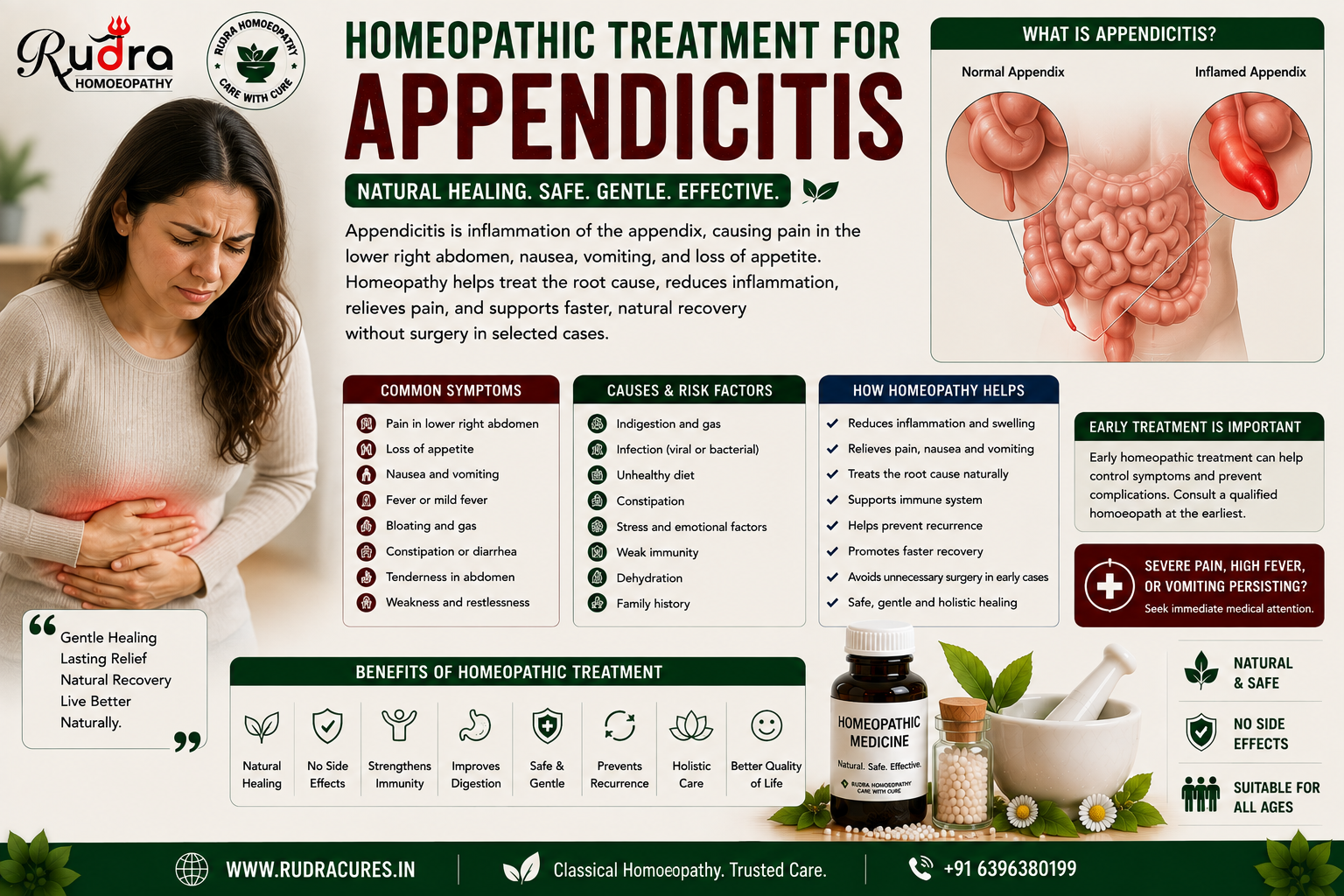
Appendicitis / Appendix Care (अपेंडिसाइटिस / पेट के निचले-दाएं हिस्से में दर्द व सूजन) – Overview & Key Remedies
Sharp or dull aching pain that starts around the belly button (navel) and moves to the lower right side of the abdomen (McBurney’s point), sudden nausea and vomiting, complete loss of appetite, mild fever with chills, severe pain when coughing or walking, abdominal tenderness when pressing on the right lower side, and constipation or diarrhea are the hallmark symptoms experienced by patients with appendicitis. Appendicitis (Inflammation of the Appendix / अपेंडिसाइटिस व अपेंडिक्स की सूजन) is a painful digestive condition where the appendix—a small, finger-shaped pouch attached to the large intestine in the lower right abdomen—becomes blocked, inflamed, and swollen. Usually caused by hard stool particles (fecoliths), swollen lymph tissues following a viral infection, or digestive congestion, bacteria rapidly multiply inside the blocked pouch, causing localized swelling and pain. As a person faces digestive congestion, intestinal infection, or chronic constipation, their PNEI (Psycho-Neuro-Endocrine-Immunology) Matrix—the master communication network connecting brain pain centers, intestinal immune lymph nodes, gut smooth muscles, and digestive blood vessels—becomes intensely inflamed. Homeopathy offers a gentle, safe, natural, non-toxic, and constitutional approach to soothe acute appendiceal inflammation, relieve right-side abdominal pain and cramping, prevent pus formation, and support complete digestive health safely.
पेट में नाभि के आसपास हल्का दर्द शुरू होकर पेट के निचले-दाहिने हिस्से (Right Lower Abdomen / McBurney’s Point) में जाकर तेज हो जाना, जी मिचलाना व उल्टी होना, बिल्कुल भूख न लगना, हल्का बुखार रहना, खांसने, चलने या करवट बदलने पर दाहिनी तरफ तेज सुई चुभने जैसा दर्द होना, और पेट के दाएं हिस्से को छूने या दबाकर छोड़ने पर तेज दर्द (Rebound Tenderness) होना—इसे सामान्य भाषा में अपेंडिसाइटिस या अपेंडिक्स का दर्द व सूजन (Appendicitis) कहा जाता है। अपेंडिक्स बड़ी आंत के निचले-दाएं हिस्से में एक छोटी नली जैसी थैली होती है। जब मल का सख्त टुकड़ा या इन्फेक्शन इसमें फंस जाता है, तो इसमें सूजन आ जाती है और मवाद भरने लगती है। शुरुआती या पुराने (Chronic) अपेंडिक्स के दर्द में सही होम्योपैथिक दवाएं सूजन को पूरी तरह खत्म कर देती हैं और ऑपरेशन (Surgery) की नौबत नहीं आने देतीं। सही समय पर सोनोग्राफी (Ultrasound) कराने और सही होम्योपैथिक इलाज से अपेंडिक्स की सूजन, दर्द व बुखार बिना किसी साइड इफेक्ट के पूरी तरह ठीक हो जाता है।
Primary Types & Stages of Appendicitis (अपेंडिसाइटिस के मुख्य प्रकार व चरण)
Understanding the specific clinical category of Appendicitis helps doctors select the right curative strategy:
- Acute Early Catarrhal Stage: Early inflammation starting with dull aching pain around the navel, loss of appetite, nausea, and mild fever.
- Acute Localized Stage: Pain shifts strictly to the right lower abdomen (McBurney’s point); walking, coughing, or pressing causes sharp pain.
- Chronic Recurrent Appendicitis: Recurring episodes of dull dragging pain in the right lower abdomen following constipation or rich spicy meals.
- Suppurative Abscess Stage: Pus forms inside the inflamed appendix, causing throbbing pain, high fever, chills, and localized abdominal hardness.
Common Causes & Risk Factors of Appendicitis (मुख्य कारण)
Key Signs and Symptoms of Appendicitis (प्रमुख लक्षण)
- Pain Moving to Lower Right Abdomen (नाभि से दाएं हिस्से में दर्द का जाना): Pain starting around the navel and settling sharply in the lower right side.
- McBurney’s Point Tenderness (दाएं पेट को छूने पर तेज दर्द): Sharp tenderness when pressing the spot two-thirds of the way from the navel to the right hip bone.
- Rebound Tenderness (दबाकर हाथ छोड़ते ही तेज दर्द होना): Severe pain triggered immediately when the doctor releases hand pressure from the abdomen.
- Nausea, Vomiting & Loss of Appetite (उल्टी, मिचली व भूख न लगना): Inability to eat food, accompanied by persistent retching or vomiting.
- Pain Worse Coughing or Walking (खांसने या चलने पर दर्द बढ़ना): Any jarring motion, sneezing, or walking straight causes sharp stabbing pain.
- Low-Grade Fever with Chills (हल्का बुखार व कंपकंपी): Temperature rising between 99°F to 101°F with general body weakness.
मुख्य लक्षण: नाभि से दाएं हिस्से में दर्द का जाना, पेट के दाएं हिस्से में छूने पर तेज दर्द, उल्टी-मिचली, भूख न लगना, खांसने पर दर्द, और हल्का बुखार।
Homeopathic Approach to Appendix Healing & Surgery Prevention
Homeopathy manages Appendicitis through Lymphoid Inflammation Reduction, Fecolith Decongestion, and Localized Pain Resolution. Conventional medicine primarily relies on immediate emergency surgical removal of the appendix (Appendectomy) and strong IV antibiotics. While emergency surgery is necessary if the appendix ruptures, mild early acute cases and chronic recurrent appendicitis can be safely and completely cured with homeopathic treatment without surgery. Homeopathic constitutional remedies (such as Belladonna, Bryonia Alba, Echinacea Angustifolia, Iris Tenax, Dioscorea Villosa, Colocynthis, Hepar Sulphuris, and Lycopodium) work naturally to soothe acute inflammation, dissolve trapped fecal congestion, reduce right-side pain and fever, prevent pus formation, and restore healthy digestive bowel movement safely without surgical scars or side effects.
मुख्य होम्योपैथिक दवाएं और उनके लक्षण (Homeopathic Medicines & Symptoms Basis)
होम्योपैथी में मरीज के लक्षणों (अचानक तेज दर्द, चलने पर दर्द, या झुकने से आराम), बुखार की स्थिति, और अल्ट्रासाउंड रिपोर्ट के आधार पर सही दवा चुनी जाती है:
लक्षण और पहचान: अपेंडिक्स के अचानक तेज दर्द, पेट के दाएं हिस्से में हथौड़े जैसी धड़कन, और तेज बुखार की नंबर 1 मास्टर दवा। पेट को छूने या बिस्तर के हल्के हिलने से भी असहनीय दर्द होना; चेहरा लाल व गर्म होना; आंखें लाल व पुतलियां फैली होना; अचानक दर्द शुरू होना।
लक्षण और पहचान: पेट के निचले-दाएं हिस्से (McBurney’s Point) में सुई चुभने जैसा तेज दर्द होना। थोड़ा सा भी हिलने-डुलने, खांसने या सांस लेने पर दर्द का भड़कना; दाहिनी करवट बिल्कुल स्थिर लेटने और कसकर दबाने से आराम मिलना; मुंह सूखना व बहुत तेज प्यास लगना।
लक्षण और पहचान: अपेंडिक्स के इन्फेक्शन को खत्म करने और मवाद (Pus) बनने से रोकने वाला नंबर 1 प्राकृतिक एंटीसेप्टिक मदर टिंचर (Echinacea Q)। यह खून की सफाई करके सेप्टिक होने से रोकता है और ऑपरेशन से बचाता है।
लक्षण और पहचान: अपेंडिक्स का मरोड़ वाला दर्द जो पीछे की तरफ तनकर खिंचने से शांत होता है (Dioscorea Q)। कोलोसिंथ (Colocynthis) में दर्द आगे की तरफ झुककर दोहरे होने और गर्म पानी की सिकाई से शांत होता है।
लक्षण और पहचान: अपेंडिक्स और आंतों के जोड़ के दर्द व खट्टी उल्टी की विशेष दवा (Iris Tenax)। हिपर सल्फ (Hepar Sulph) अपेंडिक्स में मवाद बनने और छूने पर असहनीय दर्द होने पर काम करती है।
लक्षण और पहचान: पुराने अपेंडिक्स के दर्द (Chronic Appendicitis), पेट के दाएं हिस्से में गैस गड़गड़ाने, और कब्ज की दवा। शाम 4 से 8 बजे पेट फूलना और गर्म चीजें पीने की इच्छा।
लक्षण और पहचान: अपेंडिक्स के इन्फेक्शन से तेज बुखार व कंपकंपी होने पर सेप्सिस रोकने वाली दवा (Pyrogenium 200)। अल्फाल्फा (Alfalfa Q) दर्द ठीक होने के बाद भूख व ताकत लौटाती है।
Frequently Asked Questions (15 Essential FAQs) – अपेंडिक्स के दर्द व सूजन से जुड़े सवाल और जवाब
1. What is Appendicitis?
Appendicitis is an acute or chronic inflammation of the vermiform appendix (a small pouch attached to the large intestine in the right lower abdomen) caused by blockage or infection.
अपेंडिसाइटिस (Appendicitis) पेट के निचले-दाएं हिस्से में स्थित अपेंडिक्स की थैली में होने वाली सूजन और दर्द की बीमारी है।
2. Where is Appendix pain felt in the body?
Appendix pain typically starts as a dull ache around the belly button (navel) and within a few hours shifts sharply to the lower right abdomen (McBurney’s point).
3. Can Homeopathy cure Appendicitis without surgery?
Yes. Early acute catarrhal appendicitis and chronic recurrent appendicitis can be completely cured with constitutional homeopathy without surgery, provided there is no perforation.
4. What is McBurney’s Point in Appendicitis?
McBurney’s point is the specific anatomical location on the lower right abdomen (two-thirds of the distance from the navel to the right hip bone) where appendix tenderness is highest.
5. What is the difference between Acute and Chronic Appendicitis?
Acute appendicitis is a sudden severe medical emergency with sharp pain and fever. Chronic appendicitis involves recurrent milder episodes of right lower belly pain lasting months.
6. Why is Belladonna the top remedy for sudden acute appendix pain?
Belladonna specifically relieves sudden violent throbbing pain in the right lower abdomen with high fever, hot red face, and extreme sensitivity to touch or jarring.
7. How does Echinacea Angustifolia Mother Tincture prevent pus and surgery?
Echinacea acts as a natural blood cleanser and internal antiseptic that halts bacterial infection, clears toxic inflammation, and prevents suppurative abscess formation.
8. What essential medical tests diagnose Appendicitis?
Abdominal Ultrasound (USG Abdomen checking appendix diameter > 6 mm), Contrast CT Scan of Abdomen, Complete Blood Count (CBC checking TLC/Leukocytosis), and Urine Routine.
9. What happens if an inflamed appendix bursts (perforates)?
If an appendix bursts, infected contents spill into the abdominal cavity causing peritonitis (rigid board-like belly), which is a life-threatening emergency requiring immediate surgery.
10. Why should hot heating pads or strong laxatives be avoided during acute appendix pain?
Applying direct heat or taking strong laxatives increases blood flow and bowel pressure, significantly multiplying the risk of the inflamed appendix bursting.
11. What simple home guidelines help during an appendix pain flare?
Resting quietly in bed lying on the right side, avoiding heavy solid food, taking small sips of warm water, avoiding pressing hard on the belly, and consulting a doctor immediately.
12. Are homeopathic remedies safe for children with appendix pain?
Yes. Homeopathic remedies are 100% natural, sweet-tasting, non-toxic, and completely safe for children and adults under professional medical supervision.
13. Can chronic constipation trigger appendix pain?
Yes. Hard dry stool particles (fecoliths) can get trapped inside the narrow appendix opening, blocking the lumen and triggering recurrent inflammation (treated by Lycopodium & Nux Vomica).
14. How long does it take to see appendix pain relief with homeopathy?
Acute pain, fever, and nausea ease within 2 to 6 hours with liquid split dosing, with complete inflammation clearing on ultrasound within 1 to 2 weeks of care.
15. How can I schedule a private clinical consultation?
You can connect directly with our expert clinical medical team via WhatsApp to share Abdominal Ultrasound (USG) and CBC reports in complete 100% privacy.
Lifestyle & Home Guidelines for Appendicitis Care
- Avoid Direct Heat or Hot Water Bags on Abdomen: Never apply hot fermentation over the right lower belly during acute pain to prevent the appendix from bursting.
- Do Not Take Strong Purgatives or Laxatives: Avoid harsh laxatives during acute abdominal pain, as increased bowel contractions can rupture an inflamed appendix.
- Follow a Light Liquid Diet During Pain Flares: Sip coconut water, barley water, thin khichdi water, or clear soups; avoid heavy oily foods and whole milk.
- Rest Quietly in Bed Lying on the Right Side: Lie flat on a firm bed with knees slightly bent, resting on the right side to minimize abdominal muscle strain.
- Eat a High-Fiber Diet to Prevent Constipation: Once acute pain resolves, eat fresh fruits, green vegetables, oats, and drink plenty of water to prevent fecalith blockages.
Understanding Diagnostic Milestones: A Balanced Medical Approach
Proper diagnostic evaluation confirms appendix inflammation and guides recovery:
| Assessment Type | Why It Is Crucial for Clinical Success | Clinical Focus Area |
|---|---|---|
| Abdominal Ultrasound (USG Abdomen) | Visualizes non-compressible, thickened appendix diameter (> 6 mm), periappendicular fluid, and fecoliths. | Confirms appendix diameter & fluid. |
| Complete Blood Count (CBC with TLC) | Detects elevated white blood cell count (Leukocytosis > 10,000/cu mm) and neutrophil shift confirming active infection. | Monitors active infection level. |
| Contrast-Enhanced Abdominal CT Scan | Accurately evaluates questionable cases, rules out periappendicular abscess, and confirms exact appendiceal location. | Evaluates complex appendicitis. |
Appendicitis responds best when constitutional homeopathic care is combined with avoiding direct heat, a light liquid diet, bed rest, high-fiber nutrition for constipation, and monitoring Abdominal Ultrasound and CBC reports. Your right-side abdominal comfort, digestion, and freedom from surgery can be restored steadily.
Why Choose Rudra Homoeopathy?
- 100% natural, non-surgical constitutional protocols tailored around your unique physical build, Ultrasound reports, and abdominal symptoms.
- Proven clinical experience in safely managing early acute appendicitis, McBurney’s point pain, chronic recurrent colic, and preventing surgery.
- Focuses on biochemic ileocecal decongestion and internal antiseptic blood purification without chemical side effects.
- Compassionate clinical care ensuring complete patient privacy, 100% strict confidentiality, and continuous expert support.
Conclusion
Homeopathy offers a safe, gentle, deeply effective, and permanent non-surgical path for individuals struggling with Appendicitis, Right Lower Abdominal Pain, McBurney’s Point Tenderness, and Chronic Appendix Colic. Remedies like Belladonna, Bryonia Alba, Echinacea Angustifolia, Iris Tenax, Dioscorea Villosa, Colocynthis, Hepar Sulphuris, and Lycopodium work in harmony with the body to rebalance digestive health and restore clean, comfortable, and natural gut vitality.
Manage Appendicitis, Right Lower Belly Pain, Nausea, and Digestive Cramps naturally and confidentially with expert clinical care.
💬 Confidential WhatsApp ConsultationAdvanced Clinical Comparison Tool
Compare symptoms, cross-reference Materia Medica notes, and analyze repertorial rubrics side-by-side for precise case evaluation.
Access Clinical Tool →