Protocols, potency sequencing, and dosing guidelines outlined in this advanced clinical repository are derived directly from Dr. Samuel Hahnemann's Organon of Medicine (Liquid Potency & Split Dose Method), combined with classic clinical keynotes from Dr. James Compton Burnett and Dr. William Boericke, verified through extensive practical clinical execution and advanced repertorial synthesis.
Finding an effective Homeopathic Medicine for Asthma is essential for adults and children suffering from chronic shortness of breath, suffocation, wheezing chest sounds, dry or rattling cough, and nighttime asthma attacks. Recognizing the underlying causes, types, stages, and symptoms of asthma—whether linked to environmental allergies (dust, pollen, cold air), bronchial hyper-reactivity, gastroesophageal reflux (GERD), occupational fumes, or hereditary lung weakness—is key to achieving long-term respiratory relief. Homeopathic constitutional treatment offers a gentle, safe, non-steroidal, non-addictive, and natural pathway to reduce bronchial hypersensitivity, clear trapped phlegm, expand airways, and restore natural, effortless breathing safely.
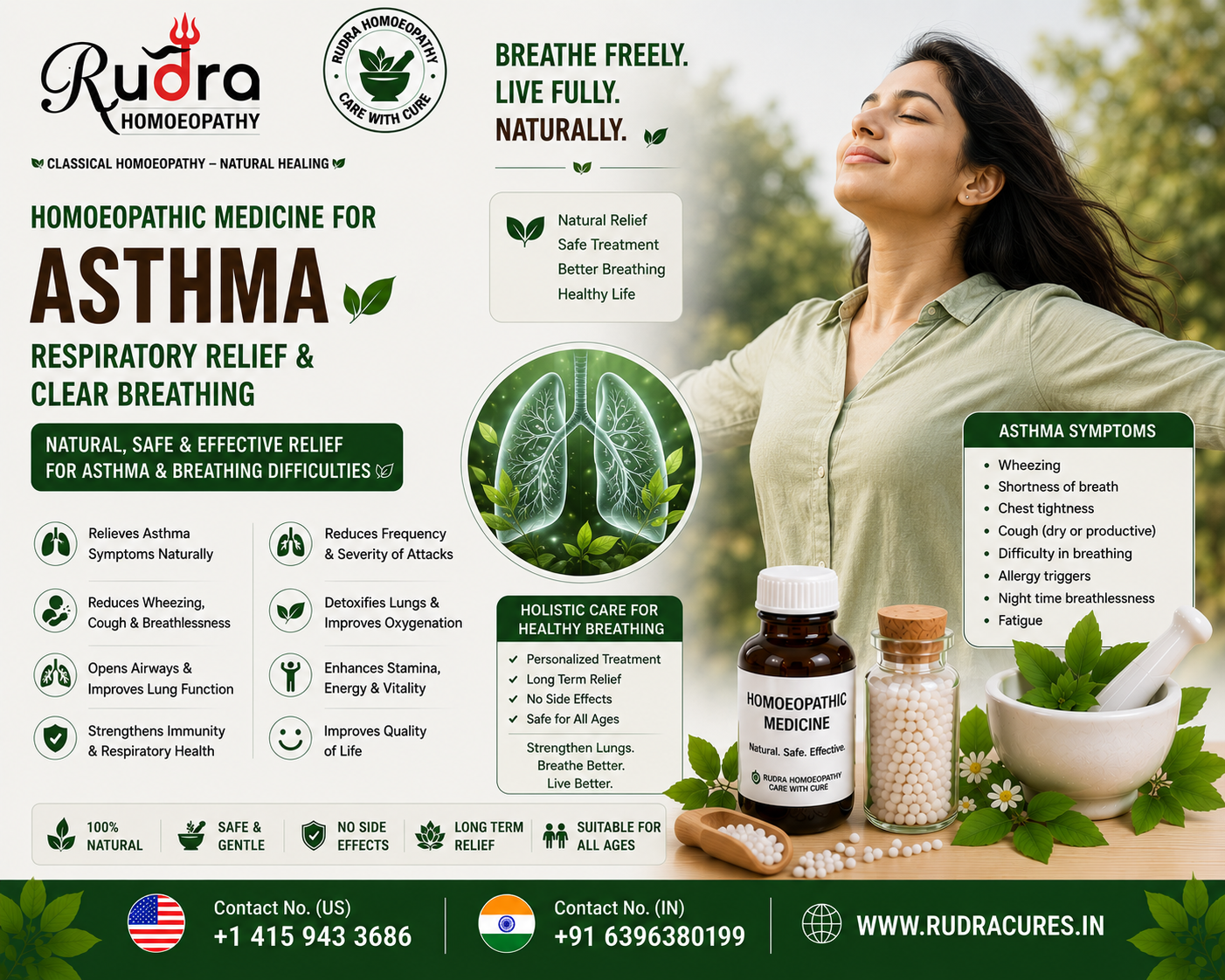
Asthma / Bronchial Care (दमा व श्वास रोग) – Overview & Key Remedies
Shortness of breath, sudden suffocative feeling while sleeping, loud wheezing or whistling sound from the chest while breathing, tight band-like feeling around the chest, dry tickling cough, and coughing up sticky mucus are among the most distressing respiratory signs experienced by asthma patients. Bronchial Asthma (Asthma / Dama / दमा व श्वास रोग) is a chronic respiratory condition where the lung air passages (bronchial tubes) become inflamed, swollen, narrowed, and filled with excess sticky phlegm. As a person faces environmental triggers (pollen, dust, smoke, cold air), viral infections, mental stress, or food allergies, their PNEI (Psycho-Neuro-Endocrine-Immunology) Matrix—the master communication network connecting brain respiratory centers, bronchial smooth muscles, mucosal immune cells (IgE antibodies), and lung tissue—becomes hyper-reactive. Homeopathy offers a gentle, safe, natural, non-steroidal, non-addictive, and constitutional approach to reduce airway sensitivity, clear trapped chest phlegm, expand bronchioles, and restore easy, effortless breathing safely.
अचानक सांस फूलना, रात को सोते समय सांस रुकने या दम घुटने जैसा अहसास होना, सांस लेते समय छाती से सीटी जैसी आवाज आना (Wheezing), छाती में जकड़न महसूस होना, सूखी धसक वाली खांसी आना, और गाढ़ा बलगम निकलना—इसे सामान्य भाषा में दमा या अस्थमा (Bronchial Asthma) कहा जाता है। यह कोई फेफड़ों की स्थायी तबाही नहीं है, बल्कि सांस की नलियों (Bronchial Tubes) की अत्यधिक संवेदनशीलता, सूजन, और हवा के रास्तों के सिकुड़ने का परिणाम है। जब धूल, धुआँ, ठंडी हवा, मौसम का बदलाव, या मानसिक तनाव शरीर में जाता है, तो सांस की नलियां सिकुड़ जाती हैं। बार-बार इनहेलर (Inhaler) या स्टेरॉयड (Steroids) की गोलियां लेने के बजाय, सही होम्योपैथिक इलाज से सांस की नलियों का लचीलापन वापस लौटता है, बलगम साफ होता है, और दमा जड़ से ठीक होने लगता है।
Primary Types & Stages of Asthma (दमा के मुख्य प्रकार व चरण)
Understanding the specific clinical pattern of asthma helps doctors select the right curative strategy:
- Allergic Atopic Asthma: Triggered by dust, pollen, animal fur, or cold air; accompanied by allergic rhinitis, sneezing, and watery eyes.
- Acute Spasmodic Night Asthma: Severe suffocative attacks occurring between 12 AM and 3 AM; patient must sit up leaning forward to catch breath.
- Moist Rattling Catarrhal Asthma: Chest full of thick, sticky, rattling phlegm that is difficult to cough up, causing blueness of lips (cyanosis) and tiredness.
- Chronic Damp Weather Asthma: Asthma that flares up every time the weather turns humid, rainy, or wet (worse in monsoon season).
Common Causes & Risk Factors of Asthma (मुख्य कारण)
Key Signs and Symptoms of Asthma (प्रमुख लक्षण)
- Shortness of Breath / Dyspnea (सांस फूलना व बेचैनी): Difficulty breathing in or out, requiring extra physical effort to pull air into lungs.
- Whistling / Wheezing Sound from Chest (छाती से सीटी जैसी आवाज आना): High-pitched whistling sound during breathing due to narrowed airways.
- Midnight Suffocative Spasms (रात को अचानक दम घुटना): Waking up suddenly at midnight gasping for air, forced to sit up in bed.
- Chest Tightness & Constriction (छाती में कसाव व जकड़न): Sensation as if a heavy weight or tight band is wrapped around the chest.
- Coughing with Sticky Phlegm (धसक वाली खांसी व बलगम): Paroxysmal cough that produces small amounts of tough, sticky, white or yellow phlegm.
- Worse From Physical Exertion or Cold Air (ठंडी हवा व चलने पर बढ़ना): Symptoms aggravating immediately after climbing stairs, running, or cold weather exposure.
मुख्य लक्षण: सांस फूलना, छाती से सीटी जैसी आवाज आना, रात में दम घुटना, छाती में जकड़न, बलगम वाली खांसी, और ठंडी हवा में तकलीफ बढ़ना।
Homeopathic Approach to Bronchial Care & Asthma Relief
Homeopathy manages Bronchial Asthma through Bronchial Hypersensitivity Reduction, Phlegm Clearance, and Immune System Balancing. Conventional treatment relies heavily on bronchodilator inhalers (salbutamol) and oral/inhaled corticosteroids. While inhalers temporarily dilate air passages, they do not reduce underlying mucosal allergy or repair hyper-reactive lung tissue, leading to lifetime inhaler dependency. Homeopathic constitutional remedies (such as Arsenicum Album, Ipecacuanha, Natrum Sulphuricum, Blatta Orientalis, Spongia Tosta, Antimonium Tartaricum, and Kalium Carbonicum) work naturally to reduce bronchial smooth muscle spasms, dissolve trapped sticky chest phlegm, desensitize airways against dust and cold air, rebuild lung immunity, and enable natural, effortless breathing safely without side effects or inhaler dependency.
मुख्य होम्योपैथिक दवाएं और उनके लक्षण (Homeopathic Medicines & Symptoms Basis)
होम्योपैथी में मरीज के लक्षणों, दमा के समय (रात 1-2 बजे या सुबह 4-5 बजे), और मौसम के प्रभाव के आधार पर सही दवा चुनी जाती है:
लक्षण और पहचान: रात के समय (विशेषकर 1 से 2 बजे) अचानक दम घुटने और सांस फूलने की नंबर 1 मास्टर दवा। मरीज सीधा लेट नहीं सकता, बिस्तर में आगे झुककर बैठना पड़ता है। अत्यधिक घबराहट, मौत का डर, और थोड़ा-थोड़ा गर्म पानी पीने की इच्छा होना।
लक्षण और पहचान: छाती में बलगम की भारी जकड़न, धसक वाली खांसी, और लगातार मिचली (Nausea) रहना। ऐसा लगता है कि छाती बलगम से भरी है लेकिन बलगम बाहर नहीं निकल पाता। जीभ साफ रहना।
लक्षण और पहचान: सीलन वाले मौसम, बारिश, या नमी से बढ़ने वाले दमा की नंबर 1 दवा। सुबह 4 से 5 बजे के बीच सांस फूलना, छाती में गड़गड़ाहट, खांसते समय छाती को हाथों से पकड़ना, और हरा-गाढ़ा बलगम आना।
लक्षण और पहचान: धूल (Dust allergy), धुएं, या मौसम के बदलाव से होने वाले दमा की प्रसिद्ध मदर टिंचर दवाएं। यह सांस की नलियों की जकड़न को तुरंत खोलकर सांस लेना आसान बनाती हैं।
लक्षण और पहचान: सूखी, कुत्ते के भौंकने जैसी (Barking) धसक वाली खांसी और सांस न आने की दवा (Spongia)। सम्बूकस (Sambucus) छोटे बच्चों में रात को अचानक नाक बंद होने और दम घुटने की अचूक दवा है।
लक्षण और पहचान: बुजुर्गों या कमजोर मरीजों की छाती में गाढ़े बलगम की भयंकर गड़गड़ाहट (Rattling) होना, लेकिन बलगम बाहर निकालने की ताकत न होना। होठों का नीला पड़ना (Cyanosis) और अत्यधिक सुस्ती।
लक्षण और पहचान: रात 2 से 4 बजे के बीच सांस फूलना, आगे झुककर बैठने से आराम मिलना (Kali Carb)। एस्पिडोस्पर्मा (Aspidosperma Q) फेफड़ों में ऑक्सीजन का स्तर बढ़ाकर सांस फूलने से तुरंत राहत देने वाला ”फेफड़ों का डिजिटलिस” है।
Frequently Asked Questions (15 Essential FAQs) – दमा व श्वास रोग से जुड़े सवाल और जवाब
1. What is Bronchial Asthma?
Bronchial Asthma is a chronic lung condition where airways become inflamed, narrowed, and clogged with sticky phlegm, causing shortness of breath and wheezing.
दमा (Asthma) फेफड़ों की वह बीमारी है जिसमें सांस की नलियों में सूजन, सिकुड़न और गाढ़ा बलगम जमा होने से सांस फूलने लगती है।
2. Can Homeopathy help reduce or stop inhaler dependency in asthma?
Yes. Constitutional homeopathy desensitizes airway allergies, clears trapped phlegm, restores bronchial flexibility, and gradually reduces inhaler reliance safely.
3. Why is Arsenicum Album the top remedy for midnight asthma attacks?
Arsenicum Album specifically relieves midnight suffocative attacks (1 AM to 2 AM) where the patient cannot lie down and must sit up leaning forward.
4. What is the difference between Asthma and Bronchitis?
Asthma is a allergic hyper-reactive airway spasm causing wheezing. Bronchitis is a temporary bacterial or viral lung infection causing fever and phlegm.
5. How does Natrum Sulphuricum help in damp weather asthma?
Natrum Sulphuricum clears sycosic bronchial stasis, relieving chest rattling and asthma attacks that worsen in rainy, wet, or monsoon weather.
6. What is a ”Wheezing” chest sound?
Wheezing is a high-pitched musical whistling sound produced when air passes through narrowed, phlegm-filled bronchial passages during breathing.
7. How does Aspidosperma Mother Tincture increase blood oxygen levels?
Aspidosperma acts directly as a natural lung tonic that stimulates brain respiratory centers, expanding bronchioles and improving oxygen saturation during breathless spells.
8. What essential medical tests evaluate Asthma?
Spirometry / Pulmonary Function Test (PFT), Peak Expiratory Flow Rate (PEFR), Chest X-Ray, Blood Absolute Eosinophil Count (AEC), and Serum IgE Levels.
9. Can cold drinks, ice creams, or dairy trigger asthma attacks?
Yes. Cold foods and refrigerated drinks cause sudden reflex contraction of bronchial smooth muscles, triggering acute asthma spasms in sensitive individuals.
10. How does Blatta Orientalis Mother Tincture help dust allergies?
Blatta Orientalis acts as a powerful organopathic bronchodilator that opens constricted air passages triggered by dust mites, smoke, or pollen.
11. What simple home guidelines reduce asthma triggers?
Using dust-proof pillow covers, avoiding smoking/fumes, drinking lukewarm water, staying away from pets if allergic, and taking steam inhalation.
12. Are homeopathic asthma remedies safe for young children?
Yes. Homeopathic remedies are 100% natural, sweet-tasting, non-steroid, non-toxic, and completely safe for infants and children.
13. What is a ”Silent Chest” in severe asthma emergency?
Silent chest happens when air passages become so extremely blocked that no air moves, causing absence of wheezing sound; this is a severe hospital emergency.
14. How long does it take to see breathing improvement with homeopathy?
Chest tightness and cough ease within 1 to 2 weeks, with wheezing frequency and inhaler dependence reducing steadily over 1 to 3 months of care.
15. How can I schedule a private clinical consultation?
You can connect directly with our expert clinical pulmonological medical team via WhatsApp to share PFT reports and health details in complete 100% privacy.
Lifestyle & Home Guidelines for Managing Asthma & Breathing Care
- Drink Lukewarm Water Daily: Drink warm or lukewarm water throughout the day to loosen sticky bronchial phlegm and soothe throat tickling.
- Avoid Known Allergen Triggers: Keep living spaces clean, use dust-proof bedding, avoid smoking, room freshener sprays, mosquito coils, and pet fur.
- Practice Daily Steam Inhalation: Take plain steam inhalation for 5 to 10 minutes every evening to keep air passages moist and open.
- Avoid Ice-Cold Foods & Refrigerated Drinks: Strictly avoid ice creams, cold carbonated drinks, refrigerated fruits, and sour curd that trigger airway spasms.
- Practice Deep Diaphragmatic Breathing: Engage in 15 minutes of daily gentle morning Pranayama (Anulom-Vilom) to expand lung oxygen capacity slowly.
Understanding Diagnostic Milestones: A Balanced Medical Approach
Proper diagnostic evaluation confirms airway responsiveness and rules out severe lung damage:
| Assessment Type | Why It Is Crucial for Clinical Success | Clinical Focus Area |
|---|---|---|
| Pulmonary Function Test (PFT / Spirometry) | Measures Peak Expiratory Flow Rate (PEFR) and $FEV_1/FVC$ ratio to confirm bronchial airway obstruction. | Confirms lung capacity & airflow. |
| Blood Absolute Eosinophil Count (AEC) & IgE | Measures circulating eosinophils and IgE antibody levels to confirm allergic bronchial hyper-reactivity. | Confirms allergic asthma status. |
| Chest Digital X-Ray Examination | Evaluates lung fields to rule out pneumonia, active lung infection, or advanced emphysematous changes. | Rules out lung infection/pneumonia. |
Bronchial Asthma responds best when constitutional homeopathic care is combined with drinking lukewarm water, avoiding dust/cold food triggers, daily steam inhalation, and gentle Pranayama breathing. Your lung capacity, effortless breathing, and overall energy can be restored steadily.
Why Choose Rudra Homoeopathy?
- 100% natural, non-steroidal constitutional protocols tailored around your unique physical build, asthma triggers, and PFT reports.
- Proven clinical experience in safely managing bronchial asthma, allergic airway disease, rattling phlegm, and night suffocation.
- Focuses on biochemic bronchial desensitization and phlegm clearance without chemical side effects or inhaler dependency.
- Compassionate clinical care ensuring complete patient privacy, 100% strict confidentiality, and continuous expert support.
Conclusion
Homeopathy offers a safe, gentle, deeply effective, and permanent non-steroid path for individuals struggling with Bronchial Asthma, Wheezing Chest, and Night Suffocation. Remedies like Arsenicum Album, Ipecacuanha, Natrum Sulphuricum, Blatta Orientalis, Spongia Tosta, Antimonium Tartaricum, and Kalium Carbonicum work in harmony with the body to rebalance respiratory health and restore natural, easy, and effortless breathing.
Restore Your Natural Effortless Breathing & Lung Health
Manage Bronchial Asthma, Wheezing, Allergic Cough, and Chest Tightness naturally and confidentially with expert clinical care.
💬 Confidential WhatsApp ConsultationAdvanced Clinical Comparison Tool
Compare symptoms, cross-reference Materia Medica notes, and analyze repertorial rubrics side-by-side for precise case evaluation.
Access Clinical Tool →
As a long-time believer in homeopathy, this article truly resonated with me. In our own family we experienced a situation where someone was suffering and homeopathy acted almost like an emergency support. The remedies helped stabilize the condition quickly and, more importantly, continued to support recovery afterwards.
What I appreciate most about homeopathy is that it does not just address the immediate alarming situation but gradually prepares and strengthens the body for the future as well. It feels less like a temporary treatment and more like lifelong care.
My sincere appreciation to the doctor and the writer for spreading such awareness and keeping this beautiful science of healing alive.