Protocols, potency sequencing, and dosing guidelines outlined in this advanced clinical repository are derived directly from Dr. Samuel Hahnemann's Organon of Medicine (Liquid Potency & Split Dose Method), combined with classic clinical keynotes from Dr. James Compton Burnett and Dr. William Boericke, verified through extensive practical clinical execution and advanced repertorial synthesis.
Finding an effective Homeopathic Medicine for Pelvic Floor Dysfunction (PFD, Pelvic Muscle Hypertonicity, Urinary Incontinence & Pelvic Organ Prolapse) is essential for individuals struggling with chronic pelvic pain, urinary urgency, incomplete bowel emptying, and deep pelvic heaviness. Recognizing the underlying pathological causes (childbirth trauma, chronic pelvic muscle over-contraction, connective tissue weakness, and neurological nerve compression), clinical types, and progressive stages is vital for integrating timely neuro-pelvic care. Homeopathic constitutional, neuromuscular-relaxing, and anti-miasmatic remedies offer a gentle, safe, non-toxic, and natural pathway to relax hypertonic pelvic muscles, strengthen supportive connective tissue, reduce chronic inflammation, and restore structural and neurological comfort safely without surgical risks.
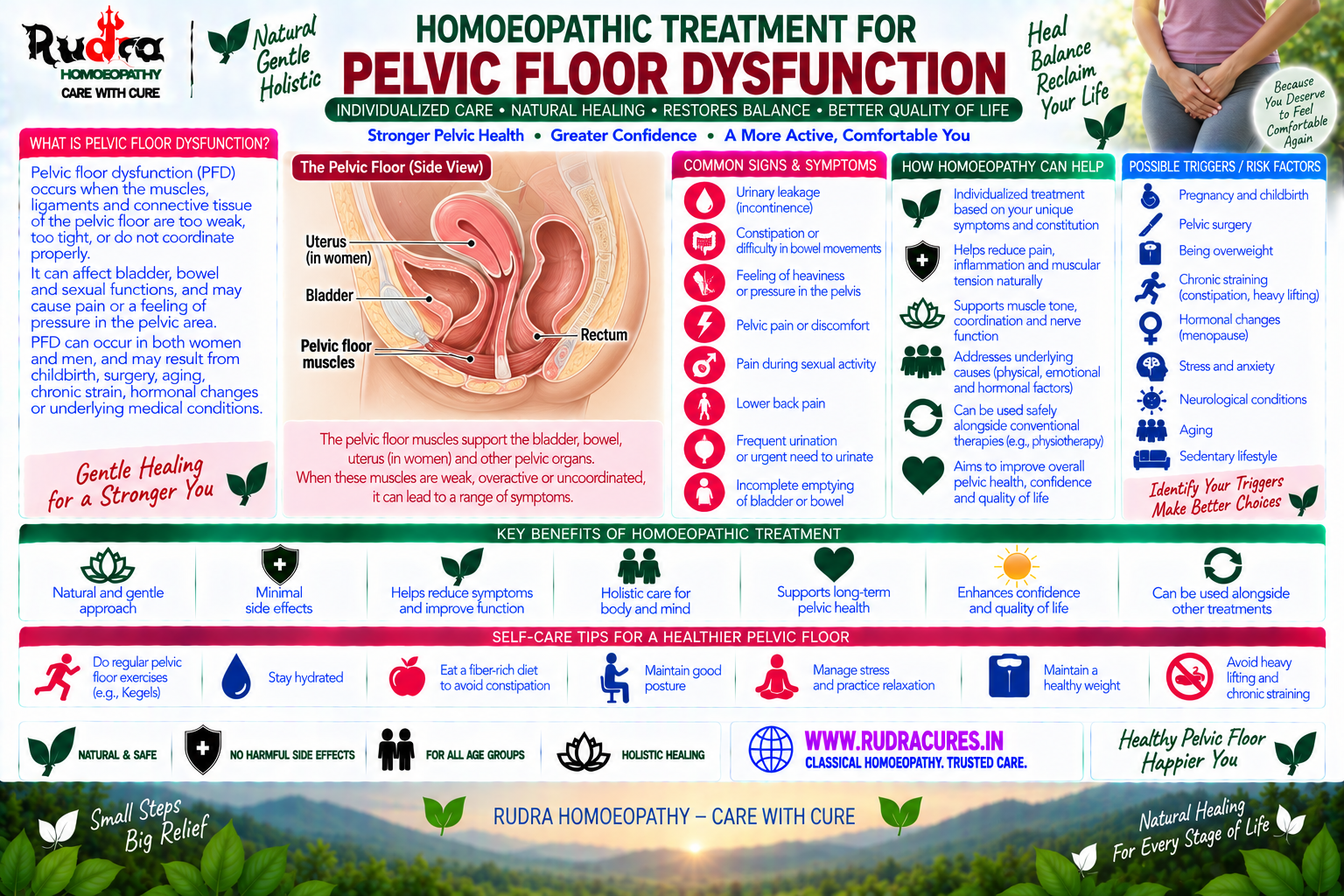
Pelvic Floor Dysfunction Care (पेल्विक फ्लोर डिसफंक्शन, पेल्विक पेन, यूरिन लीकेज और बच्चेदानी खिसकने का प्राकृतिक इलाज) – Overview & Key Remedies
Suffering from chronic pain in the pelvis, genitals, or lower back, experiencing accidental urine leakage when coughing, sneezing, or lifting, feeling a constant heavy dragging sensation or bulging at the vaginal opening (pelvic organ prolapse), having severe difficulty or straining during bowel movements, and experiencing painful intimate relations are the hallmark experiences of individuals struggling with Pelvic Floor Dysfunction (PFD / पेल्विक फ्लोर डिसफंक्शन). PFD is a condition where individuals cannot properly relax or control their pelvic floor muscles. Conventional medicine often provides limited relief through kegel exercises, pessaries, or pelvic surgery, which frequently leave patients searching for safer alternatives. Homeopathy offers a gentle, safe, natural, and deeply effective constitutional approach to relax spastic pelvic muscles, strengthen supportive connective tissue, regulate bladder and bowel function, and restore comfort without side effects.
श्रोणि (Pelvis) या कमर के निचले हिस्से में क्रॉनिक दर्द रहना, खांसने, छींकने या वजन उठाने पर **पेशाब का लीक हो जाना (Urinary Incontinence)**, बच्चेदानी या मूत्राशय का अपनी जगह से खिसकना (Pelvic Organ Prolapse) और नीचे की तरफ भारीपन या उभार महसूस होना, शौच करते समय बहुत जोर लगाना पड़ना, और संबंध बनाते समय दर्द होना—इसे सामान्य बोलचाल में पेल्विक फ्लोर डिसफंक्शन (Pelvic Floor Dysfunction) कहा जाता है। यह पेल्विक क्षेत्र की मांसपेशियों (Pelvic Floor Muscles) के या तो बहुत अधिक कड़े (Hypertonic) होने या बहुत अधिक कमजोर (Hypotonic) होने के कारण होता है। सही खान-पान (फाइबर युक्त आहार, बोन ब्रोथ) और सही होम्योपैथिक दवाओं (**Sepia, Lilium Tigrinum, Causticum, Arnica Montana, Nux Vomica, Rhus Toxicodendron, Magnesium Phosphoricum, Silicea, Calcarea Fluorica, Helonias**) के सेवन से पेल्विक मांसपेशियां मजबूत होती हैं, प्रोलapse और यूरिन लीकेज ठीक होता है, और पेल्विक क्षेत्र स्वस्थ होता है।
Primary Types of Pelvic Floor Dysfunction (पेल्विक फ्लोर डिसफंक्शन के मुख्य प्रकार)
- Hypertonic Pelvic Floor Dysfunction: Characterized by overly tight, spastic pelvic muscles leading to pelvic pain, painful intercourse, and difficulty emptying bladder or bowels (Key Remedy: Magnesium Phosphoricum).
- Hypotonic (Lax) Pelvic Floor Dysfunction: Characterized by weak muscles leading to stress urinary incontinence and pelvic organ prolapse (Key Remedy: Sepia Officinalis).
- Pelvic Organ Prolapse (POP): Descent of pelvic organs into the vaginal canal due to fascial and ligamentous weakness (Key Remedy: Lilium Tigrinum).
Common Causes & Risk Factors (मुख्य कारण)
Key Signs and Symptoms (प्रमुख लक्षण)
- Bearing-Down Pelvic Heaviness: Sensation of weight, dragging, or a bulge in the pelvis or vagina as if organs are falling out.
- Stress Urinary Incontinence: Involuntary urine leakage during coughing, sneezing, laughing, jumping, or heavy lifting.
- Obstructive Bowel Evacuation: Difficulty passing stool or needing to strain heavily, sometimes requiring digital support.
- Chronic Pelvic & Lower Back Aching: Persistent dull aching pain in the lower back, tailbone, or pelvic floor.
- Dyspareunia (Painful Intercourse): Discomfort or sharp pain during intimate relations due to muscle hypertonicity or tissue laxity.
मुख्य लक्षण: पेल्विक क्षेत्र में नीचे की तरफ भारीपन या बच्चेदानी खिसकने का अहसास, खांसने या छींकने पर पेशाब लीक होना, शौच करते समय बहुत जोर लगाना पड़ना, और कमर व पेल्विस में लगातार दर्द रहना।
Homeopathic Approach to Pelvic Floor Dysfunction Care
Homeopathy manages Pelvic Floor Dysfunction through Neuromuscular Relaxation, Pelvic Connective Tissue Strengthening, Sphincter Tone Restoration, and Anti-Inflammatory Support. Conventional treatments often provide limited relief through kegels or surgery, which frequently leave patients searching for safer alternatives. Homeopathic constitutional and neuromuscular-toning remedies (such as Sepia Officinalis, Lilium Tigrinum, Causticum, Arnica Montana, Nux Vomica, Rhus Toxicodendron, Magnesium Phosphoricum, Silicea, Calcarea Fluorica, and Helonias) work gently and rapidly to relax spastic muscles, strengthen supportive connective tissue, regulate bladder and bowel function, and restore comfort without side effects.
मुख्य होम्योपैथिक दवाएं और उनके लक्षण (Homeopathic Medicines & Symptoms Basis – 10 Medicines)
होम्योपैथी में मरीज के दर्द के प्रकार (नसों का शूटिंग दर्द, छालें, या भयंकर जलन) के आधार पर सही दवा चुनी जाती है:
लक्षण और पहचान: पेल्विक ऑर्गन प्रोलैप्स और बियरिंग-डाउन प्रेशर की विश्व प्रसिद्ध नंबर 1 दवा (Sepia 200C/1M)। **ऐसा अहसास होना मानो सभी पेल्विक अंग योनि मार्ग से बाहर निकल आएंगे**, जिसके लिए मरीज को पैर पर पैर चढ़ाकर (Crossed legs) बैठना पड़े; खांसने पर पेशाब लीक होना; चिड़चिड़ा स्वभाव।
लक्षण और पहचान: पेल्विक अंगों में बहुत तेज नीचे की तरफ खिंचाव और दबाव की खास दवा (Lilium Tigrinum 30C/200C)। **अंगों में ऐसा भारीपन जैसे उन्हें हाथों से ऊपर उठाकर थामना पड़े**; बार-बार पेशाब की हाजत और दिल घबराना; बेचैन व घबराया हुआ मानसिक स्वभाव।
लक्षण और पहचान: मूत्राशय के स्फिंक्टर की कमजोरी और स्ट्रेस यूरिनरी इनकॉन्टिनेंस की अचूक दवा (Causticum 30C/200C)। **खांसने, छींकने, हंसने या चलने पर पेशाब का अपने आप निकल जाना**; मूत्राशय की मांसपेशियों का कमजोर होना; नसों में खिंचाव।
लक्षण और पहचान: प्रसव (Childbirth) के बाद पेल्विक फ्लोर की मांसपेशियों में **कुचले जाने जैसा दर्द (Bruised soreness) और अत्यधिक सूजन होने पर** (Arnica 200C)। बैठने पर ऐसा महसूस होना जैसे निचला हिस्सा बहुत बुरी तरह जख्मी हो गया हो; बिस्तर बहुत सख्त लगना।
लक्षण और पहचान: क्रॉनिक कब्ज के कारण शौच में अत्यधिक जोर लगाने और पेल्विक कंजेशन की दवा (Nux Vomica 30C/200C)। **शौच के समय बार-बार हाजत लेकिन अधूरा पाखाना होना**; एनल स्फिंक्टर का कड़क होना; चिड़चिड़ा स्वभाव।
लक्षण और पहचान: पेल्विक क्षेत्र और निचले हिस्से में **लंबे समय तक बैठने के बाद जब पहली बार उठें तो भयंकर अकड़न और दर्द होना** (Rhus Tox 30C/200C)। थोड़ा टहलने के बाद शरीर खुल जाता है और दर्द कम होता है; बारिश और ठंड के मौसम में तकलीफ बढ़ती है।
लक्षण और पहचान: पेल्विक फ्लोर की मांसपेशियों के कड़ेपन (Hypertonicity) और ऐंठन की महान बायोकेमिक दवा (Mag Phos 6X)। पेल्विक क्षेत्र में बिजली की तरह कौंधने वाला दर्द; **गर्म पानी की थैली या सिट्ज़ बाथ (Sitz bath) लेने और कड़क सिकाई से दर्द में तुरंत चमत्कारिक आराम मिलना**।
लक्षण और पहचान: पेल्विक फेशिया और कनेक्टिव टिश्यू की कमजोरी को ठीक करने वाली एंटी-साइकोटिक दवा (Silicea 200C)। मरीज बहुत अधिक ठंडक महसूस करने वाला (Chilly) होता है; शरीर में पोषण की कमी और अंगों को थामने वाले लिगामेंट्स का कमजोर होना।
लक्षण और पहचान: पेल्विक अंगों को सहारा देने वाले ढीले लिगामेंट्स और फेशिया को मजबूती देने वाली मास्टर दवा (Calcarea Fluor 6X/30C)। **कनेक्टिव टिश्यू की लोच (Elasticity) को वापस लाकर बच्चेदानी और ब्लैडर के खिसकने को रोकती है**।
लक्षण और पहचान: पेल्विक अंगों में लगातार भारीपन और **ऐसा अहसास रहना जैसे मरीज अपने ‘गर्भ’ (Womb) को महसूस कर रही हो** (Helonias Q/30C)। अत्यधिक मानसिक और शारीरिक थकान; काम करने से दिमाग डायवर्ट होने पर थोड़ा बेहतर लगना।
Frequently Asked Questions (15 Essential FAQs – Featuring 10 Medicines) – पेल्विक फ्लोर डिसफंक्शन से जुड़े सवाल और जवाब
1. What is Pelvic Floor Dysfunction and what causes it?
Pelvic floor dysfunction is a condition where pelvic muscles become too tight (hypertonic) or too weak (hypotonic), commonly caused by childbirth trauma, chronic straining from constipation, aging, or heavy lifting.
पेल्विक फ्लोर डिसफंक्शन वह स्थिति है जिसमें पेल्विक मांसपेशियां या तो अत्यधिक टाइट हो जाती हैं या बहुत कमजोर हो जाती हैं, जिसका मुख्य कारण प्रसव पीड़ा, क्रॉनिक कब्ज या भारी वजन उठाना है।
2. Can Homeopathy cure Pelvic Floor Dysfunction and Pelvic Organ Prolapse?
Homeopathy provides profound relief by relaxing spastic pelvic muscles, strengthening supportive connective tissue, regulating bladder and bowel function, and managing prolapse symptoms without surgery using remedies like Sepia Officinalis and Causticum.
3. Why do women experience urine leakage when coughing or sneezing?
Weakened pelvic floor muscles and bladder sphincter atony fail to provide rapid counter-pressure when intra-abdominal pressure spikes suddenly from coughing or sneezing, causing stress incontinence.
4. How does Sepia help with pelvic organ prolapse and bearing-down pressure?
Sepia is the premier homeopathic remedy for pelvic laxity, matching the classic sensation that pelvic organs are falling out and restoring normal fascial tone.
5. What is the role of Causticum in stress urinary incontinence?
Causticum strengthens urinary sphincter control and detrusor muscle tone, stopping involuntary urine leakage during coughing, laughing, or physical exertion.
6. Can Pelvic Floor Dysfunction cause painful bowel movements or constipation?
Yes. Hypertonic pelvic muscles fail to relax during defecation, causing obstructive defecation syndrome where patients must strain heavily to pass stool.
7. How does Arnica Montana assist in postpartum pelvic recovery?
Arnica reduces capillary permeability, relieves bruised perineal soreness following childbirth trauma or episiotomy, and eliminates extreme tissue tenderness.
8. What is the difference between hypertonic and hypotonic pelvic floor dysfunction?
Hypertonic PFD involves tight, spastic muscles causing pelvic pain and urinary/bowel obstruction, whereas hypotonic PFD involves weak muscles causing urinary leakage and organ prolapse.
9. How does Calcarea Fluorica help strengthen pelvic ligaments?
Calcarea Fluorica restores elastic fiber tone to stretched and lax pelvic ligaments and fascia, providing natural structural support against organ descent.
10. Can dietary fiber prevent pelvic straining during bowel movements?
Yes. Eating a high-fiber diet and drinking plenty of water soften stools, eliminating the need to strain and protecting pelvic floor muscles from excessive downward pressure.
11. What lifestyle changes help manage Pelvic Floor Dysfunction?
Avoiding straining, eating high-fiber foods, drinking adequate water, practicing pelvic floor physical therapy, and maintaining proper posture provide excellent support.
12. Why do physical therapists focus on breathing and core work for PFD?
Proper diaphragmatic breathing coordinates with pelvic floor movement, helping release unconscious breath-holding and excessive intra-abdominal pressure.
13. How long does homeopathic treatment take for pelvic floor recovery?
Initial relief in urine leakage and pelvic heaviness is often noticed within 3 to 6 weeks, while structural fascial reinforcement requires consistent, structured care.
14. Are homeopathic remedies safe alongside conventional pelvic therapy?
Yes, homeopathic remedies are 100% non-toxic and can be taken safely alongside physical therapy or conventional care without chemical drug interactions.
15. How can I consult your expert clinical team?
Connect directly with our expert homeopathic team via WhatsApp to discuss your symptoms, history, and receive personalized care in complete privacy.
Lifestyle, Diet & Home Guidelines for Pelvic Care
- Eat a High-Fiber, Plant-Rich Diet: Include fresh fruits, vegetables, oats, and psyllium husk to soften stool consistency and eliminate straining during bowel movements.
- Stay Well Hydrated with Pure Water: Drink 3 to 4 liters of clean water daily to maintain smooth bowel motility and prevent hard stools.
- Practice Diaphragmatic Breathing & Core Relaxation: Engage in proper breathing techniques to coordinate pelvic floor movement and release excessive intra-abdominal pressure.
- Avoid Heavy Lifting & High-Impact Strains: Refrain from heavy lifting or high-impact jarring exercises that place downward pressure on the pelvic floor.
Understanding Diagnostic Milestones: A Balanced Medical Approach
Comprehensive medical evaluation ensures accurate identification and tailored management:
| Assessment Type | Why It Is Crucial for Clinical Success | Clinical Focus Area |
|---|---|---|
| Pelvic Floor Physical Therapy Evaluation | Comprehensive assessment; evaluates muscle strength, tone, tenderness, and coordination externally and internally. | Assesses pelvic muscle function. |
| Urodynamic Testing (When Indicated) | Evaluates bladder storage, sphincter control, and urine flow dynamics to assess urinary incontinence. | Evaluates bladder function. |
| Pelvic Organ Prolapse Quantification (POP-Q) Exam | Standardized staging system; measures the precise descent of pelvic organs into the vaginal canal. | Measures prolapse stage. |
Pelvic floor dysfunction management succeeds best when proper clinical diagnosis is combined with constitutional and neuromuscular homeopathy (Sepia / Causticum / Lilium Tigrinum / Arnica), high-fiber nutrition, and physical therapy. Pelvic support can be restored and comfortable function achieved steadily.
Why Choose Rudra Homoeopathy?
- 100% natural, non-toxic supportive protocols tailored around your unique pelvic floor dysfunction symptoms and medical reports.
- Proven clinical experience in safely managing pelvic muscle hypertonicity, urinary incontinence, and pelvic organ prolapse.
- Focuses on deep constitutional neuromuscular repair and fascial strengthening without side effects.
- Compassionate clinical care ensuring complete patient privacy and continuous expert guidance.
Conclusion
Homeopathy offers a safe, gentle, deeply effective, and permanent non-toxic path for individuals struggling with Pelvic Floor Dysfunction, Pelvic Muscle Spasm and Weakness, Stress Urinary Incontinence, and Pelvic Organ Prolapse. Remedies like Sepia Officinalis, Lilium Tigrinum, Causticum, Arnica Montana, Silicea, and Calcarea Fluorica work in harmony with the body to relax spastic muscles, reinforce supportive connective tissue, and bring comfortable function and vibrant health back into your life.
Relieve Pelvic Pressure & Support Your Pelvic Health Naturally
Manage Pelvic Floor Dysfunction, urinary incontinence, and pelvic organ prolapse naturally and confidentially with expert clinical care.
💬 Confidential WhatsApp ConsultationAdvanced Clinical Comparison Tool
Compare symptoms, cross-reference Materia Medica notes, and analyze repertorial rubrics side-by-side for precise case evaluation.
Access Clinical Tool →