Protocols, potency sequencing, and dosing guidelines outlined in this advanced clinical repository are derived directly from Dr. Samuel Hahnemann's Organon of Medicine (Liquid Potency & Split Dose Method), combined with classic clinical keynotes from Dr. James Compton Burnett and Dr. William Boericke, verified through extensive practical clinical execution and advanced repertorial synthesis.
Finding an effective Homeopathic Medicine for Apoplexy (Cerebrovascular Accident, Stroke, Cerebral Hemorrhage & Brain Ischemia) is essential for individuals facing sudden loss of consciousness, heavy stertorous (snoring) breathing, jaw dropping, facial drooping, one-sided paralysis of arm and leg (hemiplegia), loss of speech (aphasia), and post-stroke motor deficits. Recognizing the underlying causes, pathological types (Ischemic vs. Hemorrhagic), clinical stages, and symptoms—whether presented as Fulminant Sanguineous Apoplexy (cerebral hemorrhage from ruptured aneurysm or hypertension), Ischemic Thrombotic Apoplexy (cerebral arterial occlusion), Serous Apoplexy with cerebral edema, or Post-Apoplectic Motor Paralysis—is crucial for saving delicate brain tissue. Homeopathic constitutional, neuro-vascular, and clot-resorbing remedies offer a gentle, safe, non-toxic, and natural pathway to accelerate the absorption of intracranial hematomas, promote cerebral collateral reperfusion, awaken paralyzed motor cortex pathways, protect surviving penumbra neurons, and restore speech and limb mobility safely alongside critical neuro-emergency hospital care.
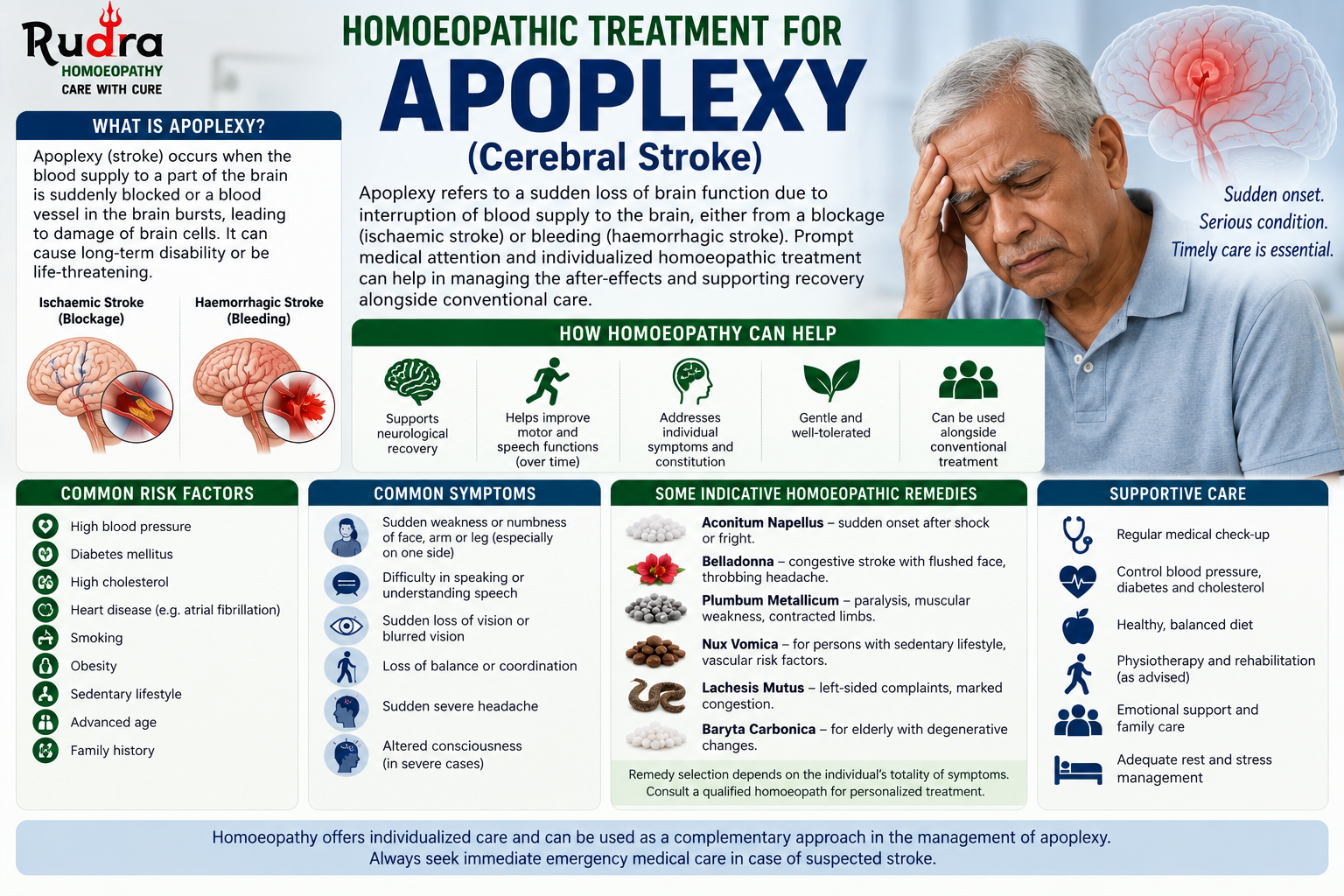
Apoplexy / Stroke & Paralysis Care (एपोप्लेक्सी / मस्तिष्क पक्षाघात व लकवा – अचानक बेहोशी, खर्राटे जैसी सांस, मुंह का टेढ़ापन व अंगों का सुन्न होना) – Overview & Key Remedies
A sudden, unexpected fall with immediate loss of consciousness, breathing heavily with a loud, rattling, snoring sound where the cheeks blow out like a bellows with every breath (Stertorous Breathing), the lower jaw dropping open, one side of the face suddenly drooping so that the mouth twists to one side and saliva drools out, complete inability to speak or slurred, unintelligible words even though the person seems to understand what is happening, complete paralysis and limpness of the arm and leg on one side of the body (Hemiplegia), unequal pupils in the eyes, sudden severe “thunderclap” headache before collapsing, and loss of control over urine and stool are the hallmark symptoms experienced during an episode of Apoplexy. Apoplexy (Cerebral Stroke / मस्तिष्क पक्षाघात, लकवा, फालिज व दिमागी नस का फटना या बंद होना) is a critical medical emergency where the blood supply to a vital part of the brain is suddenly cut off. The brain depends on a continuous flow of blood to receive oxygen and glucose. When an artery in the brain suddenly bursts (Hemorrhagic Stroke / Cerebral Hemorrhage) or gets blocked by a blood clot (Ischemic Stroke / Thrombosis), the brain cells in that area begin dying within minutes. When a stroke strikes, immediate hospitalization in a specialized stroke-ready hospital within the critical **Golden Window (under 4.5 hours)** is absolutely vital to save the patient’s life. Alongside emergency hospital care, Homeopathy offers a gentle, safe, natural, and deeply restorative neuro-rehabilitative approach to help absorb trapped blood clots in the brain, reduce brain swelling, wake up paralyzed brain nerves, restore slurred speech, recover arm and leg movement, and help prevent future strokes safely without side effects.
अचानक चक्कर खाकर गिर पड़ना और गहरी बेहोशी में चले जाना, तेज खर्राटे जैसी घड़घड़ाहट वाली सांसें चलना जिससे सांस छोड़ते समय दोनों गाल गुब्बारे की तरह फूलें (Stertorous Breathing), निचला जबड़ा नीचे लटक जाना, चेहरे का एक तरफ टेढ़ा हो जाना और मुंह से लार टपकना, आवाज का पूरी तरह बंद हो जाना या जबान लड़खड़ाना (Aphasia), शरीर के एक तरफ के हाथ और पैर का पूरी तरह बेजान व सुन्न पड़ जाना (लकवा / Paralysis / Hemiplegia), और पेशाब-पाखाने का अपने आप छूट जाना—इसे सामान्य बोलचाल में एपोप्लेक्सी, ब्रेन स्ट्रोक, मस्तिष्क पक्षाघात या फालिज का दौरा (Apoplexy / Stroke) कहा जाता है। यह मस्तिष्क की किसी नस के अचानक फट जाने (ब्रेन हेमरेज) या खून का थक्का (Clot) जमने के कारण होता है। स्ट्रोक होते ही बिना एक सेकंड गंवाए मरीज को तुरंत बड़े अस्पताल के न्यूरोलॉजी विभाग में ले जाना जरूरी है। अस्पताल के इमरजेंसी इलाज के साथ-साथ, सही होम्योपैथिक इलाज (विशेषकर **Opium, Arnica Montana, Belladonna, Bothrops, Causticum, Baryta Carb, Ashwagandha**) मस्तिष्क में जमे खून के थक्कों को तेजी से पिघलाता है, दिमाग की सूजन को खत्म करता है, लकवाग्रस्त नसों में दोबारा जान फूंकता है, टेढ़े मुंह और जबान को सीधा करता है, और मरीज को बिना किसी दुष्प्रभाव के दोबारा पैरों पर खड़ा करने में चमत्कारी मदद करता है।
Primary Types of Apoplexy & Stroke (एपोप्लेक्सी / स्ट्रोक के मुख्य प्रकार)
Understanding the exact medical type of stroke helps doctors select the right curative strategy:
- Hemorrhagic Apoplexy (ब्रेन हेमरेज): A weakened blood vessel in the brain ruptures (often due to high blood pressure); causes sudden coma, flushed face, and rapid brain pressure (Key Remedies: Opium, Arnica Montana).
- Ischemic Thrombotic Stroke (दिमाग में खून का थक्का): A blood clot blocks an artery in the brain, cutting off oxygen; often presents as waking up with one-sided weakness and aphasia (Key Remedies: Bothrops, Lachesis).
- Post-Stroke Hemiplegia (लकवा व अकड़न): Lasting paralysis of one side of the body with contracted, stiff tendons and facial drooping (Key Remedy: Causticum).
- Elderly Degenerative Stroke: Stroke occurring in elderly patients with hardening of arteries, causing memory loss, childish behavior, and speech difficulty (Key Remedy: Baryta Carbonica).
Common Causes & Risk Factors of Apoplexy (मुख्य कारण)
Key Signs and Symptoms of Apoplexy / Stroke (F.A.S.T. लक्षण)
- Face Drooping (चेहरा टेढ़ा होना): One side of the face suddenly droops or becomes numb, causing an uneven or crooked smile.
- Arm Weakness (हाथ का बेजान होना): Sudden weakness or numbness in one arm; when attempting to raise both arms, one arm drifts downward.
- Speech Difficulty / Aphasia (आवाज बंद होना या लड़खड़ाना): Inability to speak, slurred speech, or difficulty understanding simple sentences.
- Stertorous Snoring Breathing (तेज खर्राटे जैसी सांस चलना): Deep coma with loud, rattling, snoring breathing, blowing out the cheeks like a bellows on expiration.
- Sudden Stupor & Dropped Jaw (अचानक बेहोशी व जबड़ा लटकना): Total loss of consciousness with the mouth falling open and dark flushed or purplish face.
- Sudden Severe “Thunderclap” Headache (अचानक असहनीय सिरदर्द): A sudden, blinding headache described as the worst headache of life, often preceding hemorrhage.
मुख्य लक्षण: अचानक बेहोशी, तेज खर्राटे जैसी सांस चलना, मुंह का टेढ़ा होना, हाथ-पैर में लकवा, आवाज का बंद होना या लड़खड़ाना, और सिर में भयंकर दर्द।
Homeopathic Approach to Stroke Recovery & Paralysis Rehabilitation
Homeopathy manages Apoplexy and Stroke through Intracranial Hematoma Resorption, Ischemic Penumbra Neuro-Protection, Cerebral Collateral Reperfusion, and Neuromuscular Rehabilitation. Conventional hospital medicine is critical in the acute emergency phase (clot-busting injections within 4.5 hours or surgery). However, once the patient survives the acute crisis, conventional medicine offers few options beyond blood thinners and standard physiotherapy, often leaving patients with permanent limb stiffness, speech loss, and walking difficulties. Homeopathic constitutional, neuro-vascular, and clot-dissolving remedies (such as Opium, Arnica Montana, Belladonna, Bothrops Lanceolatus, Causticum, Baryta Carbonica, and Ashwagandha) work naturally to accelerate the natural absorption of trapped blood and fluid in the brain, protect surviving brain cells from dying, stimulate dormant motor nerves in the brain cortex, straighten twisted facial muscles and stiff limbs, restore clear speech, and rehabilitate walking independence safely without side effects or chemical dependency.
मुख्य होम्योपैथिक दवाएं और उनके लक्षण (Homeopathic Medicines & Symptoms Basis)
होम्योपैथी में मरीज के लक्षणों (खर्राटे जैसी सांस, दिमागी नस का फटना, जबान का बंद होना, या लकवा) के आधार पर सही दवा चुनी जाती है:
लक्षण और पहचान: एपोप्लेक्सी और स्ट्रोक के दौरे की सबसे प्रमुख और जीवनरक्षक मास्टर दवा (Opium 200C/1M)। **मरीज का गहरी बेहोशी में पड़ा रहना और तेज खर्राटे जैसी आवाज के साथ सांस चलना (Stertorous Breathing)**; सांस छोड़ते समय दोनों गालों का गुब्बारे की तरह फूलना; निचला जबड़ा नीचे लटक जाना; चेहरा गहरा लाल या सूजा हुआ होना; पुतलियां फैली या बिल्कुल छोटी होना; दर्द का बिल्कुल अहसास न होना; बेहोशी को तोड़कर होश में लाने वाली नंबर 1 दवा।
लक्षण और पहचान: जब मस्तिष्क की नस फटने (Cerebral Hemorrhage) या चोट के कारण दिमाग में खून का थक्का जम गया हो (Arnica 200C/1M)। सिर बहुत गर्म लेकिन शरीर ठंडा होना; मरीज का बात करते-करते सो जाना; बिस्तर का बहुत सख्त लगना; **दिमाग में जमे खून को तेजी से पिघलाकर सुखाने और लकवे से बचाने वाली नंबर 1 मास्टर दवा**।
लक्षण और पहचान: स्ट्रोक का बिल्कुल शुरुआती दौरा जब मस्तिष्क में खून का भयंकर दबाव बढ़ जाए। **चेहरा बिल्कुल लाल-अंगारे जैसा, आंखें चमकदार और गर्दन की नसें (Carotids) जोर-जोर से धड़कती हों**; सिर में हथौड़े चलने जैसा तेज दर्द; पुतलियां चौड़ी होना; छूने या बिस्तर के हिलने पर भी तकलीफ बढ़ना; नस फटने से पहले दबाव को शांत करने वाली दवा।
लक्षण और पहचान: जब स्ट्रोक या लकवे के बाद **मरीज की जबान पूरी तरह बंद हो जाए और वह एक शब्द भी न बोल पाए** (Motor Aphasia)। मरीज सब कुछ सुनता और समझता है लेकिन मुंह से आवाज नहीं निकाल पाता; शरीर के एक तरफ का लकवा; खून का थक्का जमने से रुकी हुई नसों को दोबारा खोलने वाली दवा।
लक्षण और पहचान: स्ट्रोक के बाद बचे हुए एकतरफा लकवे (Hemiplegia) की सबसे प्रमुख दवा (Causticum 200C/1M)। **मुंह का एक तरफ टेढ़ा हो जाना और लार टपकना**; लकवाग्रस्त हाथ और पैर की नसें खिंचकर अकड़ जाना (Contractures); जबान का भारी होना और हकलाना; खांसते समय पेशाब का छूट जाना; सूखी ठंडी हवा में तकलीफ बढ़ना।
लक्षण और पहचान: अधिक उम्र के बुजुर्गों में हाई ब्लड प्रेशर या नसों के कड़ेपन (Arteriosclerosis) के कारण होने वाले स्ट्रोक की खास दवा। दौरे के बाद बच्चों जैसी हरकतें करना, याददाश्त बिल्कुल खत्म हो जाना; जबान मोटी होना और पैर घसीटकर चलना; नसों के लचीलेपन को लौटाने वाली दवा।
लक्षण और पहचान: लकवे के कारण कमजोर व पतली पड़ चुकी मांसपेशियों में दोबारा जान और ताकत भरने वाला नंबर 1 टॉनिक (Ashwagandha Q) और ब्लड प्रेशर को कंट्रोल में रखकर दोबारा स्ट्रोक आने से बचाने वाला हार्ट टॉनिक (Crataegus Q)।
Frequently Asked Questions (15 Essential FAQs) – एपोप्लेक्सी, स्ट्रोक व लकवे से जुड़े सवाल और जवाब
1. What is Apoplexy (Stroke)?
Apoplexy is an acute cerebrovascular accident (stroke) where blood flow to a part of the brain is suddenly interrupted by a ruptured blood vessel (hemorrhage) or a clot (ischemia), causing sudden coma and paralysis.
एपोप्लेक्सी (Apoplexy / Stroke) मस्तिष्क का पक्षाघात है, जिसमें दिमाग की कोई नस फटने या खून का थक्का जमने से अचानक बेहोशी, खर्राटे जैसी सांस और शरीर के एक हिस्से में लकवा मार जाता है।
2. What should be done in the first few hours of a stroke (The Golden Window)?
Rush the patient immediately to a stroke-ready hospital within 4.5 hours for an emergency CT scan; ischemic strokes can be treated with clot-busting injections within this critical window.
3. Can Homeopathy help cure paralysis and restore speech after a stroke?
Yes. Constitutional and neuro-vascular homeopathic remedies accelerate the absorption of brain blood clots, awaken dormant brain nerves, straighten facial drooping, and restore speech and walking ability safely.
4. What is “Stertorous Breathing” during an apoplectic stroke?
It is deep, heavy snoring breathing where the soft palate and cheeks flap loosely like a bellows on expiration due to complete paralysis of the throat and facial muscles (hallmark of Opium).
5. Why is Arnica Montana crucial in cerebral hemorrhage?
Arnica Montana specifically stimulates cellular phagocytosis, accelerating the rapid reabsorption of extravasated blood and hematomas inside the brain while protecting surrounding surviving neurons.
6. What is the F.A.S.T. warning test for identifying a stroke?
F – Face Drooping, A – Arm Weakness, S – Speech Difficulty, T – Time to call an emergency ambulance immediately.
7. How does Bothrops Lanceolatus restore speech (Aphasia)?
Bothrops Lanceolatus specifically targets the speech center (Broca’s area) of the brain after an ischemic stroke, helping patients who understand speech but cannot find words to speak.
8. What essential medical tests diagnose and evaluate a Stroke?
Non-Contrast CT Scan of Brain (NCCT Head – immediately distinguishes bleeding from clot), Brain MRI with DWI, Carotid Doppler Ultrasound, ECG, and Complete Blood Profile.
9. How does Causticum help in post-stroke limb stiffness and facial paralysis?
Causticum is the premier remedy for post-stroke hemiplegia that straightens contracted, stiffened tendons, restores motor nerve conduction, and corrects twisted facial paralysis.
10. Can High Blood Pressure trigger Apoplexy?
Yes. Chronic uncontrolled high blood pressure weakens brain artery walls over time, making them vulnerable to sudden rupture (brain hemorrhage) during stress or physical strain.
11. What simple diet helps stroke recovery and prevents recurrences?
Eating a strict low-salt diet, soaked walnuts, raw crushed garlic, bottle gourd (lauki) soup, pureed soft khichdi, and strictly avoiding deep-fried greasy snacks and commercial salt.
12. Are homeopathic stroke remedies safe alongside prescribed hospital blood thinners?
Yes. Homeopathic remedies are 100% natural, non-toxic, and work completely safely alongside hospital medications, accelerating neuro-rehabilitation without drug interactions.
13. How does Ashwagandha Mother Tincture strengthen paralyzed muscles?
Ashwagandha rebuilds wasted muscle mass, stimulates motor nerve sprouting, lowers stress cortisol, and restores walking stamina and physical balance during stroke physiotherapy.
14. How long does it take to see paralysis recovery with homeopathy?
Facial tone, swallowing, and speech begin improving within 2 to 4 weeks of liquid dosing, with limb movement, finger grip, and walking independence progressing steadily over 2 to 6 months.
15. How can I schedule an emergency or post-stroke clinical consultation?
You can connect directly with our expert clinical neurological homeopathic team via WhatsApp to share Brain CT/MRI scans, discharge summaries, and symptoms in complete 100% privacy.
Lifestyle, Dietary & Home Guidelines for Stroke Recovery
- Engage in Daily Guided Stroke Physiotherapy & Speech Therapy: Perform passive and active limb movements, finger-gripping exercises, and practice vocal speech exercises daily under an experienced physiotherapist.
- Eat a Strict Low-Sodium (Low-Salt) Diet: Completely avoid added table salt, commercial chips, papads, pickles, and processed snacks; keeping salt low prevents dangerous blood pressure spikes.
- Consume 1 Clove of Crushed Raw Garlic (लहसुन) Daily: Chew or swallow crushed raw garlic with warm water in the morning; its natural allicin thins the blood naturally and cleanses cholesterol from brain arteries.
- Serve Soft, Pureed, Easy-to-Swallow Meals: If the patient has difficulty swallowing (dysphagia), serve pureed moong dal khichdi, mashed stewed apples, and bottle gourd soup to prevent food entering the windpipe (aspiration).
- Maintain Strictly Controlled Blood Pressure & Blood Sugar: Check blood pressure twice daily; keep systolic pressure safely below 130 mmHg and maintain normal blood sugar levels to prevent recurrent strokes.
Understanding Diagnostic Milestones: A Balanced Medical Approach
Comprehensive medical evaluation confirms brain pathology and monitors safe neurological recovery:
| Assessment Type | Why It Is Crucial for Clinical Success | Clinical Focus Area |
|---|---|---|
| Emergency Non-Contrast Brain CT (NCCT Head) | Gold standard immediate test; definitively distinguishes between an ischemic clot and an active brain hemorrhage within minutes. | Identifies bleed vs clot. |
| Brain MRI with Diffusion-Weighted Imaging (DWI) | Accurately detects early microscopic brain ischemia, maps surviving penumbra brain tissue, and guides rehabilitation. | Maps surviving brain cells. |
| Carotid Doppler Ultrasound & Lipid Profile | Evaluates narrowing or cholesterol plaque blockages in the major carotid neck arteries supplying the brain. | Checks carotid neck arteries. |
Apoplexy and stroke recovery succeeds best when emergency neuro-critical hospital care is paired with constitutional and neuro-regenerative homeopathy (Opium / Arnica / Bothrops / Causticum), dedicated daily physiotherapy, a low-salt brain-healthy diet, and blood pressure control. Your speech clarity, limb strength, and natural walking independence can be restored steadily.
Why Choose Rudra Homoeopathy?
- 100% natural, non-toxic constitutional protocols tailored around your unique Brain CT/MRI findings, stroke type, and paralysis symptoms.
- Proven clinical experience in safely managing post-stroke hemiplegia, cerebral hematoma resorption, facial paralysis, and speech loss (aphasia).
- Focuses on biochemic neuro-vascular reperfusion and motor nerve reactivation without drug interactions with hospital medications.
- Compassionate clinical care ensuring complete patient privacy, 100% strict confidentiality, and continuous expert support.
Conclusion
Homeopathy offers a safe, gentle, deeply effective, and permanent non-toxic path for individuals recovering from Apoplexy, Brain Stroke, Cerebral Hemorrhage, and Post-Stroke Paralysis. Remedies like Opium, Arnica Montana, Belladonna, Bothrops Lanceolatus, Causticum, Baryta Carbonica, and Ashwagandha work in harmony with the body to heal the brain, dissolve clots, restore speech, and rebuild joyful, independent, and vibrant physical mobility.
Manage Apoplexy, Stroke Rehabilitation, Post-Stroke Paralysis, and Speech Loss naturally and confidentially with expert clinical care.
💬 Confidential WhatsApp ConsultationAdvanced Clinical Comparison Tool
Compare symptoms, cross-reference Materia Medica notes, and analyze repertorial rubrics side-by-side for precise case evaluation.
Access Clinical Tool →