
Protocols, potency sequencing, and dosing guidelines outlined in this advanced clinical repository are derived directly from Dr. Samuel Hahnemann's Organon of Medicine (Liquid Potency & Split Dose Method), combined with classic clinical keynotes from Dr. James Compton Burnett and Dr. William Boericke, verified through extensive practical clinical execution and advanced repertorial synthesis.
Finding an effective Homeopathic Medicine for Pleural Effusion (Pathological Fluid Accumulation in the Pleural Cavity & Hydrothorax) is essential for individuals struggling with progressive shortness of breath, suffocative orthopnea (inability to lie flat), dull dragging heaviness in the chest, persistent dry hacking cough, sharp stitching pain easing as fluid accumulates, and chest tightness. Recognizing the underlying causes, biochemical types (Transudative vs Exudative via Light’s criteria), stages, and symptoms of pleural effusion—whether presented as Parapneumonic Exudate, Tuberculous Pleural Effusion, Congestive Cardiac Hydrothorax, Nephrotic/Hepatic Transudate, Malignant Pleural Effusion, or Purulent Empyema—is crucial for accelerating natural lymphatic reabsorption. Homeopathic constitutional and organopathic drainage remedies offer a gentle, safe, non-toxic, and natural pathway to restore pleural microvascular permeability, stimulate lymphatic fluid evacuation, prevent chronic fibrotic pleural thickening, and revive free, expansive breathing safely without repetitive painful needle taps.
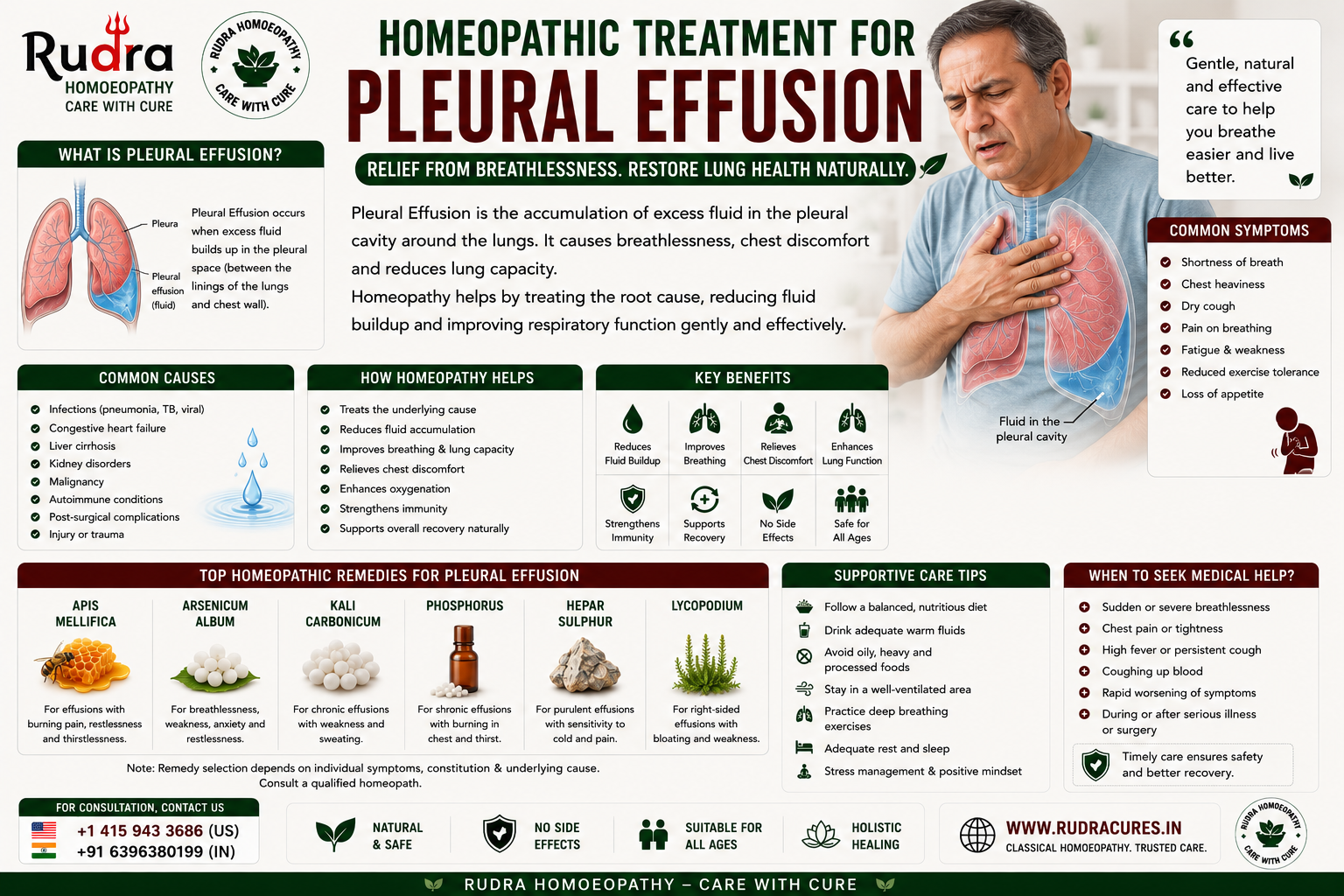
Pleural Effusion / Water in Lungs Care (फेफड़ों में पानी भरना – सांस फूलना, सीने में भारीपन व सूखी खांसी) – Overview & Key Remedies
Feeling a heavy, suffocating weight on your chest as if a heavy stone is pressing down on your lungs, shortness of breath that worsens when walking, climbing stairs, or trying to lie flat on your back (having to sleep sitting propped up with multiple pillows), persistent dry hacking cough, mild to high fever with night sweats, sharp chest pain that gradually turns into a dull ache as fluid accumulates, and feeling constantly tired and exhausted are the hallmark symptoms experienced by individuals with Pleural Effusion. Pleural Effusion (Fluid Around the Lungs / Hydrothorax / फेफड़ों के पर्दे में पानी भरना व फुफ्फुस प्रवाह) is a condition where an excessive amount of watery fluid collects in the pleural space—the narrow gap between the double-layered membrane wrapping the lungs and the inner chest wall. Normally, only a few teaspoons of fluid lubricate this space. However, due to lung infections (like Pneumonia or Tuberculosis), heart weakness (Heart Failure), liver cirrhosis, kidney disorders, or cancer, fluid production increases rapidly while the body’s natural drainage gets blocked. This trapped fluid compresses the lung like a squashed sponge, preventing it from expanding fully during breathing. Homeopathy offers a gentle, safe, natural, non-toxic, and constitutional approach to stimulate natural lymphatic drainage of trapped pleural fluid, cool down internal pleural inflammation, relieve suffocative chest heaviness, improve lung expansion, prevent permanent lung scarring, and restore deep, effortless breathing safely without painful repetitive needle aspirations.
सीने में भारी बोझ व जकड़न महसूस होना, थोड़ा सा चलने या सीढ़ियां चढ़ने पर सांस फूलना, बिस्तर पर सीधा लेटते ही दम घुटना और रात को तकिए का सहारा लेकर बैठकर सोना पड़ना (Orthopnea), लगातार सूखी खांसी चलना, बुखार के साथ रात को पसीना आना, और फेफड़ों के चारों तरफ पानी भर जाने से सीने में भारी दबाव महसूस होना—इसे सामान्य भाषा में फेफड़ों में पानी भरना या प्लूरल इफ्यूजन (Pleural Effusion / Water in Lungs) कहा जाता है। यह कोई फेफड़ों के अंदर का पानी नहीं है, बल्कि फेफड़ों की बाहरी झिल्ली (पर्दे) के बीच इन्फेक्शन (जैसे निमोनिया, टीबी), दिल की कमजोरी या लिवर-किडनी की बीमारी के कारण जमा हुआ तरल पदार्थ है। बार-बार सुई (Needle Tap) से पानी निकालने से पानी दोबारा भर सकता है क्योंकि अंदर की सूजन और रिसाव ठीक नहीं होता। सही मेडिकल जांच के साथ-साथ, सही होम्योपैथिक इलाज (विशेषकर **Cantharis, Apocynum, Apis Mellifica, Bryonia, Sulfur, Thiosinaminum**) फेफड़ों की झिल्ली की सूजन को शांत करता है, जमे हुए पानी को प्राकृतिक रूप से सुखाकर पेशाब के रास्ते बाहर निकालता है, फेफड़ों को पूरा फैलने की ताकत देता है, और बिना किसी सर्जरी के सांस पूरी तरह खोल देता है।
Primary Types of Pleural Effusion (फेफड़ों में पानी भरने के मुख्य प्रकार)
Understanding the specific clinical type of fluid helps doctors select the right curative strategy:
- Parapneumonic Effusion (Exudative Type): Fluid accumulating due to acute pneumonia or lung infection; causes chest heaviness, dry cough, and fever (Key Remedy: Cantharis).
- Tuberculous Pleural Effusion: Fluid caused by tuberculosis infection; features high ADA levels, evening fevers, drenching night sweats, and weight loss (Key Remedy: Tuberculinum).
- Cardiac & Renal Hydrothorax (Transudative Type): Fluid accumulating due to heart failure or kidney/liver disorders; causes severe breathlessness on lying flat (Key Remedy: Apocynum).
- Purulent Empyema: Thick bacterial pus collecting in the pleural cavity; causes high spiking fever, severe chills, and toxic prostration (Key Remedy: Hepar Sulph).
Common Causes & Risk Factors of Pleural Effusion (मुख्य कारण)
Key Signs and Symptoms of Pleural Effusion (प्रमुख लक्षण)
- Shortness of Breath on Exertion (सांस फूलना): Difficulty breathing that worsens with minimal walking, climbing stairs, or physical activity.
- Suffocative Orthopnea (सीधा लेटने पर दम घुटना): Inability to lie flat on your back in bed; having to sleep in a semi-sitting position propped up with pillows.
- Dull Dragging Chest Heaviness (सीने में भारी दबाव): Sensation of a heavy stone or tight band pressing on the ribs, restricting normal lung expansion.
- Persistent Dry Hacking Cough (लगातार सूखी खांसी): Dry, irritating cough caused by mechanical compression of the lung airways by the surrounding fluid.
- Diminished Stitching Pain (दर्द का कम होना लेकिन भारीपन बढ़ना): Sharp stitching pain easing as fluid separates the pleural layers, but breathlessness worsening.
- Drenching Night Sweats & Fever (रात को पसीना व बुखार): Sweating heavily during sleep with cyclical evening fevers (especially in tuberculous effusion).
मुख्य लक्षण: सांस फूलना, सीधा लेटने पर दम घुटना, सीने में भारी बोझ, सूखी खांसी, रात को पसीना आना, और फेफड़ों में पानी भरने से चलने-फिरने में तकलीफ।
Homeopathic Approach to Fluid Resorption & Lung Recovery
Homeopathy manages Pleural Effusion through Pleural Endothelial Stabilization, Lymphatic Fluid Drainage Activation, Serous Membrane Decongestion, and Lung Expansion Restoration. Conventional medicine relies heavily on repeated invasive needle thoracentesis (tapping the fluid with a syringe) or chest tube insertion, which only removes fluid temporarily without fixing the internal leakage, while carrying risks of lung puncture, bleeding, and infections. Homeopathic constitutional and drainage remedies (such as Cantharis, Apocynum Cannabinum, Apis Mellifica, Bryonia Alba, Sulfur, Hepar Sulph, and Thiosinaminum) work naturally to stabilize the delicate blood vessels in the pleura, stimulate natural lymphatic and renal evacuation of trapped fluid, stop internal inflammation, melt post-effusion fibrous scar adhesions, and restore full, deep, and effortless breathing safely without painful needles, chemical side effects, or fluid recurrences.
मुख्य होम्योपैथिक दवाएं और उनके लक्षण (Homeopathic Medicines & Symptoms Basis)
होम्योपैथी में मरीज के लक्षणों (सांस फूलने का समय, लेटने की स्थिति, सीने में भारीपन, या पानी के प्रकार) के आधार पर सही दवा चुनी जाती है:
लक्षण और पहचान: निमोनिया या इन्फेक्शन के बाद फेफड़ों के पर्दे में पानी भरने (Pleural Effusion) की नंबर 1 मास्टर दवा। सीने में आग जैसी तेज जलन होना; सांस लेने में भारी तकलीफ और सीधा न लेट पाना; पेशाब करते समय तेज जलन होना; फेफड़ों के अंदर जमे हुए तरल पदार्थ को तेजी से सुखाने वाली महा-औषधि।
लक्षण और पहचान: जब दिल या किडनी की कमजोरी से फेफड़ों में बहुत ज्यादा पानी भर जाए (Hydrothorax)। सीने में भारी दबाव, सूखी दम घुटने वाली खांसी; पेशाब बहुत कम मात्रा में आना; सीधा लेटने पर सांस बिल्कुल रुकने लगना; जमे हुए पानी को पेशाब के रास्ते बाहर निकालने वाला नंबर 1 प्राकृतिक टॉनिक।
लक्षण और पहचान: फेफड़ों में बहुत तेजी से पानी भरना, चेहरे व पैरों पर सूजन आना और सीने में मधुमक्खी के डंक जैसा चुभने वाला दर्द होना। गर्म कमरे से बहुत घबराहट होना और ठंडी खुली हवा पसंद करना; **पानी की प्यास बिल्कुल न लगना (Thirstless)**; पेशाब की मात्रा बहुत कम हो जाना।
लक्षण और पहचान: जब फेफड़ों में पानी भरने की शुरुआत हो और सीने में सुई चुभने जैसा तेज दर्द हो। थोड़ा सा भी हिलने या गहरी सांस लेने पर दर्द का भड़कना; **दर्द वाली करवट बिल्कुल स्थिर लेटने पर बहुत आराम मिलना**; होंठ बहुत सूखे होना और बहुत सारा ठंडा पानी पीने की तेज प्यास।
लक्षण और पहचान: जब दूसरी दवाओं के बाद भी फेफड़ों का बचा हुआ पानी पूरी तरह सूख न रहा हो। रात को पैरों के तलवों में तेज जलन होना; सुबह 5 बजे दस्त लगना; शरीर की अंदरूनी लसिका ग्रंथियों को सक्रिय करके फेफड़ों को पूरी तरह साफ करने वाली दवा।
लक्षण और पहचान: फेफड़ों से पानी सूखने के बाद अंदर बने कड़े जाले, चिपके हुए पर्दे (Adhesions) और सीने के कड़ेपन को पूरी तरह पिघलाकर फेफड़ों को दोबारा लचीला और स्वस्थ बनाने वाली नंबर 1 दवा (Thiosinaminum 3X)।
लक्षण और पहचान: फेफड़ों के पानी में मवाद (Empyema) पड़ने और तेज कंपकंपी वाले बुखार में हिपर सल्फ (Hepar Sulph) काम करती है। बार-बार सुई से पानी निकलवाने के बाद आई भयंकर कमजोरी और खून की कमी को चाइना (China) दूर करती है।
Frequently Asked Questions (15 Essential FAQs) – फेफड़ों में पानी भरने से जुड़े सवाल और जवाब
1. What is Pleural Effusion (Water in Lungs)?
Pleural Effusion is the abnormal accumulation of excess fluid in the space between the double-layered pleural membrane surrounding the lungs and the chest wall, compressing the lung.
प्लूरल इफ्यूजन (Pleural Effusion) फेफड़ों के चारों तरफ मौजूद झिल्ली के बीच असामान्य रूप से पानी भर जाना है, जिससे फेफड़े दब जाते हैं और सांस लेने में भारी तकलीफ होती है।
2. What is the difference between Transudative and Exudative Pleural Effusion?
Transudates are clear, protein-poor fluids caused by heart failure or kidney/liver disease. Exudates are protein-rich fluids caused by local lung infections like pneumonia, tuberculosis, or cancer.
3. Can Homeopathy absorb Pleural Effusion safely without repeated needle tapping?
Yes. Constitutional and drainage homeopathic remedies stimulate natural lymphatic reabsorption, stabilize capillary leakage, clear fluid through natural urination, and prevent fluid recurrence safely.
4. Why does lying flat on the back cause severe breathlessness (Orthopnea)?
Lying flat allows the accumulated fluid to spread across the lung surface, maximizing compression on the lung tissue; sitting upright allows fluid to settle at the bottom, freeing upper lung zones.
5. Why is Cantharis the top master remedy for Pleural Effusion?
Cantharis specifically treats serofibrinous exudative pleurisy, arresting massive plastic exudation, reducing burning chest heat, and accelerating rapid natural fluid resorption.
6. How does Apocynum Cannabinum act as a “vegetable trocar”?
Apocynum Cannabinum is renowned as a natural fluid drainer that increases kidney filtration, clearing massive hydrothorax and cardiac dropsy without mechanical needles.
7. What is Tuberculous Pleural Effusion and how is it diagnosed?
Tuberculous effusion occurs when TB bacteria inflame the pleura; diagnosed by high pleural fluid Adenosine Deaminase (ADA > 40 U/L), night sweats, and weight loss (treated by Tuberculinum & Iodium).
8. What essential medical tests diagnose and monitor Pleural Effusion?
Digital Chest X-Ray (PA & Lateral view), Ultrasound of Thorax (USG Chest measuring exact fluid volume), Contrast CT Chest, and Pleural Fluid Analysis (Protein, LDH, ADA, Cell count).
9. What is Purulent Empyema?
Empyema is the collection of thick bacterial pus inside the pleural cavity, presenting with high spiking fever, chills, and drenching night sweats (treated by Hepar Sulph & Silicea).
10. Can Pleural Effusion leave permanent chest tightness or scar adhesions?
Yes. Trapped fluid can leave thick fibrous scar tissue binding the lungs to the ribs, safely dissolved with homeopathic Thiosinaminum 3X and Calcarea Fluorica 6X.
11. Why does needle fluid tapping (Thoracentesis) sometimes fail to cure permanently?
Needle tapping mechanically empties fluid but does not fix the inflamed leaking blood vessels, causing the fluid to re-accumulate within days if the underlying cause is untreated.
12. Are homeopathic pleurisy remedies safe alongside hospital antibiotics or heart medicines?
Yes. Homeopathic remedies are 100% natural, non-toxic, and work completely safely alongside prescribed antibiotics or heart medications to accelerate fluid resorption without drug interactions.
13. What simple diet helps recover from Pleural Effusion?
Eating high-protein easily digestible meals (moong dal soup, paneer, boiled eggs), sipping warm barley water, and strictly avoiding high-salt snacks, pickles, and cold drinks.
14. How long does it take to see fluid absorption and breathing relief with homeopathy?
Breathlessness and chest heaviness begin easing within 2 to 4 days of liquid split dosing, with complete fluid resorption and clear lung expansion seen on X-ray over 2 to 4 weeks of care.
15. How can I schedule a private clinical consultation?
You can connect directly with our expert clinical respiratory homeopathic team via WhatsApp to share Chest X-rays, USG reports, and medical history in complete 100% privacy.
Lifestyle, Breathing Care & Home Guidelines for Pleural Effusion
- Sleep in a Propped-Up Semi-Sitting Position: Use 2 to 3 pillows behind your back to keep your chest elevated at night, allowing the lungs to expand freely and preventing midnight breathlessness.
- Follow a Strict Low-Sodium (Low-Salt) Diet: Avoid table salt, pickles, papads, chips, and processed foods that cause fluid retention in the body.
- Sip Warm Diuretic Fluids Throughout the Day: Drink boiled barley water (जौ का पानी), fresh coconut water, and warm ginger-tulsi tea to stimulate natural fluid clearance.
- Avoid Large Gulping of Water: Do not drink large volumes of water at once; take small sips to avoid overloading the circulation in heart or kidney conditions.
- Practice Gentle Diaphragmatic Breathing: Once the fluid begins absorbing, practice slow, gentle belly breathing (Pranayama) to expand compressed lung bases and prevent internal scar adhesions.
Understanding Diagnostic Milestones: A Balanced Medical Approach
Comprehensive medical evaluation confirms pleural pathology and monitors safe fluid resorption:
| Assessment Type | Why It Is Crucial for Clinical Success | Clinical Focus Area |
|---|---|---|
| Digital Chest X-Ray (PA & Lateral View) | Visualizes meniscus sign, blunting of costophrenic angles, mediastinal shift, and tracks fluid clearance. | Evaluates pleural fluid volume. |
| Thoracic Ultrasound (USG Chest) | Accurately quantifies exact fluid volume in mL, detects internal fibrin septations, and guides non-invasive resolution. | Measures exact fluid depth. |
| Pleural Fluid Analysis (Light’s Criteria & ADA) | Differentiates Transudate vs Exudate and tests ADA level to confirm or rule out tuberculous etiology. | Identifies fluid etiology & TB. |
Pleural Effusion recovery succeeds permanently when constitutional and drainage homeopathic care (Cantharis / Apocynum / Sulfur / Thiosinaminum) is paired with a low-salt high-protein diet, propped-up sleeping, warm diuretic fluids, and monitoring Chest X-rays. Your chest comfort, easy deep breathing, and natural physical vitality can be restored steadily.
Why Choose Rudra Homoeopathy?
- 100% natural, non-invasive constitutional protocols tailored around your unique Chest X-rays, USG reports, and underlying health history.
- Proven clinical experience in safely managing pleural effusion, water in lungs, hydrothorax, empyema, and post-pleuritic adhesions.
- Focuses on biochemic endothelial stabilization and natural fluid resorption without chemical side effects or repetitive needle taps.
- Compassionate clinical care ensuring complete patient privacy, 100% strict confidentiality, and continuous expert support.
Conclusion
Homeopathy offers a safe, gentle, deeply effective, and permanent non-invasive path for individuals struggling with Pleural Effusion, Water Around the Lungs, Suffocative Breathlessness, and Chest Heaviness. Remedies like Cantharis, Apocynum Cannabinum, Apis Mellifica, Bryonia Alba, Sulfur, Hepar Sulph, and Thiosinaminum work in harmony with the body to cool internal inflammation, absorb trapped fluid, and restore painless, deep, and natural breathing vitality.
Manage Pleural Effusion, Water in Lungs, Chest Heaviness, and Breathlessness naturally and confidentially with expert clinical care.
💬 Confidential WhatsApp ConsultationAdvanced Clinical Comparison Tool
Compare symptoms, cross-reference Materia Medica notes, and analyze repertorial rubrics side-by-side for precise case evaluation.
Access Clinical Tool →