
Protocols, potency sequencing, and dosing guidelines outlined in this advanced clinical repository are derived directly from Dr. Samuel Hahnemann's Organon of Medicine (Liquid Potency & Split Dose Method), combined with classic clinical keynotes from Dr. James Compton Burnett and Dr. William Boericke, verified through extensive practical clinical execution and advanced repertorial synthesis.
Finding an effective Homeopathic Medicine for Pneumonia is essential for adults and children dealing with high fever, sharp chest pain while breathing or coughing, thick rusty or purulent phlegm, shortness of breath, and lung consolidation. Recognizing the underlying causes, types, stages, and symptoms of pneumonia—whether linked to bacterial pathogens (Lobar Pneumonia), viral respiratory infections (Bronchopneumonia), atypical mycoplasma, aspiration, or weakened lung immunity—is crucial for preventing serious respiratory failure. Homeopathic constitutional care offers a gentle, safe, non-toxic, and natural pathway to reduce lung tissue inflammation, dissolve consolidated bronchial exudates, clear trapped chest phlegm, and rebuild healthy respiratory vitality safely.
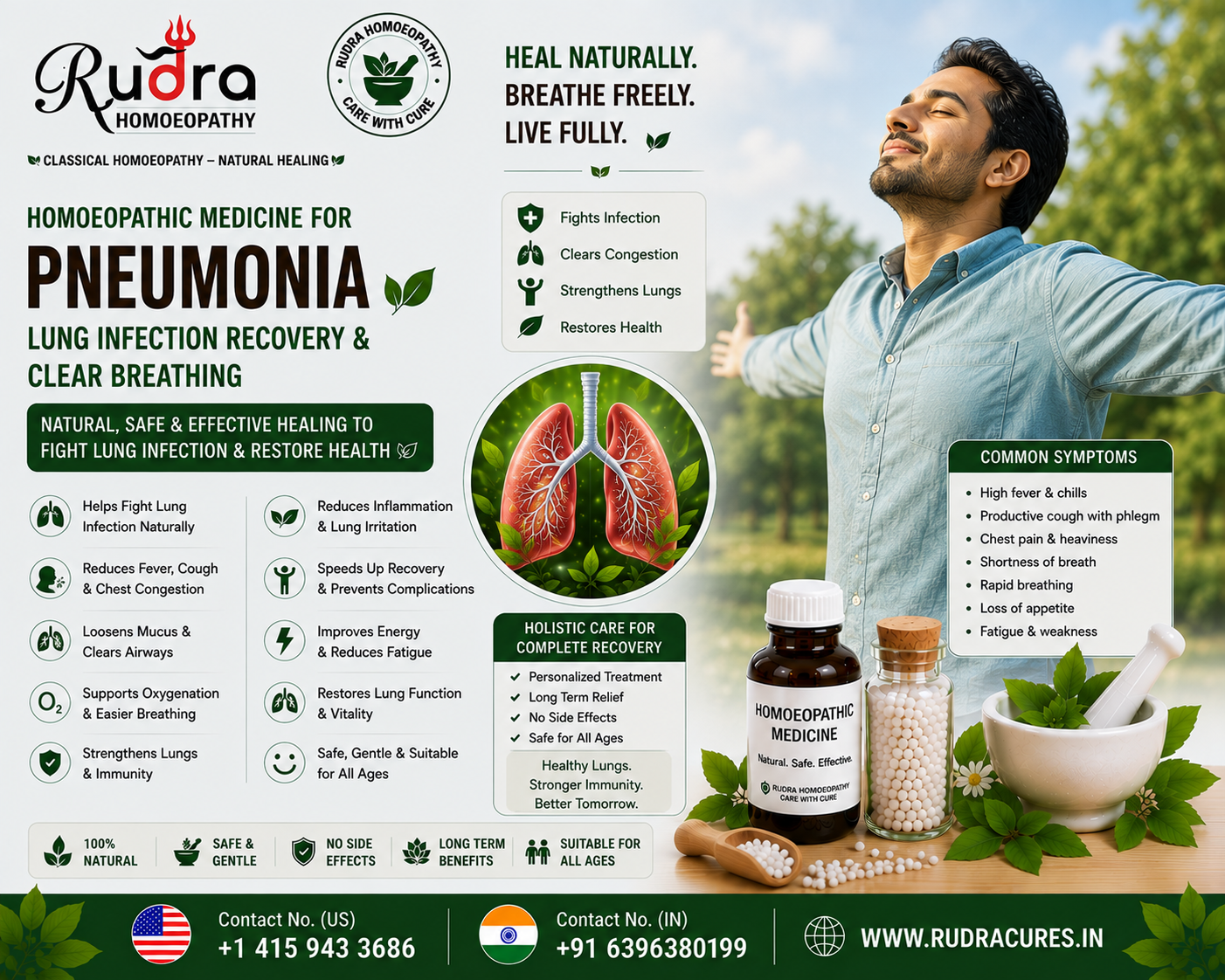
Pneumonia / Lung Infection (निमोनिया व फेफड़ों का संक्रमण) – Overview & Key Remedies
High fever with shaking chills, sharp stabbing chest pain when breathing deeply or coughing, short rapid breathing, coughing up thick rust-colored, yellow, or greenish phlegm, extreme physical weakness, loss of appetite, and blue lips or fingernails are the primary symptoms experienced by patients with pneumonia. Pneumonia (Lung Infection / Parenchymal Consolidation / निमोनिया व फेफड़ों का संक्रमण) is a serious respiratory infection where the lung air sacs (alveoli) become inflamed and filled with fluid, pus, and inflammatory cells. Caused by bacteria (Streptococcus pneumoniae), viruses (Flu, RSV), or atypical bugs, this infection impairs normal oxygen exchange into the blood. As a person faces cold weather exposure, recent viral colds, or weakened lung immunity, their PNEI (Psycho-Neuro-Endocrine-Immunology) Matrix—the master communication network connecting brain breathing centers, lung blood capillaries, mucosal immune cells, and white blood cell defenders—becomes severely strained. Homeopathy offers a gentle, safe, natural, non-toxic, and constitutional approach to reduce lung inflammation, dissolve consolidated chest phlegm, ease pleuritic chest pain, and restore healthy lung breathing safely.
कंपकंपी के साथ तेज बुखार आना, सांस लेते या खांसते समय छाती में सुई चुभने जैसा तेज दर्द होना, सांस बहुत तेजी से फूलना, जंग (Rust) जैसे भूरे, पीले या हरे रंग का गाढ़ा बलगम निकलना, और भयंकर शारीरिक कमजोरी महसूस होना—इसे सामान्य भाषा में निमोनिया या फेफड़ों का इन्फेक्शन (Pneumonia / Lung Infection) कहा जाता है। निमोनिया में फेफड़ों की हवा की थैलियों (Alveoli) में इन्फेक्शन के कारण पस और पानी जमा हो जाता है, जिससे फेफड़े बलगम से भर जाते हैं और खून में पर्याप्त ऑक्सीजन नहीं पहुँच पाती। केवल एंटीबायोटिक्स (Antibiotics) लेने से इन्फेक्शन तो रुक सकता है, लेकिन फेफड़ों में जमा बलगम और कमजोरी बनी रहती है। सही होम्योपैथिक इलाज से फेफड़ों में जमा बलगम पिघलकर बाहर निकलता है, छाती का दर्द दूर होता है, और फेफड़ों की ताकत पूरी तरह वापस लौटती है।
Primary Stages & Types of Pneumonia (निमोनिया के मुख्य प्रकार व चरण)
Understanding the specific clinical stage of pneumonia helps doctors select the right curative strategy:
- Stage 1 – Early Congestion Stage: Acute fever onset within 24 hours; dry hot skin, shaking chills, rapid shallow breathing, and short dry cough.
- Stage 2 – Red Consolidation Stage: Lung air sacs fill with exudate; sharp stabbing pleuritic chest pain (worse motion), and rust-colored or blood-stained phlegm.
- Stage 3 – Purulent Resolution Stage: Breakdown of inflammatory exudate; loose cough with thick yellow or greenish purulent phlegm, chest rattling, and shortness of breath.
- Post-Pneumonic Weakness Stage: Lingering physical debility, night sweats, slow phlegm clearance, and persistent fatigue following pneumonia.
Common Causes & Risk Factors of Pneumonia (मुख्य कारण)
Key Signs and Symptoms of Pneumonia (प्रमुख लक्षण)
- High Fever with Shaking Chills (कंपकंपी के साथ तेज बुखार): Sudden temperature spike accompanied by violent shivering and cold feeling.
- Sharp Stabbing Chest Pain (छाती में सुई चुभने जैसा दर्द): Pleuritic chest pain that worsens sharply when taking a deep breath or coughing.
- Short Rapid Breathing / Dyspnea (तेजी से सांस चलना): Breathing becoming fast and shallow due to reduced lung oxygen exchange capacity.
- Rust-Colored or Yellow-Green Phlegm (भूरा, पीला या हरा बलगम): Coughing up thick phlegm with a rusty, brownish, or purulent appearance.
- Flapping of Nostrils / Alae Nasi (नाक के नथुने फूलना): Flapping motion of nostrils during breathing, common in severe lung consolidation.
- Bluish Lips or Fingernails (होठों व नाखूनों का नीला पड़ना – Cyanosis): Oxygen saturation ($SpO_2$) dropping, causing bluish discoloration of skin.
मुख्य लक्षण: कंपकंपी के साथ तेज बुखार, सांस लेते समय छाती में चुभन वाला दर्द, तेजी से सांस चलना, जंग जैसा बलगम, और होठों का नीला पड़ना।
Homeopathic Approach to Lung Clearance & Pneumonia Healing
Homeopathy manages Pneumonia through Pulmonary Parenchymal Inflammatory Reduction, Exudate Liquefaction, and Immune Vitality Building. Conventional treatment relies heavily on broad-spectrum antibiotics, fever reducers, and oxygen support. While antibiotics control bacteria, they do not automatically dissolve solid fibrinous phlegm trapped deep in lung air sacs, leading to prolonged post-pneumonic cough and weakness. Homeopathic constitutional remedies (such as Aconitum Napellus, Bryonia Alba, Phosphorus, Chelidonium Majus, Antimonium Tartaricum, Lycopodium, and Hepar Sulph) work naturally to soothe acute lung inflammation, dissolve consolidated chest phlegm, relieve sharp pleuritic chest stitches, restore natural blood oxygen saturation ($SpO_2$), and ensure complete recovery without lingering weakness.
मुख्य होम्योपैथिक दवाएं और उनके लक्षण (Homeopathic Medicines & Symptoms Basis)
होम्योपैथी में निमोनिया के चरण (पहला दिन, दूसरा चरण, या बलगम निकलने का समय), बलगम के रंग, और छाती के दर्द के आधार पर सही दवा चुनी जाती है:
लक्षण और पहचान: निमोनिया के शुरुआती 24 घंटों की नंबर 1 दवा। ठंडी हवा लगने के बाद अचानक कंपकंपी के साथ तेज बुखार, सूखी जलन वाली त्वचा, सूखी खांसी, अत्यधिक घबराहट, और मौत का डर।
लक्षण और पहचान: निमोनिया के दूसरे चरण की मास्टर दवा। सांस लेते या खांसते समय छाती में सुई चुभने जैसा तेज दर्द होना; मरीज दर्द वाले हिस्से के बल बिल्कुल स्थिर लेटा रहता है क्योंकि थोड़ा सा भी हिलने-डुलने से दर्द बढ़ता है। जंग (Rust) जैसा बलगम और तेज प्यास।
लक्षण और पहचान: बाएं फेफड़े के निमोनिया और छाती में भारीपन/जलन की अचूक दवा। ऐसा लगता है जैसे छाती पर भारी वजन रखा है या रस्सी बंधी है; जंग जैसा या खूनी बलगम; बाईं तरफ लेटने पर तकलीफ बढ़ना; बर्फ जैसा ठंडा पानी पीने की तीव्र इच्छा।
लक्षण और पहचान: दाएं फेफड़े के निचले हिस्से के निमोनिया की विशेष दवा। दाहिनी कंधे की हड्डी (Scapula) के नीचे लगातार तेज दर्द होना, पीलिया/पीली रंगत होना, और सांस लेते समय नाक के नथुने (Alae Nasi) फूलना।
लक्षण और पहचान: निमोनिया के तीसरे चरण में छाती में बलगम की भारी गड़गड़ाहट (Rattling) होना, लेकिन मरीज में बलगम बाहर निकालने की ताकत न होना। सुस्ती, कमजोरी, और होठों का नीला पड़ना (Cyanosis)।
लक्षण और पहचान: निमोनिया ठीक न होने या बलगम फंसने पर नथुने फूलना (Lycopodium)। हीपर सल्फर (Hepar Sulph) पीला-हरा मवाद जैसा बलगम निकालने और ठंड से बचाने की मास्टर दवा है।
लक्षण और पहचान: बुखार की शुरुआती अवस्था (Ferrum Phos) और निमोनिया में ऑक्सीजन का स्तर ($SpO_2$) कम होने पर फेफड़ों को ऑक्सीजन देने वाला टॉनिक (Aspidosperma Q)।
Frequently Asked Questions (15 Essential FAQs) – निमोनिया से जुड़े सवाल और जवाब
1. What is Pneumonia?
Pneumonia is an acute infection of the lung air sacs (alveoli) caused by bacteria, viruses, or fungi, filling the lungs with fluid and purulent phlegm.
निमोनिया (Pneumonia) फेफड़ों की हवा की थैलियों में होने वाला वह इन्फेक्शन है जिससे फेफड़ों में पानी और मवाद वाला बलगम भर जाता है।
2. Can Homeopathy help resolve pneumonia lung phlegm safely?
Yes. Constitutional homeopathy relieves chest inflammation, dissolves consolidated lung phlegm, eases stabbing chest pain, and speeds up safe recovery.
3. Why does chest pain worsen during deep breathing or coughing in pneumonia?
Pneumonia inflammation often extends to the outer lung lining (pleura), causing sharp stabbing pleuritic pain whenever lungs expand during deep breathing or coughing.
4. Why is Bryonia Alba the premier remedy for pleuritic pneumonia pain?
Bryonia Alba specifically eases sharp stabbing chest stitches where the patient feels better lying completely still on the affected painful side.
5. What is ”Rust-Colored” Sputum in pneumonia?
Rust-colored sputum is brownish-red phlegm containing decomposed red blood cells, indicating active lung alveolar consolidation (treated by Bryonia and Phosphorus).
6. How does Aspidosperma Mother Tincture help when oxygen levels drop?
Aspidosperma acts directly as a lung oxygenator that stimulates respiratory brain centers, expanding air passages and improving oxygen absorption ($SpO_2$).
7. What is the difference between Pneumonia and Bronchitis?
Bronchitis is inflammation of the upper bronchial tubes. Pneumonia is a deeper, more severe infection affecting the deep lung air sacs (alveoli) and parenchymal tissue.
8. What essential medical tests diagnose Pneumonia?
Chest Digital X-Ray (checking for lung opacity/consolidation), Complete Blood Count (CBC with High TLC/Neutrophils), Pulse Oximetry ($SpO_2$), and Sputum Culture.
9. Why does flapping of nostrils (alae nasi) happen in pneumonia?
Flapping nostrils indicate that the body is working extra hard to pull air into consolidated, oxygen-starved lungs (treated by Chelidonium and Lycopodium).
10. How does Antimonium Tartaricum clear rattling chest phlegm?
Antimonium Tartaricum liquefies heavy rattling phlegm in weak or elderly patients who lack the physical strength to cough up trapped mucus.
11. What simple home guidelines support pneumonia recovery?
Complete bed rest, drinking warm soups and lukewarm water, steam inhalation, chest warmth, and monitoring blood oxygen saturation ($SpO_2$).
12. Are homeopathic remedies safe alongside prescribed antibiotics or oxygen?
Yes. Homeopathic remedies are 100% natural, non-toxic, and work completely safely alongside emergency hospital medical care, antibiotics, or oxygen support.
13. When does pneumonia become a life-threatening emergency?
Oxygen saturation ($SpO_2$) dropping below 90%, blue lips/fingers, severe shortness of breath, confusion, or low blood pressure requires immediate ICU emergency care.
14. How long does complete recovery take after pneumonia?
High fever and sharp chest pain resolve within 3 to 7 days, with lung consolidation clearing and physical strength returning fully over 2 to 4 weeks of care.
15. How can I schedule a private clinical consultation?
You can connect directly with our expert clinical pulmonological medical team via WhatsApp to share Chest X-Ray and CBC reports in complete 100% privacy.
Lifestyle & Home Guidelines for Pneumonia Recovery
- Take Complete Bed Rest: Allow your body complete physical rest in a warm, clean, well-ventilated room to support lung healing.
- Drink Lukewarm Water & Nourishing Soups: Drink warm water, veg/chicken soups, and warm lemonade daily to thin out thick chest phlegm and maintain hydration.
- Practice Daily Steam Inhalation: Take plain warm steam inhalation for 5 to 10 minutes twice daily to loosen consolidated bronchial secretions.
- Monitor Blood Oxygen ($SpO_2$) & Temperature: Check oxygen saturation using a pulse oximeter regularly to ensure $SpO_2$ remains safely above 94%.
- Avoid Cold Air Drafts & Chilled Foods: Protect chest and throat from direct cold wind, and strictly avoid refrigerated ice creams or cold drinks.
Understanding Diagnostic Milestones: A Balanced Medical Approach
Proper diagnostic evaluation confirms lung consolidation clearing and guides recovery:
| Assessment Type | Why It Is Crucial for Clinical Success | Clinical Focus Area |
|---|---|---|
| Chest Digital X-Ray Examination | Evaluates exact lobar or bronchial lung opacity/consolidation clearing over the recovery period. | Confirms lung opacity clearing. |
| Complete Blood Count (CBC & CRP) | Monitors Total Leukocyte Count (TLC / Neutrophils) and CRP to confirm infection resolution. | Confirms infection resolution. |
| Pulse Oximetry ($SpO_2$) Monitoring | Tracks blood oxygen saturation ($SpO_2$) to ensure adequate lung capillary oxygen diffusion. | Confirms blood oxygen saturation. |
Pneumonia responds best when constitutional homeopathic care is combined with bed rest, lukewarm water hydration, steam inhalation, nourishing soups, and monitoring oxygen levels ($SpO_2$). Your lung capacity, chest comfort, and physical strength can be restored steadily.
Why Choose Rudra Homoeopathy?
- 100% natural, non-toxic constitutional protocols tailored around your unique physical build, Chest X-Ray reports, and pneumonia stage.
- Proven clinical experience in safely managing pneumonia, lung consolidation, pleuritic chest pain, rattling phlegm, and post-pneumonic weakness.
- Focuses on biochemic phlegm liquefaction and lung oxygenation support without chemical side effects.
- Compassionate clinical care ensuring complete patient privacy, 100% strict confidentiality, and continuous expert support.
Conclusion
Homeopathy offers a safe, gentle, deeply effective, and permanent path for individuals struggling with Pneumonia, Lung Consolidation, and Pleuritic Chest Pain. Remedies like Aconitum Napellus, Bryonia Alba, Phosphorus, Chelidonium Majus, Antimonium Tartaricum, Lycopodium, and Aspidosperma work in harmony with the body to rebalance respiratory health and restore clean, effortless breathing and lung strength.
Manage Pneumonia, Lung Consolidation, Chest Pain, and Rattling Phlegm naturally and confidentially with expert clinical care.
💬 Confidential WhatsApp ConsultationAdvanced Clinical Comparison Tool
Compare symptoms, cross-reference Materia Medica notes, and analyze repertorial rubrics side-by-side for precise case evaluation.
Access Clinical Tool →